BY ANKELI EMMANUEL, Sokoto.
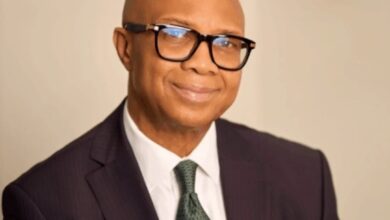
An estimated 20 to 40 million people annually are being subjected to modern slavery globally, Abdulganiyu Abubakar has said.
Abubakar, the National President of Network Against Child Trafficking, Abuse and Labour (NACTAL), further stated that, trafficking under whatever guise is a gross human rights violation.
According to him, human trafficking is a global reality and a crime that deceitfully exploits people including women, girls, youths and children.
Giving his position in a press to commemorate the European Nations Anti Trafficking Day, Abdulganiyu said, any recruitment and or transporting of people into a situation of exploitation due to their vulnerability such as due to unemployment, homelessness, illiteracy among others, constitutes trafficking.
“”Victims/survivours of human trafficking are often faced with different forms of exploitation including forced/child labour, forced marriage, prostitution and organ harvest.”
While noting that some criminally minded cartels see trafficking as lucrative despite its devastating side effects on the victims, Abdulganiyu quoted United Nations report on human trafficking as saying, “Human trafficking earns estimated profits of $150 billion annually for traffickers, with $99 billion from commercial sexual exploitation.
“Also, an estimated 71% of human trafficking victims are women and girls while men and boys account for 29%,” he said.
Bringing the scenario back home, Abdulganiyu said there is none of the states in Nigeria that does not suffer the consequences of trafficking, adding however, that it is difficult to establish the prevalence of human trafficking in Nigeria due to dearth of data.
He said further that the National Agency for the Prohibition of Trafficking in Persons (NAPTIP) stated that seventy-five (75%) percent of those who are trafficked within Nigeria are trafficked across states, while 23% are trafficked within states. Only 2% of those trafficked, are trafficked outside the country”.
Continuing, Abdulganiyu said, “Nigeria is a source, transit, and destination state for women and children subjected to trafficking in persons including forced labour, sexual exploitation and forced prostitution.
“While trafficking affects every part of the state, reported cases show that women and girls are mostly trafficked within and outside Nigeria particularly for involuntary domestic servitude, sexual exploitation, forced prostitution and street vending among others.”
Abdulganiyu listed poverty, youth employment, lack of educational and economic opportunities, displacement, and ignorance amongst others, as the factors giving rise to trafficking. These factors, he stressed, expose thousands of women and girls to falling victims of traffickers who capitalize on their vulnerability to recruit, transfer and harbor them for the purpose of exploitation.
He, therefore, appealed to stakeholders in Nigeria such as religious leaders, traditional rulers, community influencers, opinion leaders, youth leaders, women groups, the organized private sector and other Civil Society Organizations to support the efforts of government in ending human trafficking in the nation by empowering the poor and vulnerable families in their various localities.