Collective response needed to tackle world water crisis – Global Commission; Says, problem deeply intertwined with climate change

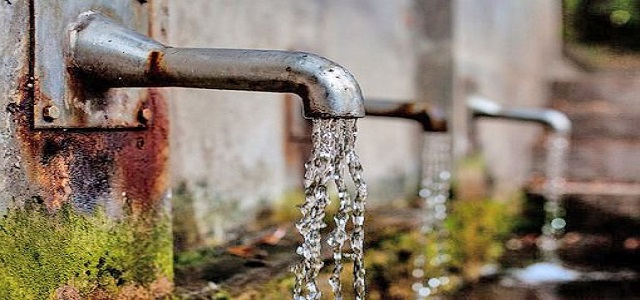
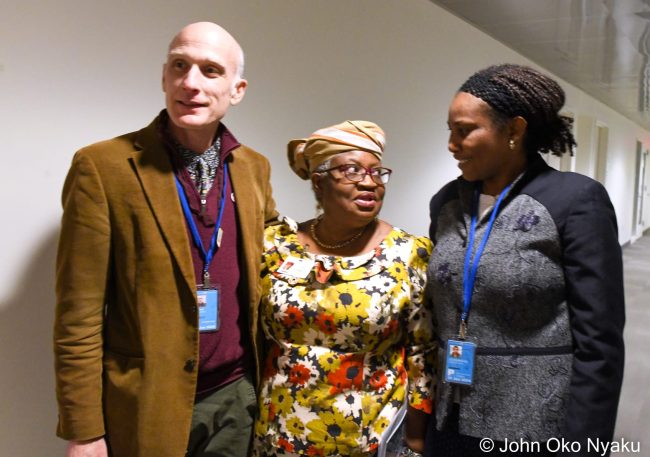
The Global Commission on the Economics of Water (GCEW) has said that the water crisis presently confronting the world is “deeply intertwined with climate change” and that there is need for countries to collaborate to tackle the challenge and resolve the problem.
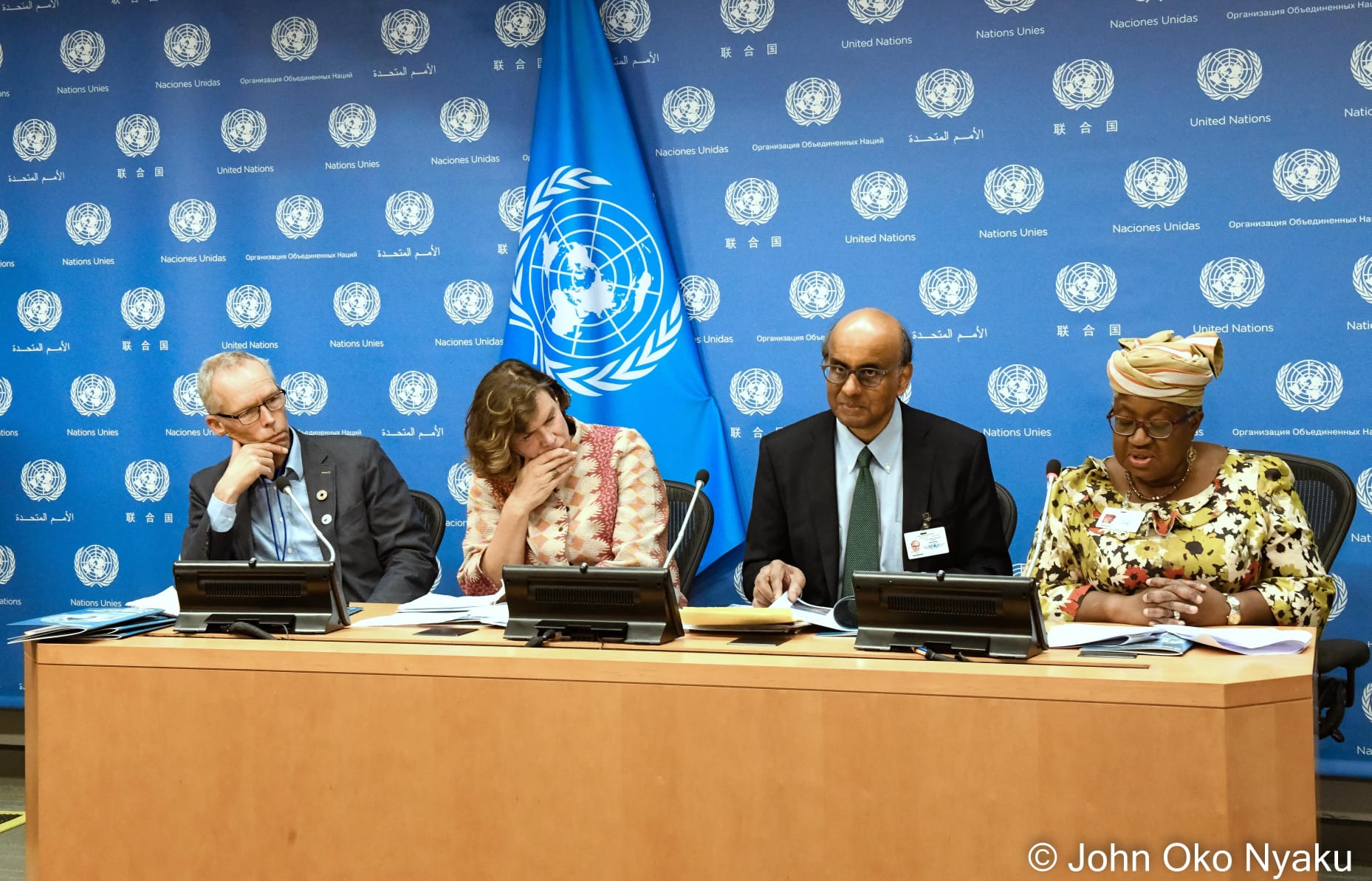
The Commission, which said these recently in a presentation at the United Nations (UN) headquarters in New York, also insists that “crucially, the world must recognize and manage the water cycle as a global common good, restoring and safeguarding it for all.”
Mariana Mazzucato, Ngozi Okonjo-Iweala, Johan Rockstrom and Tharman Shanmugaratnam are co-chairpersons of the GCEW which “was established in May 2022 at the initiative of the Government of the Netherlands as co-host of the UN 2023 Water Conference.”
It has the aim of “re-envisioning the economics and governance of water, and completing the sustainability trilogy that began with the Stem Review on the Economics of Climate Change and the Dasgupta Review on the Economics of Biodiversity.”
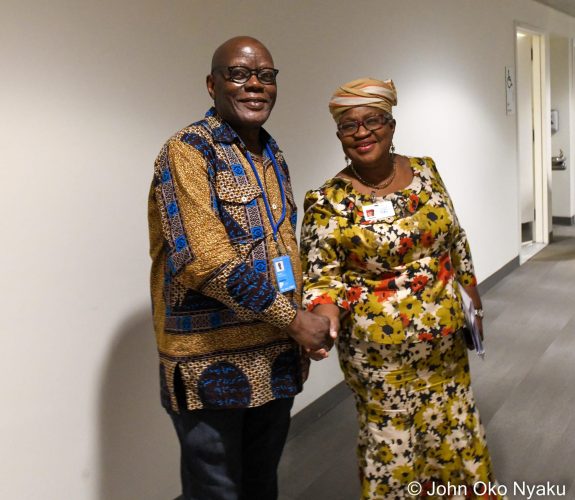
At the GCEW event, which was addressed by Dr. Okonjo-Iweala and the other co-chairs, the group said further that to design a new economics that safeguards the water cycle, it is proposing “an outcome-focused, mission-driven approach which reflects the many roles water plays in human well-being.”
Such an approach, it said, “must mobilize water stakeholders, including public, private, civil society and local community and utilize innovation policy to catalyze solutions to concrete problems; and scale up investments in water through new types of public-private partnerships.”
The statement quoted Mazzucato, co-chair of GCEW and Professor in the Economics of Innovation and Public Value at University College London as saying, “We need new economic thinking to help move from reactively fixing to proactively shaping economies to become inclusive and sustainable,” adding that “moving from sectoral to mission-oriented Innovation policies with a common good approach can help us put equity and justice at the centre of water partnerships and bring multiple sectors together to tackle our biggest water challenges.”
The group also argues that the world must cease undervaluing and underpricing water, stressing that “combined with targeted support for the poor and vulnerable, making sure water is properly priced will enable it to be used more efficiently in every sector, more equitably in every population and more sustainably both locally and globally.”
It also insists that the about “USD 700 billion of subsidies in agriculture and water, which often fuel excessive water consumption and other environmentally damaging practices, must be phased out, and the resources that are freed up used instead to incentivise water conservation and universal access.
“Efforts to require disclosure of water footprints should be accelerated so as to spur a rechannelling of finance towards sustainable practices,” it insisted.
GCEW also recommended “establishing Just Water Partnerships (JWPs) to enable investments in water access, resilience, and sustainability in low-and middle-income countries, in ways that contribute to both national development goals and the global common good.”
The JWPs, it noted further, “should drive down the cost of capital by bringing together different streams of finance – including leveraging on the Multilateral Development Banks and Development Finance Institutions to crowd in private investments.”
The Commission, which “comprises an independent and diverse group of experts from the fields of science, economics and policy making, and with leadership experience at community, city, national and multilateral levels,” also urged the world to “act on opportunities that can move the needle significantly in the current decade.”
These opportunities, it said, “include fortifying freshwater storage systems, developing the urban circular water economy especially recycling industrial and urban wastewater, reducing water footprints in manufacturing, as well as shifting agriculture to precision irrigation, less water-intensive crops and drought-resilient farming.”
The group equally argued that “the multilateral governance of water, which is currently fragmented and not up to the challenge, must be reshaped. Trade policy should also be used as a tool for more sustainable use of water, for example, by not exacerbating scarcity in water-stressed regions.
“Multilateralism should also support capacity building for all, prioritize gender equality in water decision-making, and empower farmers, women, youth, Indigenous Peoples and local communities, and consumers who are at the frontlines of water conservation.”
The statement also quoted another co-chair of GCEW, Shanmugaratnam, who is also a Senior Minister in Singapore, as saying that “solving the water challenge requires higher ambition, but it’s an ambition that is actually achievable if we work collectively and accelerate actions in the current decade, ” adding “We have the scientific expertise, we know what the basic policy orientations should be, and there is no real lack of finance globally.”
The task, according to the group, “is to organize these resources for a sustainable and globally-equitable future – that’s in every nation’s interest.”
To bring together the latest knowledge and findings on the world’s water crisis, the group has published “The What, Why and How of the World Water Crisis: Global Commission on the Economics of Water Phase 1 Review and Findings,” accompanying the release of the Call to Action.
It also, importantly, made the point that the far-reaching views and recommendations of the Commission are independent of the Government of the Netherlands.