
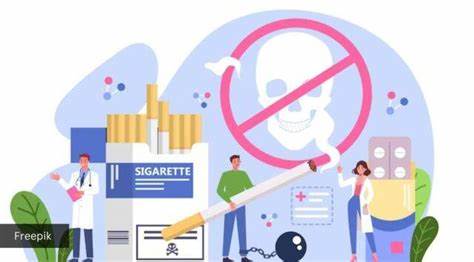
Introduction:
Social and technological advancement are inevitably intertwined for the advancement of human development. The conceivable notion that the world has become a global village propelled by the advent of the internet as well as the ever present and compelling social media usage has led to heightened addictive tendencies, to increased knowledge of, access to and the use of illicit drugs globally. This has led to the sweeping epidemic of drug addiction across the globe which is one of the most pervasive ills of our modern society. COVID-19 pandemic also presents unique challenges for people already struggling with depression and substance use disorders.
The long periods of the COVID 19 lock down and isolation, coupled with the socio – economic implications had exacerbated the problem worldwide with people seeking solace and answers in mood altering medications and alcohol that are often gate ways to drug addiction.
COVID 19 and drug addiction became the two pandemics that collided during the most catastrophic public health crisis in modern times. The effects of which governments and stakeholders around the world are still struggling to comprehend and manage.
The compulsive, excessive, and self-damaging use of habit-forming drugs or substances, leading to addiction or dependence and serious physiological injury cuts across all ages, social and political classes. It is a disease that families are either afraid to talk about or just so embarrassed to admit exist in their home.
It is also fast becoming a perplexing topic at dinner tables in most enlightened homes in both the developed world as well as in developing countries where parents and relatives are beginning to pay close attention to the issue.
Statistics:
According to a 2022 United Nations Office on Drugs and Crime (UNODC)’s World Drug Report, there are about 284 million people aged 15-64 who use drugs worldwide, a 26 per cent increase over the previous decade with just over 11.2 million people worldwide were injecting drugs with 1 in 20 adults in the world, who are between the ages of 15 and 64 years, were confirmed drug abusers in 2014 resulting in over 29 million people worldwide suffering from drug abuse disorders. Young people are using more drugs, with use levels today in many countries higher than with the previous generation. In Africa and Latin America, people under 35 represent the majority of people being treated for drug use disorders.
Globally, the report estimates that 11.2 million people worldwide were injecting drugs. Around half of this number were living with hepatitis C, 1.4 million were living with HIV, and 1.2 million were living with both. In a landmark UN General Assembly special session resolution on the world drug problem, containing more than 100 concrete recommendations to reduce demand and supply, opioid dependence was considered the most harmful accounting for 70 percent of the adverse health impact associated with drug use.
Yury Fedotov, the United Nations Office of Drugs and Crime (UNODC) Executive Director lamented that “there is much work to be done to confront the much harm inflicted by drugs to health, development, peace and security, in all regions of the world”.
It is a noteworthy fact that illicit drug trafficking, use and addiction constitute a significant share of the global burden of diseases like HIV and Hepatitis C especially with those who are intravenous drug users. There is also a strong causal association of drug trafficking, drug addiction and increasing trends of violent crimes and now even terrorism.
It is imperative that the global drug problem, like diabetes, should be recognized in all countries of African as well, and primarily in Nigeria, as an epidemic and national emergency. It is a plague that is yet in its early stages in the Nigerian society but that even most advanced nations of the world are still grappling with it and are hardly making any decent impact in its control despite their huge resources and time spent on enforcement, awareness creation and recently rehabilitation.
The surge in the United States even amongst the demographics initially thought immune to it calls for huge cause for concern. Though it is still thought to be an evolving phenomenon, the rest of the world should pay close attention to it. It would not be surprising to see the uncanny similarities in the comparative schematic graphs of the rise in violent crimes, mental health issues with the rising drug addiction rate. It is often a common saying in the United States that as California goes so the rest of America goes and when America ‘sneezes’ the rest of the world catches cold. The world watched as California went with its drug crises and the United States of America now has a fever from the drug epidemic and it is now inevitable that the rest of the world especially Africa will go into a coma from the crisis.
Regrettably, most developing countries and especially those of predominantly black nations still take a lukewarm approach to the clear and present dangers of illicit drugs in their homes, schools and places of work. Either because of the societal stigma or out or perilous ignorance, they are refusing to allow it to come to the national consciousness. Majority of their people may yet consider it a private matter that needs to be addressed and dealt with privately or presumptuously amongst the elite. They are neglecting the now pervasive and permeating fact that the very bright seemingly naive girl or boy next door in local high school or college has access to and is using drugs.
It is a particularly disturbing fact that Nigeria, which is the most populous black nation on earth and the number one economy in Africa is yet to initiate a clear direction on enforcement of its national policy or declaration on illicit drug use and overdose.
Nigeria has a pivotal role to play and should get ahead of the curve to champion this cause for Africa and other black nations to emulate. Africa with a population of 1.216 billion has the fastest growing and youngest population in the world with over 200 million of them between age 15 and 24 (the youth bracket).The current trend indicates that this figure will double by 2045, according to the 2012 African Economic Outlook report prepared by experts from the African Development Bank (AfDB).The top 30 countries with the youngest population in African are Nigeria’s two immediate neighbours in its north. Niger and Chad rank first and third respectively with 56.9 % and 54.6 % of its population reported as being under 18 with Nigeria on number sixteen on the list with 50.4%.
It is expedient that Nigeria with an estimated 220 million people projected to be the third most populated nation on earth by the year 2050 have a reflective assessment of its drug problem and take successful cues from other countries to formulate, as well as enforce policies that are socially and culturally acceptable and sustainable bearing in mind Nigerian’s diverse ethnic and religious inclinations.
There has to be a collaborative collective “coming together” of all stakeholders involved in the management of drug addiction. There should be representatives from all levels of government, religious leaders, traditional rulers, professional and ethnic organizations, social media, economic and policy advocates as well as non-governmental bodies like the Reorientation Advocates of Nigeria (RAN) and student body representatives to begin the discussion. There should also be collaborative efforts of Nigerian Diaspora Organizations like ANPA (Association of Nigerian Physicians in America), NAPAC (Nigerian American Public Affairs Committee), Foundations, and more recently, the partnership of the United States based ANNMOM and RAN will play vital roles in seeking global funding and Nigerian Diaspora experts in managing drug addiction to help offer solutions.
It is imperative that everyone involved in solving Nigeria’s drug addiction problems understand the need for research and development to collect data, on the types of drugs, sources and suppliers of these drugs, the demographics of users and those inclined to, and are at risk of, drug use and addictions. A properly collected data and the analysis of these data with the proper tools would serve as the basis for effective resource allocation for efficient crisis management and predictive, objective results.
The U.S. government does not track death rates for every drug. However, the National Center for Health Statistics at the Centers for Disease Control and Prevention does collect information on many of the more commonly used drugs. The CDC also has a searchable database, called CDC Wonder. Drugs Involved in U.S. Overdose Deaths* – Among the more than 94000 drug overdose deaths estimated in 2022, the sharpest increase occurred among deaths related to fentanyl and fentanyl analogs (synthetic opioids) with over 20,000 overdose deaths. While synthetic and psychedelic drugs are in use in more advanced countries, the epidemic in developing countries like Nigeria is less sophisticated with the average exposure to drugs now being between age 15 to 18, with marijuana considered the gate way drug to more potent illicit drug use.
It has been reported that every day, over 500,000 bottles of codeine are consumed by young Nigerians across the country, same with the intake of Tramadol, Rohypnol, Marijuana, and other opsocialioids. This is a frightening alarming trend that has subtly eaten deeply into the fabrics of the Nigerian society involving youths of all classes. Even more disturbing is the increasing number of girls now involved in this urban menace of drug abuse.
The drug epidemic in Nigeria is a ticking time bomb about to explode with a report of about 46 % of young adults reported to have used drugs at least once in their lifetime. The usual method of intake is via mixing with their beverages, soft drinks and whatever substances they add to water resulting in subculture of wanting to be high for escapism or even sexual enhancement.
In a November 2017 newspaper report, a University Professor of Pharmaceutical Sciences, Nelson Ochekpe disclosed that recent research suggests that over 60 per cent of substance abuse occurs in Northern Nigeria with Kano State being its major hub with a purported 7 out 10 using drugs on frequent basis. A similar concern was sounded by the then Nigeria’s first lady, Aisha Buhari, that Northern youths, including women, were wasting their lives with drug abuse. She urged the political and religious leaders in the region to urgently find a solution to the menace.
There have been multiple reports explaining why there is this upsurge within the last five years, which is not particularly different from the global report, The ease in communication across hemispheres with the use of social media, social adulation of movie and music stars, peer pressure, increase in dysfunctional families, devaluation of cultural and religious values, poor social support and a very high unemployment rate of 41% by the Global audit and tax advisory firm, KPMG, have made countless youths and their families victims of this social menace.
Types of drugs used.
The observed trend is that alcohol, cannabis, tobacco and cigarettes are the most abused drugs while cocaine, sedatives, kolanuts, analgesics, coffee, caffeine, glue, heroin, energy drinks, miraa, tramadol, tranquillizers, antimalarials and antibiotics were the least types of drugs being abused by secondary school students. However, recent studies had showed indications that students, especially in secondary schools are abusing rohypnol or rookies and codeine syrup, which is usually mixed with soft drinks or garri soaked in water. Cocaine has also been observed to be a trending drug of abuse among adolescents in secondary school.
The increasing legalization of marijuana in western countries has also resulted in a permissible acceptance of marijuana among Nigerian youths with Skunk or SK for short which some refer to as the “elder brother” of Indian hemp, which is said to be much stronger than hemp though a bit more expensive. It is still readily easy to buy because it is often sold, by the same peddlers.
The prevailing increase in drug use, trafficking and distribution led to the establishment of the National Drug Law Enforcement Agency (NDLEA) in 1990 and the National Agency for Food and Drug Administration and Control (NAFDAC) in 1993. Drug and substance abuse is prevalent across Nigeria’s six geopolitical zones. However, the South-West zone, which comprises of Ekiti, Lagos, Ogun, Ondo, Osun and Oyo States, in the last half a decade has become a zone of serious concern that is reported to have the highest prevalence of drug and substance use, especially in Lagos.
Managing drug addiction problem:
It is undoubtedly an enormous task to manage drug abuse in Nigeria. There has to be no ambiguity or duplication of duty but a cohesive collaboration between the NDLEA and other agencies that enforce drug control.
Nigeria needs to take a cue from other nations to formulate policies that are socially and culturally acceptable and easily implementable and sustainable across the country. This must be different from the approach of most western countries like the United States that took on a pejorative, racially inclined punitive approach for decades resulting in predominately African Americans being incarcerated with little or no history of successful control of the problem. The management of this social menace should begin by recognizing that drug addiction is a disease that requires a holistic multi-disciplinary approach. The discussion should begin at dinner tables. Parents should become more vigilant concerning the behaviours of, especially, their teenage children. It is particularly of importance to involve the school systems, religious and traditional leaders as well as all other stakeholders.
All segments of the governments from the Federal, State and Local levels, irrespective of political persuasions or biases, would have to work together to develop a national policy that should include management of the crisis from as early as at the elementary school level up to the tertiary level. There should be teachings about the negative effects of illicit drug use and drug addiction. Screening protocols for all healthcare professionals should be developed to identify and diagnose those who are at risk. There has to be the creation and investment in specialty training and rehabilitation centres and programs to help stem this epidemic. There is also the need for stricter regulations in the procurement and sales of controlled substances. Restricting importation and local manufacturing as well as sales to only designated qualified personnel and centres. No matter how alluring it is to fully engage law enforcement with its attendant punitive measures to satisfy international standards and pressures it suffices to understand that addiction is also a socio-medical problem and the most effective methods of success would be to encourage and educate people about the ills of illicit drug use and addiction. To dissuade its use, embrace the need to seek help, avoid the stigmatization or victimization by the society and law enforcement as well as encourage prompt expert help and care.
Drug addiction is a pervasive disease. When it affects one individual, it affects all of the society Nigeria should lead a successful fight against drug addiction that will serve as a model for the rest of Africa.
Dr. Aluya, MD MBBS is a Medical Advocate and Chief Medical Officer, Newark Community Health Centers, Newark, New Jersey, USA


