Thursday, April 17, 2025 qualifies as a historic day for the embattled nation of Haiti, as it not only commemorated the two-hundredth (200th) anniversary of what is referred to as its independence debt, imposed on it by France in 1825, but also witnessed an admission by the French President, Emmanuel Macron, that an injustice was done by France to the then young nation that needs to be redressed.
Macron admitted in a statement, in which he announced the setting up of a joint commission made up of nationals of both countries that the decision to impose the staggering independence debt on Haiti “put a price on the liberty of a young nation, which from its birth thereby confronted the unjust force of history.”
He assured that the joint commission would “propose recommendations to both governments to draw lessons from it and build a more peaceful future”.
As Macron was admitting the injustice and announcing the setting up of the joint commission, People of African Descent, who gathered in New York, United States of America (USA), were raising their voices loud in unison to denounce France for what speaker after speaker referred to, variously, as an atrocious, monstrous, shameful, painful, illegitimate, immoral, oppressive, crippling and traumatic levy imposed on Haiti for winning its epochal war of liberation.
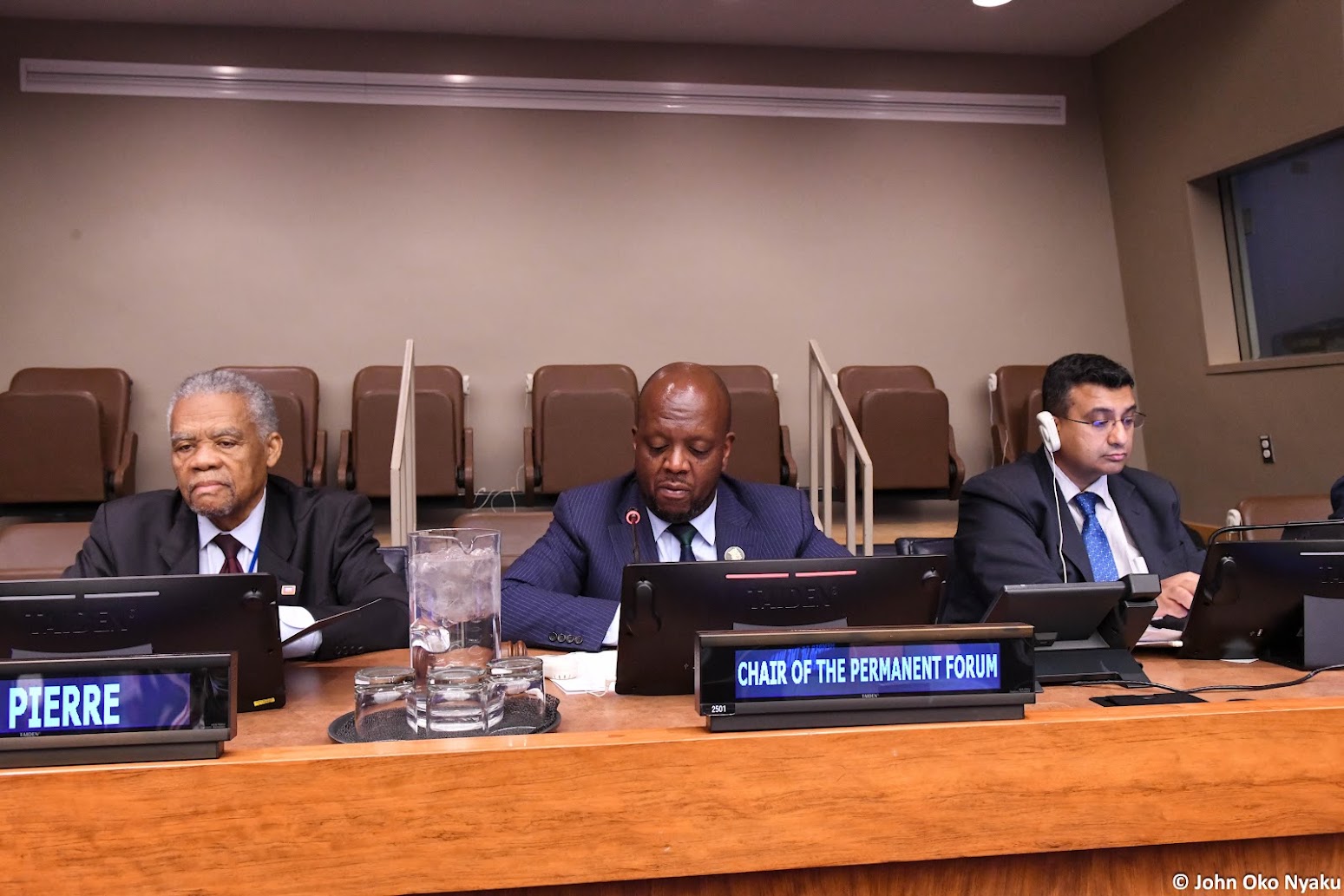
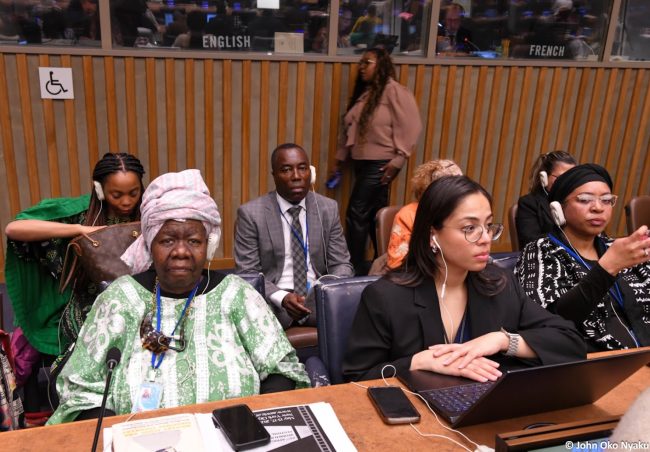
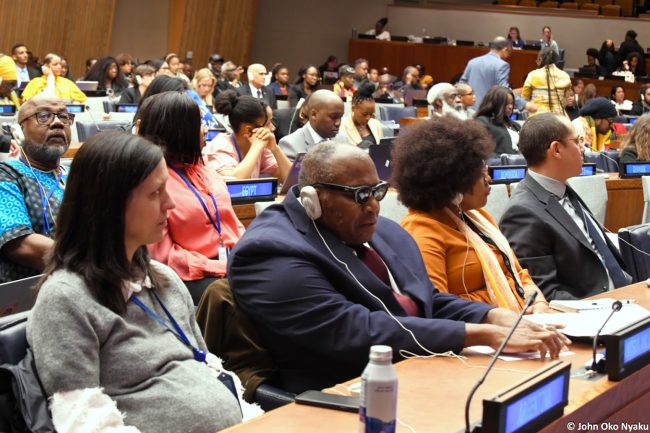
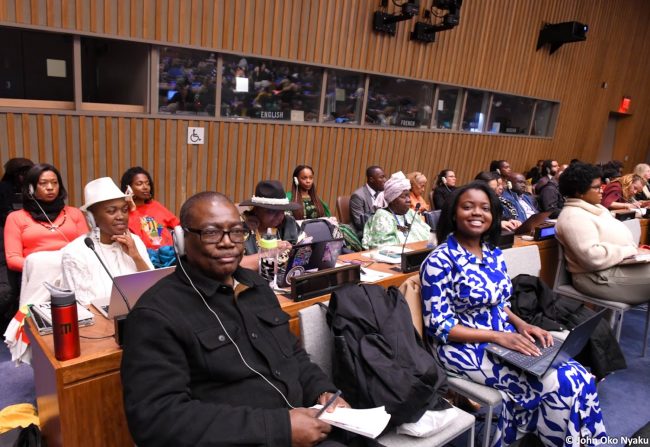
The occasion was the closing event of the 4th Session of the Permanent Forum of People of African Descent (PFPAD), which focused on “Haiti’s Independence Debt: 200 years later.”
That memorable day, Thursday, April 17, 2025, provided the perfect platform for most of the panelists and participants in the discussion to vent their anger at the unjust and illegal imposition of the “independence debt” on Haiti by France.
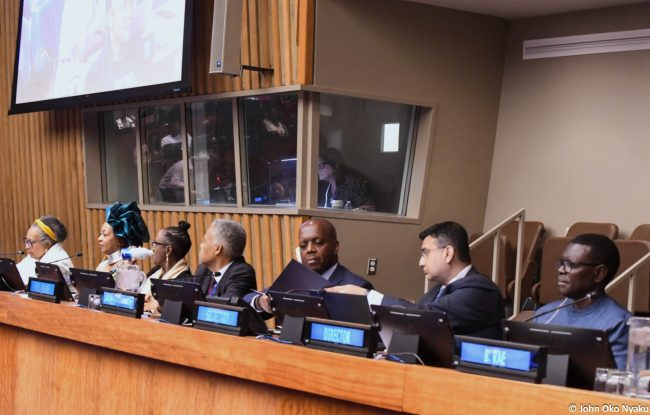
Moderated by the new Chairman of PFPAD, Ambassador Martin Kimani, the program also offered the opportunity for the participants to discuss the current crisis in Haiti and how it has its roots in the crippling “independence debt” that denied the then young nation of funds to develop its infrastructure, education, healthcare and other sectors.
The panelists for the often passion-fueled discussion were Pierre Ericq Pierre, the Permanent Representative of Haiti to the United Nations, Gaynel Curry, Member of the Permanent Forum, Professor Verene Albertha Shepherd, Vice-Chair, UN Committee on the Elimination of Racial Discrimination, Monique Clesca, a writer, journalist, activist and retired international development and communication expert, and Ambassador Bob Rae, President of the Economic and Social Council (ECOSOC).
They took turns to articulate strong positions on the injustice of the “independence debt” and its connection to the current dire security, economic and general humanitarian situation in Haiti.
Ambassador Kimani kicked off the discussion with acknowledgement of the announcement by President Macron, same day, of the establishment of the joint commission, but among others, Kimani noted that the Forum will be observing the developments closely, pointing out that the effectiveness of the process would depend on the willingness of those who participate in it to fully recognize the scale and consequences of the “so called independence debt,” on how the process unfolds, and whether it leads to meaningful redress.
A common refrain in the presentations of most of the panelists, member states, agencies, civil society groups and other participants from all over the world, was the acknowledgement of the necessity and urgency for France to financially restitute the huge “ransom” it extorted at gun point (14 war ships) from a young, isolated and fragile Haiti, as well as for it undertake other reparatory justice processes, so that the process of building the infrastructure, education, healthcare, agriculture and other sectors of the broken country can begin in earnest.
Ms. Curry presented the “Human Rights Situation in Haiti and its Historical Roots,” the Permanent Forum’s position and advocacy plan for Haiti, and the recommendations therefrom, among which is the call for the establishment of a reparation fund for Haiti; Professor Shepherd stressed the need to immediately go from promise to payment from Paris (capital of France) to Port-au-Prince (capital of Haiti); while Clesca got a standing ovation for her passionate presentation, which painted the grim picture of the enormous injustice done to her country by the “monstrous debt” imposed by the French, its crippling effect on the development of the then young nation, and the fact that the colossal amount paid for its freedom still haunts Haiti, accounting in large measure for the current chaos prevailing in the country.
She noted, however, that in spite of the literal suffocation of the country by the 150 million gold francs slave ransom imposed by France, as a precondition for recognizing the nation’s independence, and the chronic misery and crisis it brought about, Haiti, which Professor Shepherd described as home to humanity’s most resilient people, still succeeded in building a vibrant civilization with distinct culture, music, literature, music, among others.
Shepherd and Clesca also paid tribute to champions of the cause of restitution and reparations for Haiti, most of who are no more, but whose legacies live after them. While Shepherd insisted that the process must move from promise to payment, from Paris to Port-au-Prince, Clesca stressed that all eyes are now on Macron and his joint commission, warning that Haitians would not settle for symbolic gestures or tokenism.
The point was also strongly made that it is not only France that owes Haiti restitution and reparatory justice, but that the United States, Colombia, Jamaica, the entire Caribbean countries, and, indeed, the whole world owes Haiti, especially a debt of gratitude for braving all odds to prove that freedom could be won.
A senior Colombian government official at the Forum acknowledged that his country, indeed, owes Haiti for funding its liberation effort and more, and assured that their government was working on setting up a Haiti Support Fund in appreciation of all that the now beleaguered country did for them during their own fight for freedom.
It was also noted that as Haiti set the example by becoming the first independent black nation in the world, which emboldened other nations to fight for their freedom, its current just fight for restitution and reparatory justice will also reenforce the growing clamor for restitution and reparatory justice by People of African Descent all over the world for decades of unpaid slave labor and other forms injustice visited on them and their ancestors by colonialists.
The chants in the hallowed halls of the United Nations on that day of history became “Justice for Haiti,” “Restitution and Reparations for Haiti Now,” and to end the discussion, a Haitian musician was called up to sing, and some participants, led by the Queen Mother, Dr. Delois Blakely, danced out to honor Haiti and its long suffering but resilient, unbowed and hopeful people.