
By Isiah Christie
To start his term, President Donald Trump immediately issued an executive order with the intention of ending birthright citizenship – the 160-year-old principle in the 14th Amendment, which states that babies born on U.S. soil are immediately considered citizens – in pursuit of anti-alien policies that have certainly existed to much controversy amongst United States citizens. Many are of the belief that Trump’s actions are of poor judgment and extreme, forcing states into new laws that will make birth certifications and eligibility for citizenship more confusing and divisive.
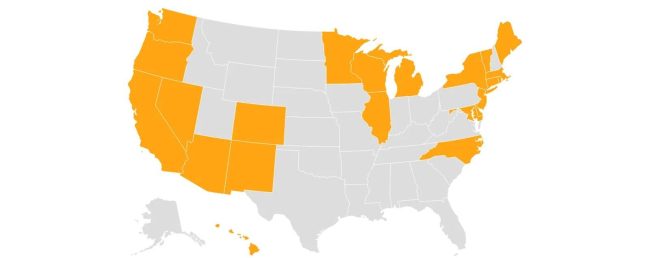
Certain states have been adamantly against the rewriting of the historic Amendment and intend to sue Trump’s order. Twenty states that have identified as blue or swing states in the past four elections are part of this group, including: Washington, Oregon, California, Nevada, Colorado, New Mexico, Minnesota, Wisconsin, Michigan, Illinois, Maryland, Delaware, Maine, Vermont, Massachusetts, Rhode Island, Connecticut, New York, Hawaii, and New Jersey. North Carolina and Arizona also join as red states against the order, resulting in 44% of the country standing in opposition.
However, New Jersey is in an interesting situation compared to some of its other anti-order peers. Not only is it within close proximity of multiple states that are slated to accept the order – including Pennsylvania, Ohio, West Virginia, and Virginia – it is also already a rapidly-growing center of attention in terms of attracting potential citizens. This also includes a high abundance of immigrants – with the second-highest immigrant rate in the country as of 2024 – and that is the group that will be most affected by this order. Many of them that have yet to acquire citizenship will end up birthing children that are not recognized as citizens, and this can lead to identification of their status and potential deportation via Trump’s rules.
As a result, New Jersey is expected to be a “safe haven” of sorts for this demographic. While many citizens of the state are concerned about the rapid population growth that will inevitably occur, it is seen as a positive by others. The revitalization of the state’s biggest cities, including the recently-gentrified Jersey City and growing Newark, will only be fully attainable should they embrace a significant growth and revamping in population and diversity. These incoming residents will greatly aid in that effort, meaning this order could – in an ironic fashion – help New Jersey’s quest for urban improvement.
Of course, this will require a rapid reaction that includes the transformation of major cities so they can sustain an influx of new people – but with the warning signs in the sky, New Jersey has time to react and renew.