
Trump’s unipolar determination of global trade tariffs is changing international trade landscape – Prof. Nwankwo, former DMO DG

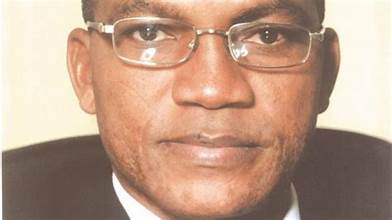
Former Director General (DG), Debt Management Office (DMO) of Nigeria, Professor Abraham Nwankwo, has said that the prevailing unipolar determination of global trade tariff by President Donald Trump of the Unites States is changing the global international trade landscape.
Professor Nwankwo, who is now a Professor of Practice, Department of Economics, MIVA Open University, Abuja, said this as Chairman of the maiden International Conference and MSMEs Trade Exhibition organized by the Professor Ngozi Egbuna International Center for Regional Integration and Trade Research (ICRITR ), Nnamdi Azikiwe University, Awka on Wednesday, August 13, 2025.
The Conference had as its theme, “30 years of Nigeria in WTO: Opportunities, Challenges, and Prospects,” and had as its Key Note Speaker, the Director-General of the World Trade Organisation (WTO), a former Minister of Finance and former Minister of Foreign Affairs of Nigeria, Dr. Ngozi Okonjo-Iweala.
Nwankwo, who was DG of DMO from 2007 to 2017, commended the organisers of the Conference for “complementing the discussions with a Trade Exhibition on MSMEs, knowing that MSMEs constitute the engine rooms of production and you can trade only what you produce,” stressing that pathways for Nigeria and other African countries to maximize participation in, and benefits from world trade must be figured out.
He also called for attention to be paid to the implications for Nigeria, other African nations, and other inadequately industrialized countries, of the prevailing world trade realities, “taking into account the vision of the relatively young African Continental Free Trade Area (AfCFTA).”
Nwankwo, who holds a Ph.D. in Economics from the University of Nigeria Nsukka (UNN), identified two issues that must be kept in focus -the relationship between Africa’s global trade and economic activities, and the nexus between trade and the public debt dynamics through infrastructure.
According to him, sustainable and transformative trade derives from production of goods and services, and that currently, Africa’s share of the world’s GDP is about 2.6 percent, which compares abysmally with Asia’s 36 percent. It is, therefore, he noted, “not surprising that while Asia’s share of global trade is about 38.5 percent, Africa’s is a paltry 2.9 percent.”
He further pointed out that “the performance of the GDP majorly derives from sufficiency of appropriate infrastructure, of which the funding gap in Africa is estimated at USD 100 billion per annum,” noting that “much of the funding is expected to come in the form of debt financing.”
The author of several widely acclaimed books, including a 2011 Economics classic, Stable Growth and Foreign Exchange, stressed, however, that “most African countries are suffering open or hidden unsustainable debt profiles, thus presenting a dilemma.” Nevertheless, he insisted, that the point must be made “that the public debt factor is part of the up-stream of the value chain of global trade.”
The Conference attracted dignitaries from different parts of the world, including academics, experts and professionals from the WTO and other international organizations.