Yaounde, Oct. 6, 2025
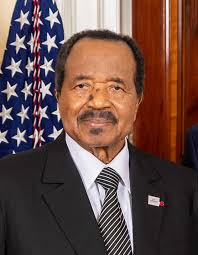
The world’s oldest head of state, President of Cameroon, Paul Biya stands a strong chance of victory when the country goes to the polls on Oct.12, an analyst says.
Biya, according to the analyst may likely win in spite of criticisms, as well as a host of security and economic challenges,
Announcing his bid for an eighth term in July, Biya, 92, said he was heeding “numerous and insistent” calls to stay in office but the 2025 election cycle has also featured striking appeals for him to step aside.
First, came Catholic Archbishop Samuel Kleda, who went on French radio in 2024 Christmas and said it was “not realistic” for Biya to keep doing the job.
Then came the defections of not one but two cabinet members from Cameroon’s vote-rich northern regions, both of whom openly challenged Biya’s fitness to lead.
Finally, the president’s own daughter, 27-year-old Brenda Biya, said on TikTok that her father “has made too many people suffer” and urged Cameroonians to vote him out.
She later recanted but the post continued to circulate widely among Biya’s detractors.
In spite of these criticisms, as well as a host of security and economic challenges, the world’s oldest head of state still maintained his position.
Analysts said he is buttressed by factors that have already helped keep him in power for more than four decades: an entrenched patronage system, flawed electoral institutions, a loyal army and a divided opposition.
Arrey Ntui, senior analyst for International Crisis Group, the conflict-prevention organisation said “the president has managed to enforce loyalty to him and the system.
“Very few people in the ruling system are willing to put their heads above the parapet to challenge him.
“When it comes to the president, there is no more independent thinking. It is just a one-line story: The president is there, he’s able to run again, that’s it.’’
Biya has held a tight grip on power since taking over as president in 1982 from his one-time mentor, Ahmadou Ahidjo, whom he sidelined and forced into exile.
He survived a coup attempt in 1984 and a stiff challenge during Cameroon’s first multi-party elections in 1992, when he won 40 per cent of the votes, just three percentage points more than the runner-up.
In 2008, Biya signed a constitutional amendment, removing a two-term limit for the presidency.
He went on to win by comfortable margins in elections in 2011 and 2018, dismissing his opponents’ complaints of ballot stuffing and intimidation.
Biya’s biggest obstacle this time around could be his own health, which had long been a source of speculation, including his disappearance from public view for 42 days in 2024.
The government had dismissed the health concerns as “pure fantasy”, though in 2024, it also banned public discussion of the topic.
Cameroonians continued to grapple daily with poor access to basic amenities from roads and water to electricity and waste management.