
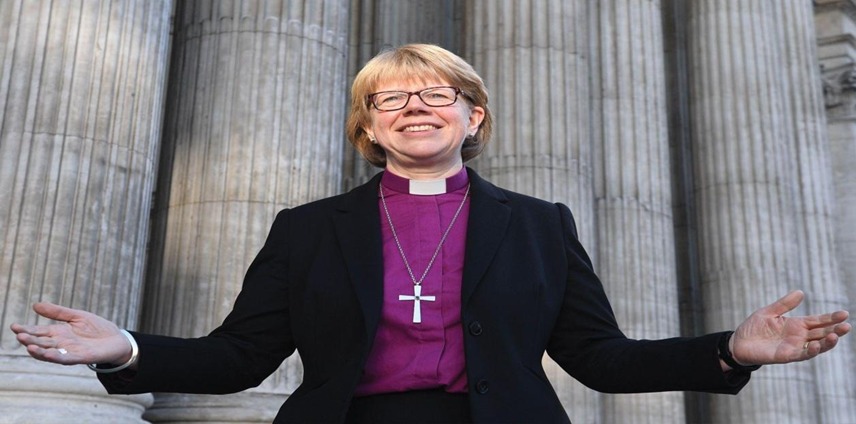
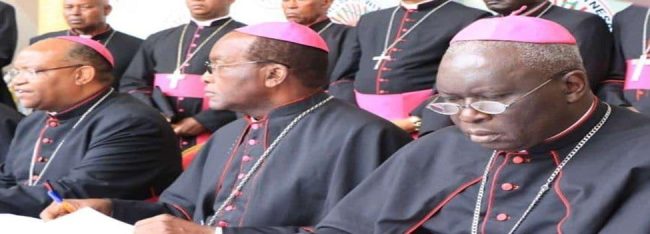
The Anglican Communion, the global family of all the Anglican Churches that are spread across more than 165 countries, is currently facing one of the most challenging crises of its 490 years history. This crisis is rooted in two issues that have persistently tended to divide the body of Christ over some decades now. And these are the ordination of women and the recognition of gay relationships within the clergy and laity of the Welsh Communion and the Church of England. These two concerns have caused deep frictions, particularly between the Church of England and the Anglican Churches of Africa and Asia. But while these differences are often framed as theological debates, the truth is that at the centre of these controversies lies an inescapable dilemma that hinges on the relationship between the authority of the Church and the authority of the State. And if it is not carefully managed, this dilemma could potentially tear the global Anglican Communion apart. Yet, the same crisis also presents an opportunity for the Church to re-examine its foundations, redefine its mission in light of contemporary realities, and emerge stronger than ever before. The question is: can the Church handle this challenge with the same Spirit that Christ did when he lived among men in the world?
Jesus was known for frequently interacting with “sinners”, people considered morally or ritually impure by the religious elite of His time. The term “sinners” in the Gospels did not only mean people who committed obvious wrongs, but also anyone outside the strict religious and social norms of Jewish society. He associated with Matthew, a tax collector he invited to become one of his disciples and another tax collector, Zacchaeus, who later repented. There was the woman who anointed His feet who was described as a “sinful woman” in the house of Simon the Pharisee (Luke 7:36–50). There was the woman who was caught in adultery. Jesus forgave her, telling her to “go and sin no more” (John 8:1–11). Jesus broke social and moral taboos and treated such women with compassion and respect, thereby restoring their dignity. Jesus touched and healed lepers, who were ostracized and considered untouchable (Matthew 8:1–4; Luke 17:11–19). His contact with the “unclean” showed that God’s mercy overrides ritual law. On the cross, Jesus forgave the repentant thief crucified beside Him (Luke 23:39–43). His parables of the Lost Sheep, Lost Coin, and Prodigal Son were told precisely to defend His fellowship with such people. Jesus’ association with “sinners” wasn’t incidental, it was central to His Mission. He said plainly “I have not come to call the righteous, but sinners to repentance.” (Luke 5:32) His approach revealed a radical message: No one is beyond God’s reach. Repentance and faith, not social status or ritual purity, are what open the way to salvation. But again, can the Church handle this challenge with the same Spirit that Christ did when he lived among men in the world?
The fundamental point that must be appreciated is that the Church, in all its manifestations, does not exist on its own. It exists in nations, and is therefore subject to the laws and political frameworks of those nations. This is why we have the Church of England and not England of Church, and the Anglican Church of Nigeria rather than Nigeria of the Anglican Church. When it comes to the laws of the land, the nation is supreme in the sense that political authority has the final say over what is or cannot be permissible within its jurisdiction. In theocratic states, such as Saudi Arabia or Iran, religious laws are not distinguishable from political laws. But in secular or pluralistic states such as Britain, Nigeria, Kenya, Uganda or the United States, the Church is only one institution among many, and its powers are curtailed by the supremacy of civil law. This political context is what has set the stage for the divisions we see today within the worldwide Anglican Communion.
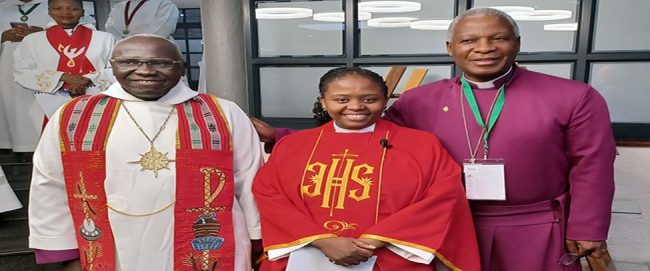
Take, for instance, the Church of England’s acceptance of women priests. This decision was driven in large part by the evolving legal and social norms of the United Kingdom. It was inevitable that the push for gender equality that transformed the British society over the past century must influence the Church because it is the Church of England. To reject the ordination of women would have put the Church of England in direct conflict with the laws and values of the society it serves. With time, the Church conceded that there was no Scriptural barrier to women serving in holy orders, and today women serve not only as priests but also as bishops.
This development was not perceived in the same way in many African and Asian provinces. In Nigeria, for instance, the ordination of women remains a highly contentious issue, even as I write this. While some dioceses permitted it as in the case of Bishop Haruna of Kwara State who ordained female priests whose responsibility was later reduced to the same level as deaconesses, many others resisted it strongly, citing both cultural values and Scriptural interpretations. As things stand now, it has become obvious that this lack of consensus will reflect the broader challenge the Church will face in the long run, of balancing local realities with the global Anglican identity.
The Episcopal Church in the United States, which is part of the worldwide Anglican Communion, first made the historic decision to allow same-sex marriages within its parishes and to ordain openly gay clergy. This decision was consistent with the broader political and social climate in America, where same-sex marriage is protected under the Federal law. Yet, it provoked outrage in many other parts of the Anglican world. In Nigeria, for example, same-sex relationships are not only frowned upon but are criminalized, with penalties as severe as 14 years in prison for those who engage in them. In such a context, the idea of blessing a same-sex union or ordaining a gay priest is unimaginable. For Nigerian Anglicans, it is not merely a matter of theology but of legal and cultural survival. The Church must obey the laws of the land or risk violating the laws and facing litigation. This sharp contrast between the permissive laws of the West and the prohibitive laws of Africa and Asia lies at the heart of the present crisis.
The dilemma, therefore, is clear. In some parts of the world, the Church is legally bound to accept what other parts of the world are legally bound to reject. In Britain, refusal to marry same-sex couples could expose the Church to litigation under anti-discrimination laws. In Nigeria, performing such a marriage could expose the Church to criminal prosecution. So, crucially, the Church is caught between conflicting legal imperatives, both of which are rooted in the political structures of their respective societies. To insist on uniformity across the global Communion, therefore, is to risk irreparable schism. To allow for diversity of practice, in any case, is to acknowledge that the Church can no longer speak with one voice on issues of gender and sexuality. This is also the dilemma of the Anglican Communion.
It is tempting in situations like this to give up hope, to conclude that the Communion has reached the end of the road, and to allow the frictions to harden into permanent fractures. Some Anglicans in Africa and Asia have already taken steps in that direction, forming breakaway fellowships or refusing to participate in gatherings hosted by the Church of England at Lambeth Palace. But such reactions, while understandable, fail to recognize the deeper calling of the Church. The Church is not merely a human institution subject to political winds. It is, in Christian belief, the body of Christ, called to unity and perseverance. To break apart because of political exigencies is to act like sheep without a shepherd, to surrender to despair like those who have no hope. The true challenge before the Anglican Communion is not how to avoid division at all costs, but how to turn the very sources of division into opportunities for growth, resilience, and renewed faith. The present crisis is not the first time the Church has faced division. Throughout its history, the Church has been torn apart by doctrinal disputes, cultural differences, and political pressures. The Great Schism of 1054 divided Eastern Orthodoxy from Western Catholicism. The Protestant Reformation of the 16th century fractured the Western Church into innumerable denominations. Even within Anglicanism itself, there have been longstanding tensions between Evangelicals, Anglo-Catholics, and broad Church adherents. Yet, in every age, the Church has found ways to adapt, to survive, and to continue its mission. Why should our generation be any different? If there is anything to go by, the global nature of the Anglican Communion, spanning cultures and continents, gives it a unique opportunity to model a new form of unity, one that is not based on uniformity, but on mutual respect, patience, and a shared commitment to the Gospel of Christ.
The ordination of women and the acceptance of gay clergy are not merely abstract issues; they touch the deepest questions of human identity, dignity, and morality. Different societies will inevitably answer these questions differently, shaped by their histories, cultures, and legal systems. The Church of England, operating within a liberal democracy that prizes individual rights, has chosen one path. The Church of Nigeria, operating within a conservative society that criminalizes homosexuality, has chosen another. Neither Church can simply adopt the practices of the other without betraying its own context. The solution, therefore, cannot be to impose one model on all. Instead, the Anglican Communion must embrace a model of pluralism, acknowledging that the gospel can take different forms in different lands, without insisting that one expression is the only authentic one.
This will not be easy. It will require humility from both sides. Those in the West must resist the temptation to see African or Asian Churches as backward or intolerant. They must recognize that their brothers and sisters in the Global South are constrained by laws and cultures beyond their control. At the same time, those in the Global South must resist the temptation to see the West as apostate or corrupt. They must recognize that their brothers and sisters in the West are striving to be faithful within their own legal and cultural frameworks. Both sides must understand that they are united not by political ideologies but by a common faith in Christ.
That faith, if genuine, should be strong enough to withstand the storms of political impositions by embracing the spirit Christ exhibited when he communed with sinners. Indeed, one might argue that the present crisis is a test of the Church’s authenticity. If the Communion can survive this moment, it will demonstrate to the world that the body of Christ is not just another human institution doomed to fracture under pressure. It will show that the Church is capable of transcending cultural and political boundaries, of holding together in love despite profound differences. Such a witness would be invaluable in a world that is becoming increasingly divided by nationalism, ideology, and identity politics. It would prove that unity does not require uniformity, and that love can indeed cover a multitude of nonconformist tendencies.
The path forward, then, is not to break the Communion but to strengthen it. This will require deliberate efforts at dialogue, reconciliation, and mutual understanding. The Lambeth Conference, the decennial gathering of Anglican bishops, must now be more than a forum for airing grievances. It must become a space for honest engagement, where bishops can speak candidly about their contexts and listen humbly to others. Provinces must be given the freedom to chart their own course on issues of gender and sexuality, while still remaining in Communion with one another. And above all, the Church must keep its eyes fixed on its primary mission: to proclaim the gospel, to serve the poor, to seek justice, and to bear witness to the kingdom of God.
In practical terms, this means that the Church of England should be allowed to continue its path of inclusivity without demanding that Nigeria or Uganda follow suit. It means that the Church of Nigeria should be allowed to maintain its traditional stance without being treated as a pariah. It means recognizing and taking into account the fact that the authority of the Church is always subject to the authority of the State, and that political exigencies will continue to shape the Church’s practice. But more importantly, it also means refusing to let those exigencies define the Church’s identity. The Church must be more than a mirror of its society: it must be a light to the nations, a city set on a hill, a sign of hope in a divided world.
The dilemma of the Anglican Communion is real, but it is not insurmountable. It is, in fact, an opportunity for the Church to rediscover its true calling. The world is watching to see whether Anglicans will allow themselves to be broken by political pressures, or whether they will rise above them with resilience and faith. The decision of the authorities will determine not only the future of Anglicanism but also the credibility of the Christian witness in our time. Let the Communion, therefore, not give up like those who have no hope. Let it not scatter like sheep without a shepherd. It should, instead, devise ways to remain together, to strengthen its bonds, and to show the world that even in the face of profound disagreement, the love of Christ can still hold us fast. Just as the new Archbishop of Canterbury noted in her first speech after her appointment: “If you want to go fast, you go alone. But if you want to go far, you go together.” Anglicans worldwide can see some light in those words of wisdom. And decide which way to go.
Chief Sir Asinugo, PhD., M.A., KSC writes from the UK