
Otti urges traditional rulers to prioritise justice, fairness in leadership

By Ihechinyere Chigemeri-Uwom
Umuahia
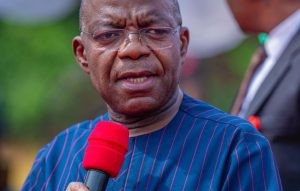
Gov. Alex Otti of Abia has urged traditional rulers to uphold justice and fairness in their leadership roles, describing power as a divine gift that must not be abused.
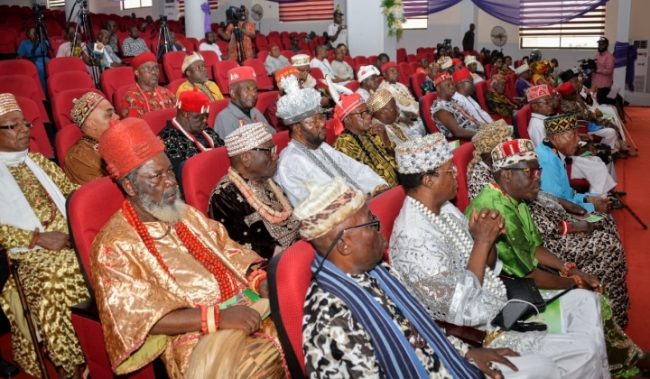
Otti said this on Friday during the opening ceremony of the South-East Traditional Rulers Council meeting which also had in attendance the leadership of their South-South counterparts, in Umuahia.
The governor said that leadership opportunities were bestowed by God and should be exercised with a deep sense of responsibility, stressing that justice remained the cornerstone of good governance.
“Power belongs to God, so anytime you are given the opportunity to lead people, it is a gift from God, and you should not disappoint Him,” he said.
Otti described justice as fairness, equity and righteousness, urging those in positions of authority, especially traditional rulers, to dispense it without bias.
He warned against allowing personal interests to influence decision-making, noting that justice is compromised when leaders take sides in resolving disputes.
Otti cited the appointment of the Abia Head of Service, who hails from the South-South region as an example of fairness and inclusiveness in governance.
He dismissed criticisms over the official’s state of origin, insisting that residency, contribution and merit should take precedence over ethnic considerations.
“This is an example of justice and we must rise above artificial differences created by politics and ensure fairness for all,” he said.
The governor noted that traditional rulers were in a unique position to promote justice, as their roles were not subject to electoral tenures and allowed for sustained influence in their communities.
Otti also called for unity among stakeholders and leaders in the South-East, urging them to work collaboratively for regional development.
He said that “if you want to go fast, go alone; but if you want to go far, go together”, a testament of the need for collective action.
He said that contrary to public perception, governors in the region maintained cordial working relationships, though their priorities might differ based on the specific needs of their states.
The governor explained that development strategies varied across states due to historical and infrastructural differences, cautioning against unfair comparisons among leaders.
He said his administration prioritised road infrastructure upon assumption of office due to existing deficits, and had since expanded focus to healthcare and education.
Otti expressed appreciation to stakeholders for their support and commended organisers for choosing Abia to host the meeting.
In his speech, the Chairman of the South-East Traditional Rulers Council, Eze Emmanuel Okeke, said that the occasion was to serve as an opportunity for traditional rulers to deliberate on issues.
Okeke also described the meeting as a platform for traditional rulers to evolve strategies that would contribute to increased development and security in the regions.
He commended the governor for the infrastructural development being witnessed across the state.
Okeke described the rebuilding agenda of the state government as a welcome development which had improved the welfare of the people of Abia and transformed the state.
In his speech, the Chairman of the South-South Traditional Rulers Council, Ohna Sergeant Awuse, called for stronger collaboration between the South-East and South-South regions to promote unity, peace, and sustainable development.
Awuse reaffirmed the commitment of traditional rulers to constituted authority and the unity of Nigeria, describing peace as “priceless” and essential for national progress.
According to him, traditional rulers must continue to work closely with governments at all levels to strengthen governance at the grassroots.
“Our roles are reinforced through recognition and collaboration with state governments,” he said.
Awuse stressed the need for unity between the two regions, noting that cooperation remained key to overcoming shared challenges and maximising opportunities for development.
He also underscored the importance of gratitude, urging communities to acknowledge government efforts, particularly in appointments and development initiatives that benefit the people.
Awuse further called on leaders in both regions to close ranks, support one another, and act collectively in the interest of national unity.
In his speech, the Chairman of Abia Traditional Rulers Council, Eze Linus Mba, described the gathering as an opportunity for deliberation on pressing challenges confronting the regions, particularly threats to cultural heritage and growing divisions among communities.
Mba said that issues such as land disputes, political tensions and competition over resources had contributed to instability and must be urgently addressed.
The traditional ruler urged his colleagues to uphold their roles as custodians of culture by promoting peace, unity, tolerance and hard work among their people.
He also called for stronger collaboration between traditional institutions and government in tackling security challenges, advocating for their integration into local security frameworks through dialogue and joint strategies.
Mba appreciated the participation of traditional rulers from the South-South, describing their presence as a show of solidarity.
He further appealed to the Federal Government to consider granting pardon to Nnamdi Kanu in the interest of peace and national unity.
Earlier, the Commissioner for Local Government and Chieftaincy Affairs, Chief Uzor Nwachukwu, described the Council as a critical platform for promoting unity, peace, and grassroots development.
Nwachukwu said the gathering went beyond a formal assembly, noting that it represented a convergence of wisdom, tradition, and collective responsibility among leaders who shape the direction of their communities.
He reaffirmed the importance of traditional institutions, describing them as the bedrock of grassroots governance even before the advent of modern administrative systems.
According to him, the values established by forefathers—consultation, justice, accountability, and communal progress—remain relevant in addressing contemporary challenges.
The commissioner commended the traditional rulers for their roles as custodians of culture, promoters of peace, and vital links between government and the people.
Nwachukwu identified security, youth development, and economic growth as key challenges requiring collective regional responses.
He noted that the traditional rulers provide veritable platforms for strengthening peace, promoting cultural values, and enhancing grassroots intelligence.
The commissioner assured that the government would continue to rely on the guidance and support of traditional rulers in implementing policies aimed at building peaceful, prosperous, and resilient communities.
He urged participants to be guided by wisdom, unity, and a commitment to peace in their deliberations.
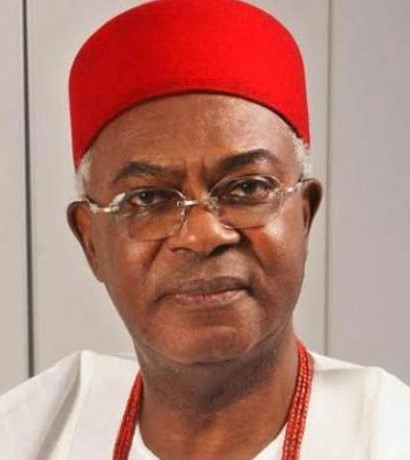
In an interview with newsmen, the Obi of Onitsha, Igwe Nnaemeka Achebe, noted that the issue of the release of the leader of the proscribed Indigenous People of Biafra, Mazi Nnamdi Kanu, had attracted both national and international attention.
Achebe said that with the widespread calls for Kanu’s release, the next step should be decisive action by the Federal Government.
“There have been several calls for the release of Nnamdi Kanu, and I believe the whole world has heard about it.
“What we expect now is action from the government through discussion and negotiation,” he said.
On maintaining security in the region, Achebe emphasised that the responsibility of traditional rulers focuses on ensuring the safety and development of their various communities.
“The traditional ruler is to lead his people in security, development and culture. That is my role in Onitsha,” he said.
He explained that his domain, Onitsha, operates a coordinated security framework involving local vigilante groups in collaboration with the police.
“We have our security apparatus, including the state vigilante service and the Onitsha Indigenous Vigilante Service.
“We work together with security agencies to keep our communities safe and that is my primary role,” Achebe added.
He stressed that all traditional rulers must uphold similar standards, warning that failure to discharge their duties should attract consequences.
“Anyone who fails in their responsibility, whether a commissioner or a traditional ruler, should face the repercussions,” Achebe said.