

turnpot@gmail.com 0807 552 5533, 0803 251 0193
Prussian war strategist, Carl von Clausewitz, defines war as the continuation of politics by other means. In other words, when diplomacy fails, nations resort to war to achieve the same objectives they had set out to achieve with diplomacy. Thus, war is not an end in itself but a means to an end. And like Niccolo Machiavelli posits in his political treatise, The Prince, the end justifies the means. Once the end or objective is achieved, then, the loss, destruction, dislocation, and terrible suffering that war brings become justified.
Three quick take-aways from Clausewitz’s treatise are that war is a very serious business which is not levied for flimsy reasons. Two: War is the last resort after and only after diplomacy has failed. Three: What determines the success of war is, if the same set goals or objectives which diplomacy had failed to achieve are now achieved by war. It is then that the efforts invested in the war by the protagonist(s) will be worth the while.
The loser also learns the useful lesson of the need to bend over backward at the point of diplomacy to avoid war; for, why be intransigent at negotiations only to eventually lose everything and accept the same or even more crippling conditions than those hitherto rejected? The examples of the powers that lost out in the 1st and 2nd World Wars and the crippling conditions imposed on them after the loss bears repeating here.
To what extent does Clausewitz’s treatise apply to the just-concluded tripartite war (with proxies throwing in jabs from the sidelines!) between the United States of America, the State of Israel and the Islamic Republic of Iran? In war, says the ancient Greek tragic dramatist, Aeschylus, the first casualty is truth; meaning that truth is not only deliberately concealed but its concealment is elevated to the high art of state policy, with vicious penalties for dissenters.
Honest reporting of events is not only forbidden but is also treated as crime committed against the State, its national interests, and survival. Death penalty for offenders has often and routinely been resorted to, especially by totalitarian or dictatorial regimes. Thus, propaganda, misinformation, disinformation and the brazen distortion of facts become official state policy. The media is heavily censored. Even in so-called democracies, rulers acquire emergency powers which enable them to suppress fundamental human rights and ride roughshod over the will of the same people they claim to represent.
The US-Israel-Iran war was not different. A lot happened which were not only shielded from the public but were also disfigured and distorted. Therefore, our knowledge of what happened pre-war, during the war and after it is limited to what we were allowed to know.
We heard that the US and Iran had started negotiations and were just a few hours away from reaching an agreement when the US made a volte-face and, jointly with Israel, launched a barrage of missiles on the Islamic republic. The US and Israel were the first to attack; under international law and conventions, they were the aggressors. When Iran responded in kind, it acted legitimately in self defence, which is permitted under international law and conventions.
Why did the US and Israel attack when negotiations were not only ongoing but were said to be proceeding smoothly and a positive end was in sight? One argument is that neither the US nor Israel trusted the Iranians to honour any agreement reached. In other words, they saw Iran as merely playing games to ward off an attack, after which it would go back on whatever agreement was reached by the parties.
A counter argument, however, is that both the US and Israel had made up their mind a long time ago and were fixated on the attack, come what may. They had prepared and were armed to the teeth. But Iran chose to take the wind off the sail of its opponents by cooperating during negotiations, to the chagrin, embarrassment and frustration of both the US and Israel. To allow negotiations to proceed and conclude on a positive note would further make the preconceived positions of the US and Israel more untenable.
Clausewitz’s treatise that war is launched only after diplomacy has failed thus fell flat on its face. Not only has diplomacy not failed here, it was, in fact, succeeding when the US and Israel aborted it and levied war on Iran.
Now, what were the publicly-stated goals or objectives (apart from hidden goals) that the US and Israel sought to achieve with their attack on Iran? One is not just to disrupt or postpone but to completely destroy Iran’s nuclear programme. The US and Israel accuse Iran of seeking to produce nuclear weapons; Iran denies this, stating that its nuclear programme is for peaceful means. The US and Israel, which are both nuclear powers, disbelieve this.
Iran has refused to recognize the State of Israel, unlike some other Arab and Middle East countries. The fear of Israel is that Iran’s nuclear weapons programme is an existential threat while the US reasons that a nuclear-power Iran will distort and disrupt the balance of power equations it has adroitly erected and gingerly maintained in the region for its own continued hegemony.
Another reason not officially stated is that the US eyes Iran’s vast oil resources. After the success of its Venezuelan invasion, the argument in some American quarters is that if the US could also “capture” Iran, it would automatically control over 30 percent of the entire world’s oil reserves. Not only that, with Iran beholden to both Russia and China, which are superpower rivals of the US, dragging Iran into the US orbit would be a huge blow on both China and Russia, which will not only deny them access to Iran’s vital resources but will, after the loss of Venezuela, also mean the loss of another strategic ally.
Thus, regime change in Iran became a very key component of the US agenda. Iran would be attacked; its leadership would be exterminated, a mass uprising against whatever remains of the Islamic regime will unfold and the US will move in not only to install a pliant regime beholden to the US but also one that is permanently crippled and would be unable to pose an existential threat to Israel or any of it neighbours that operate within the US orbit.
The above are goals, stated and unstated, that the US and Israel must have reckoned could not be totally achieved through diplomacy. Only a decimated and conquered Iran will afford them the opportunity to ride roughshod over the Islamic Republic; hence war.
Now, how far have the US and Israel achieved their goals? From video and other pictorial evidence, both the US and Israel substantially destroyed Iranian military and civilian facilities. They virtually wiped out the Iranian leadership, including its leader, Ayatollah Ali Khamenei, as well as scores of its military officers and top scientists, and thousands of other Iranian citizens, hundreds of them school children.
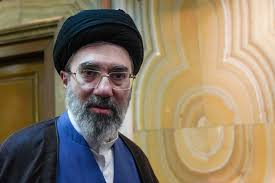
But whereas Khamenei was killed and regime change effected, it was not along the line envisaged by the US. Khamenei has been succeeded by his son. The Iranian regime remains fully in charge of the country. The public uproar expected from the Iranian population has failed to materialize; instead, the war appears to have solidified majority of Iranians behind their leaders, who were now afforded the opportunity to bear down heavily on dissenters.
The US claimed to have destroyed Iran’s nuclear capability, but it turned out it has only buried the enriched uranium fuselages and will now need to put thousand of boots on ground in Iran to get to where those fuselages are buried deep under the ground, excavate and ship them to the US. What a tall order! The US also claims to have decapitated Iran’s military, yet the same Iran was able to attack locations within Israel, inflicting damages that the media was not allowed to fully report, as well as attacking US military bases and allies in the region.
But, perhaps, the most intriguing aspect is the US report that it has destroyed the Iranian navy; that it no longer possesses the capability to threaten, adding that the US would keep the Strait of Hormuz safe for ships to pass through and ensure that 20 percent of the world’s crude oil and gas trade that pass through the strait would go on uninterrupted. Not only is Iran still strong enough to close the strait; not only has the US been unable to stop it from doing so; the US’s NATO allies have also declined President Donald Trump’s call for help!
As Iran and the US return to the negotiation table in Pakistan, what ails the entire world is no longer the exchange of missiles by the combatants but Iran’s effective closure and control of the Strait of Hormuz, which the US appears to have tacitly acquiesce to with Trump’s diplomatic language of referring to the strait as “joint venture” between the US and Iran! What does that mean – defeat, acquiesce or what? Did the US and Israel achieve the goals for which they levied war on Iran or did they only succeed in opening Pandora’s box?
* Former editor of PUNCH newspapers, Chairman of its Editorial Board and Deputy Editor-in-chief, BOLAWOLE was also the Managing Director/Editor-in-chief of The Westerner news magazine. He writes the ON THE LORD’S DAY column in the Sunday Tribune and TREASURES column in New Telegraph newspaper on Wednesdays. He is also a public affairs analyst on radio and television.