
CBN, Financial Markets’ Association announce Nigerian Overnight Financing Rate as new money market benchmark

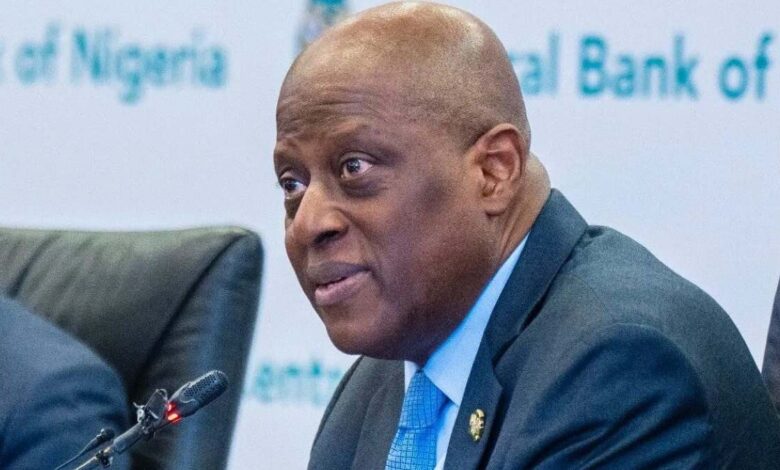
The Central Bank of Nigeria (CBN), in collaboration with the Financial Markets Dealers Association (FMDA), Friday announced the introduction of the Nigerian Overnight Financing Rate (NOFR), a standardized benchmark aimed at enhancing transparency, strengthening monetary policy transmission, and deepening Nigeria’s money market.
NOFR, according to a statement by Hakama Sidi Ali (Mrs.) Ag. Director, Corporate Communications, CBN, was developed to align Nigeria with global best practices in short-term interest rate benchmarks. It is expected to improve price discovery and transparency while promoting consistent pricing of money market instruments. It will enhance the effectiveness of monetary policy, support financial innovation, boost investor confidence, and strengthen risk management across the financial system.
The introduction of NOFR positions Nigeria alongside leading global benchmarks such as SOFR (United States), SONIA (United Kingdom), €STR (Eurozone), and TONA (Japan). It also complements African benchmarks such as JIBAR (South Africa).
Following a stakeholder engagement session held on February 27, 2026, where market participants formally adopted the benchmark, and subsequent regulatory approval, NOFR is now in use, with the CBN serving as the benchmark administrator.
The Bank will ensure governance, transparency, and regular publication of the rate.
Nigerian Overnight Financing Rate (NOFR)
Comprehensive Frequently Asked Questions (FAQs) For All Stakeholders
- General and Cross‑Market Questions
Q: What is the Nigerian Overnight Financing Rate (NOFR)?
A: NOFR is Nigeria’s official overnight risk‑free interest rate benchmark. It reflects the cost of overnight secured funding in the Nigerian interbank market and is based on actual market transactions, not estimates.
Q: Why is NOFR important?
A: NOFR promotes transparency, reliability, fair pricing of financial contracts, reduces manipulation risk, and aligns Nigeria with global benchmark reform practices.
Q: Who administers and publishes NOFR?
A: NOFR is administered and published by the Central Bank of Nigeria (CBN).
Q: How often is NOFR published?
A: NOFR is published daily at 10:00 a.m. Lagos time on the business day following the fixing day.
Q: Is NOFR a monetary policy rate?
A: No. NOFR is a market‑based reference rate and is distinct from CBN monetary policy rates such as the Monetary Policy Rate (MPR).
- Questions for Banks and Financial Institutions
Q: Which transactions are eligible for NOFR calculation?
A: Eligible transactions are NGN‑denominated overnight secured repo transactions executed on the fixing day, reported by eligible banks, and with a minimum size of NGN 5 billion.
Q: How is NOFR calculated?
A: NOFR is calculated as a volume‑weighted trimmed mean. The lowest 10 percent and highest 10 percent of transaction volumes are excluded, and the remaining rates are averaged.
Q: What happens if transaction data is insufficient?
A: Where eligible transaction data is insufficient, NOFR equals the previous business day’s rate and this outcome is clearly disclosed at publication.
- Questions for Corporates and Businesses
Q: Does NOFR affect corporate loans?
A: Yes. Certain corporate, structured, or syndicated loans may reference NOFR directly or indirectly.
Q: Will NOFR determine corporate borrowing costs?
A: No. NOFR improves transparency but does not determine loan margins or total borrowing costs, which depend on credit risk, tenor, and contractual terms.
- Questions for Investors
Q: How is NOFR used in financial markets?
A: NOFR may be used for pricing, valuation, discounting, and risk management of NGN‑denominated instruments.
Q: Is NOFR aligned with global best practices?
A: Yes. NOFR is comparable to SOFR (United States), SONIA (United Kingdom), and €STR (Euro Area).
- Questions for Retail Customers
Q: Does NOFR set savings or consumer loan rates?
A: No. Retail interest rates are determined by banks using multiple factors such as funding costs, operating expenses, and credit risk.
Q: How do customers benefit from NOFR?
A: Retail customers benefit indirectly through greater transparency, improved benchmark credibility, and increased confidence in the financial system.
F. Governance and Oversight
Q: Can NOFR be corrected after publication?
A: Corrections are made only in exceptional cases of material error of 5 basis points or more, and any correction is clearly labelled and disclosed.
Q: How often is the NOFR methodology reviewed?
A: The NOFR methodology is reviewed at least once a year by the Central Bank of Nigeria.
Key Takeaway
NOFR strengthens transparency, fairness, and stability in Nigeria’s financial system while
aligning domestic markets with global benchmark standards.