
Union Bank advocates inclusivity, female empowerment at 2024 International Women’s Day event

Lagos, NIGERIA
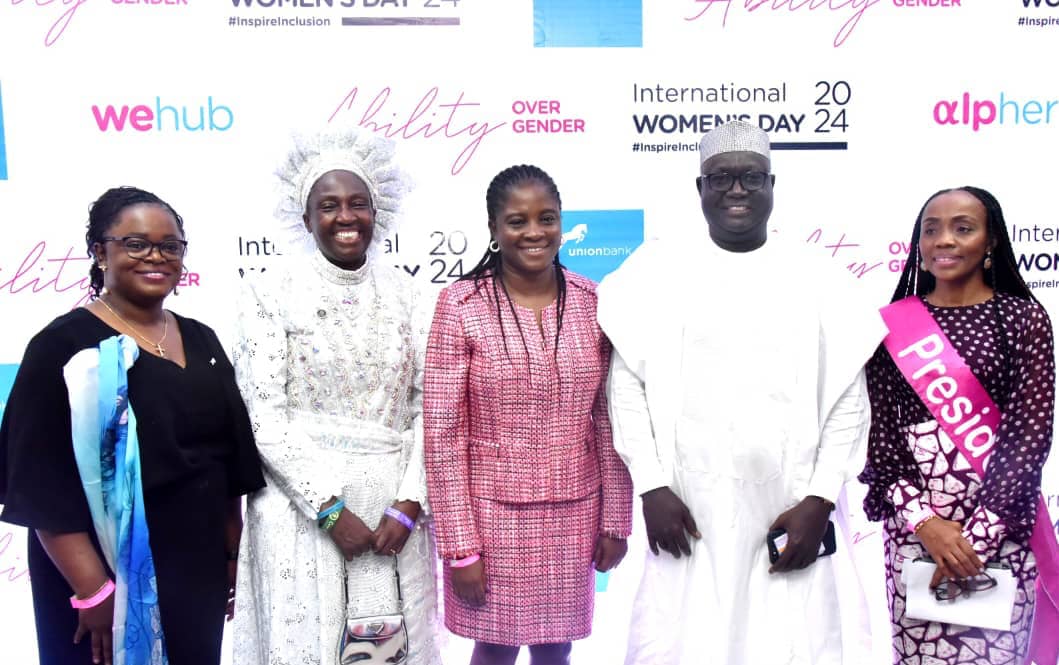
Union Bank of Nigeria has re-emphasised its advocacy for an equitable and inclusive society devoid of biases, stereotypes, and discrimination. This assertion was recently made at a special event hosted by the Bank to commemorate this year’s International Women’s Day celebration under the global theme #InspireInclusion.
Tagged Ability Over Gender, the occasion provided the Bank with another unique opportunity to showcase its commitment to gender inclusivity and promotion of female excellence and competence across different fields of endeavour.
The event highlighted a keynote address by Union Bank’s new CEO, Yetunde B. Oni, who reiterated the financial institution’s commitment to continually champion the cause of women’s advancement and other underrepresented communities while pushing for their inclusion and recognition in otherwise closed-off spaces.
A special panel session moderated by Chioma Nwokike, Head of Retail Segments and αlpher, followed soon after the keynote address. The panellists included Chinasa Collins-Ogbuo, Advocacy & Communications Lead at EFInA (Enhancing Financial Innovation & Access); Dr. Zahra Modibbo, Managing Partner, Débbo Africa; Olajumoke Daramola, Specialist Advisory Services Africa, Women’s World Banking; and Esohe Adetola, Learning Solutions Manager at Shell Nigeria, who lent their voices on how to change the narrative around inclusion and truly create an environment that enables women to truly thrive and excel ‘Because She Can’.
Speaking at the sidelines of the event, Olufunmilola Aluko, Chief Brand & Marketing Officer at Union Bank, said
“Union Bank, at its core, stands for equal representation and acknowledgement of the incredible skills and ability women bring to the table notwithstanding the industry or enterprise they engage in. The message behind this year’s theme is a call for everyone to strive for a fair, equitable world where individuals are judged and assessed on the depth of their capability rather than their biological makeup.”