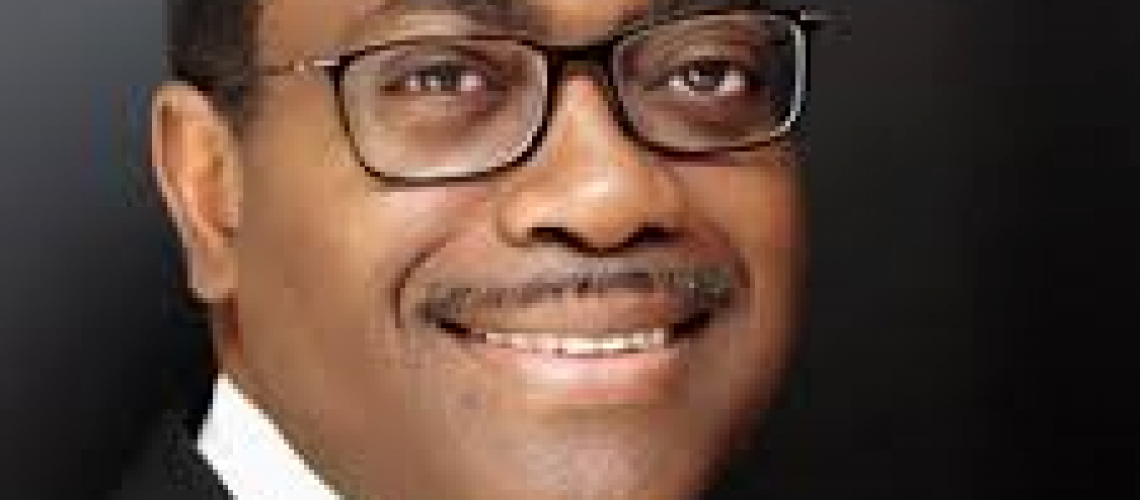
Let us celebrate Alhaji Tanko Yakasai at 100 By Emeka Asinugo
There are indeed only a few Nigerians whose lives reflect in equal measure as that of Alhaji Tank Yakassai, Nigeria’s modern journey from colonial experience, through independence and civil war, to the dreams and challenges of democratic governance. As Alhaji Tanko Yakasai lives a full century, his story stands out distinctly as a living chronicle of Nigeria’s aspirations, struggles, and enduring hope in justice, democracy, and good governance.
Born on December 5, 1925 in the old Kofar Mata quarters of Kano City at the time Nigeria was under colonial rule, Yakasai’s early life unfolded in a context of deep inequality and discrimination. That background shaped his moral compass and political resolve. From a young age, confronted by social injustice under foreign rule, he decided that his voice must join the growing chorus for liberation and equality. As a youthful activist, journalist and political agitator, he aligned himself with forces that rejected oppression. His commitment to emancipation was clear, and the years ahead would prove that commitment unshakeable. Yakasai’s first major political engagement came through the Northern Elements Progressive Union — NEPU. The Union was then one of the most courageous proponents of social justice and political awakening in Northern Nigeria. Through NEPU, Yakasai raised awareness among ordinary people, pressing for fairness, inclusivity, and political rights for all. That grassroots mobilization helped to awaken the political consciousness of a region mostly neglected under colonial policy.
As Nigeria approached and achieved independence in 1960, Yakasai remained committed to the vision of a just, unified nation. His early activism matured into public service. Over the decades, he held various important positions, among them, State Commissioner in Kano, during the administration of then-Military Governor Audu Bako. In that capacity, Yakasai helped to shape policies at a pivotal time in Nigeria’s post-independence governance. In the Second Republic, when democratic governance returned under Alhaji Shehu Shagari, Yakasai served as Special Assistant on National Assembly Liaison, bridging the executive and legislative branches at a time democratic institutions were still fragile and evolving. In that role, he contributed to efforts to strengthen parliamentary practice and the rule of law, to give voice to the citizenry through representative government.
But Yakasai’s journey was far from being described as easy. When military rule returned after the 1983 coup by General Muhammad Buhari, that toppled President Shagari, he was arrested and detained at Kirikiri Maximum Security Prison without trial with many others. That experience underlined the dangers faced by those who stood for democracy, even in times of repression. He was eventually released, but the political climate remained fraught with challenges. His activism and advocacy continued under successive regimes, sometimes in challenging circumstances. Through it all, his voice persisted, not always loud, but always principled. Over time, he evolved into one of the nation’s leading “elder statesmen,” widely regarded as a moral compass and a voice of reason capable of bridging divides.
With democracy restored during Nigeria’s Fourth Republic, Yakasai helped shape the socio-political conversation in new ways. He was a founding member of the Arewa Consultative Forum (ACF), an influential northern socio-political advocacy group. Through ACF, he worked to ensure that the voices of the North remained part of national dialogue, always advocating for unity, fairness, and inclusion rather than division or sectionalism.
Despite stepping back from active partisan politics in recent years as he himself has clarified, Yakasai has remained intellectually and morally engaged. At 99, he spoke about his hopes for Nigeria: unity, good governance, accountability, fair opportunities, and justice for all citizens. He expressed his desire to see Nigeria grow in inclusive democracy, and urged political leaders to uphold transparency and fairness in all they do.
Now, as he turns 100, the anniversary is not simply a personal milestone, it is a national celebration. His age is not just a number, it is a symbol: a century of lived experience through colonialism, independence, military rule, political turbulence, and democratic rebirth. The accolade is not only for longevity, but for steadfast devotion to ideals that have shaped and continue to shape Nigeria’s political trajectory. The Northern Senators Forum (NSF) has already given him a well-deserved honour for a lifetime of service. Even the Presidency paused to salute him.
On his centennial birthday, President Bola Tinubu personally paid tribute to him, describing Yakasai as “the last man standing” among the early freedom fighters, and extolling his century-long commitment to freedom, democracy, and national unity.
But what does Yakasai’s life teach us as a people, and as a nation? First, that democracy and justice are not the achievements of a single generation but the labor of many across decades. His activism in the 1940s–1950s planted seeds of political consciousness in Northern Nigeria, when fear, ignorance and colonial repression stifled voices. His decades in public service, through military and civilian regimes, remind us that governance demands integrity, resilience, and faith in the common good. His current role as an elder statesman, refusing to chase partisan gain and advocating unity and fairness shows that even at 100 years, one can remain committed to national purpose above narrow interest.
Second, Yakasai’s life underscores the importance of inclusive national unity. In a country often divided along regional, ethnic and religious lines, he has stood for cohesion, justice and equitable representation. Through his involvement with NEPU, ACF and public service roles, he worked to bring northerners and southerners, Christians and Muslims, the marginalized and the privileged into a shared conversation about governance, rights and citizenship.
Third, his century-long voice continues to bridge generations. From those who remember colonial oppression, to those who came of age after independence, to today’s youth facing new challenges, Yakasai links the past, present, and future. His experiences, his memory, and his counsel offer a rare continuity in a nation too often fragmented by short attention spans, quick political swings, and forgotten history. By living through so many of Nigeria’s defining moments and by refusing to bow out of the public conversation, he remains a repository of collective memory and a moral compass for younger leaders.
As we celebrate Alhaji Tanko Yakasai at 100, we are not celebrating just his age. We are celebrating a well-lived life dedicated to the liberation, unity, justice and democratic aspirations of Nigeria. We are celebrating a man who, over a century, never lost faith in his country. And perhaps above all, we are celebrating the idea that good governance, justice and democracy are not abstract ideals, they are the labour of everyday people, generation after generation, sustained by courage, conscience and unshakable hope.
We will continue to pray to Almighty Allah that his years after 100 be blessed with robust health and peace of mind and may his example continue to inspire those who still struggle for a New Nigeria that is worthy of his sacrifices.
Chief Sir Asinugo, PhD., M.A., KSC, is a veteran journalist