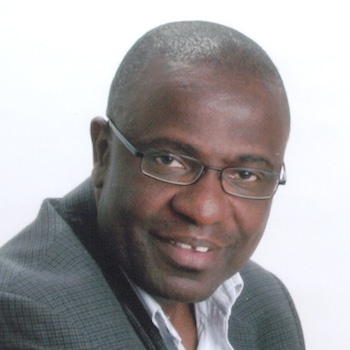
What govt borrowings are used for – DMO DG Oniha; Says public debt now N39trn


By Kadiri Abdulrahman
Abuja, March 17, 2022
The Debt Management Office (DMO), says the country’s increasing debt profile is mainly used to finance Capital Projects and Human Capital Development.
The Director-General of DMO, Patience Oniha said this on Thursday in Abuja, while giving an update of the country’s debt profile.
Oniha, who said that Nigeria’s public debt as at December, 2021 is N39.55 trillion, said that the various social challenges in the country, as well as global occurrences had also increased the country’s debt.
“Borrowings are essentially for Capital Expenditure and Human Capital Development as specified in the Fiscal Responsibility Act 2007.
“Having witnessed two economic recessions, we have had to spend our ways out of recession, which contributed significantly to the growth in the public debt.
“It is unlikely that our recovery from each of the two recessions would have been as fast without the sustained government expenditure funded partly by debt,’’ she said.
According to her, the insecurity situation has also resulted to increased borrowings.
“To compound matters, the country has technically been at war with the pervasive security challenges across the nation.
“This has necessitated massive expenditures on security equipment and operations, contributing to the fiscal deficit. Defence and security sector accounts for 22 per cent of the 2021 budget,’’ she said.
Oniha said that the most viable solution to the country’s fiscal challenge was to grow sources of revenue and plug all leakages.
“We must, however, continue to rationalise our expenditure as we cannot afford waste.
“In reality, our largest expenditure items are currently personnel cost, debt service and capital expenditure, which between them account for 85 per cent of the 2022 budget.
“There is very little scope for cut in any of these over the medium term,’’ she said.
According to her, revenue generation remains the major fiscal constraint of the Federal Government.
“Systemic resource mobilisation problem was also compounded by the recent economic recessions.
“Several measures are being instituted under government’s Strategic Revenue Growth Initiatives to improve revenue and entrench fiscal prudence with emphasis on achieving value for money,’’ she said.
She, however, said that borrowing was not a bad thing as governments around the world borrow whenever they needed to.
The director-general said that borrowing for infrastructure development did not also imply that the government was creating a burden for the future generations as the infrastructure would eventually be inherited and utilised by that generation.
Oniha said further that the N39.55 trillion public debt of the country represented the total external and domestic debts of the Federal Government, 36 state governments as well as the Federal Capital Territory (FCT).
The News Agency of Nigeria (NAN) recalls that DMO had earlier revealed that the country’s debt stock as at September 2021, was N38 trillion.
She said that the increased public debt included new borrowings by both the Federal Government and state governments.
“For the Federal Government, it would be recalled that the 2021 Appropriation and Supplementary Acts included total new borrowings of N5.48 trillion
to part-finance the deficits.
“Borrowing for this purpose, and disbursements by multilateral and bilateral creditors account for a significant portion of the increase in the debt stock, ” she said.
Oniha said that the new borrowings were raised from diverse sources, which included issuance of Eurobonds, Sovereign Sukuk and Federal Government of Nigeria Bonds.
“These Capital raisings were utilised to finance capital projects and support economic recovery,’’ she said.
According to Oniha, the country’s debt situation is within reasonable limits.
She, however, said that the Federal Government had taken concrete steps to address revenue challenges which made servicing of the debts burdensome.
“With the total Public Debt-to-Gross Domestic Product ratio of 22.47 per cent, the debt ratio still remains within Nigeria’s self-imposed limit of 40 per cent.
“This ratio is prudent when compared to the 55 per cent limit advised by the World Bank and the International Monetary Fund (IMF) for countries in Nigeria’s peer group.
“The Federal Government is mindful of the relatively high Debt-to-Revenue ratio and has initiated various measures…. to increase revenue through the Strategic Revenue Growth Initiative and the introduction of Finance Acts since 2019,’’ she said.