
By Nefishetu Yakubu
Benin:
Some religious leaders in Nigeria have identified illiteracy as the bane of religious intolerance in the country.
The religious leaders spoke at a grassroot sensitisation programme on Freedom of Religion and Belief (FORB) in Nigeria in Benin on Friday.
The event was organised by the National Human Rights Commission (NHRC) for religious leaders from Edo, Ebonyi and Osun states.
It had The Kukah Center, Nasrul-lahi-l-Fathiu Society (NASFAT) and King Abdullah ibn Abdulaziz International Centre for Inter-Religious Dialogue as funding partners.
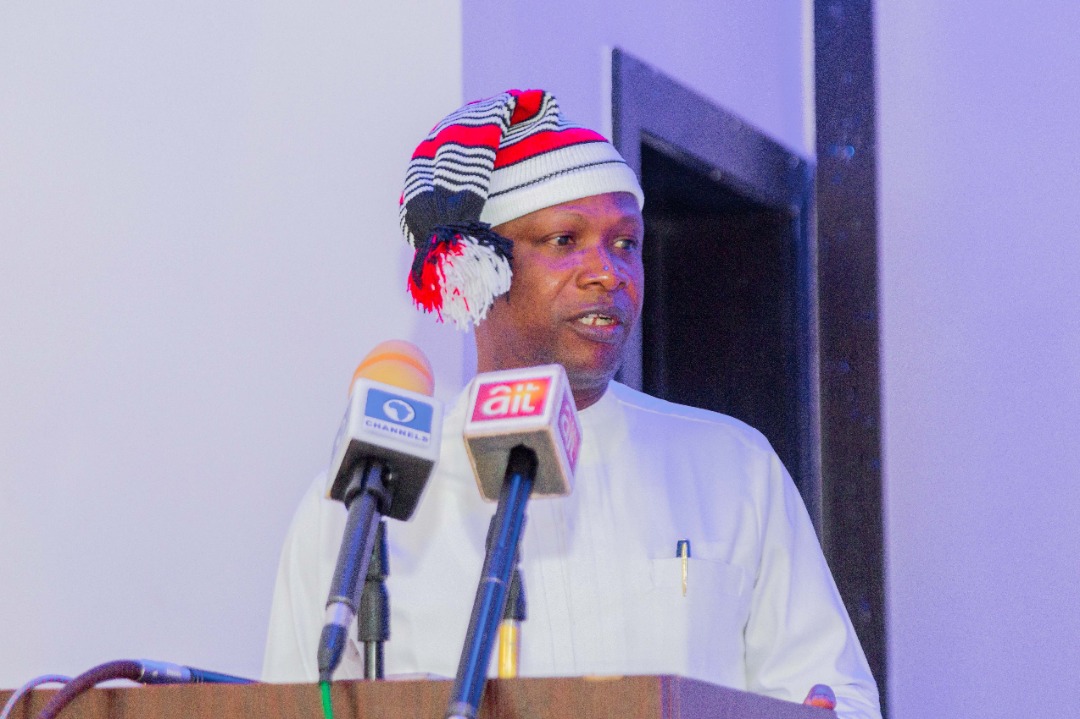
Speaking during a panel session, Gabriel Odom, of the Agape Foundation, Ebonyi, said that illiteracy was a significant factor responsible for religious intolerance.
Odom stated that many Nigerians lacked deep understanding of religion which had led to misconceptions and conflicts.
He further said that many Nigerians were only religiously inclined by identification or nomenclature, and not by practice.
“Many have taken to needless unhealthy rivalry. Also, economic hardship is fuelling religious intolerance.
“Poverty and lack of opportunities can drive people to seek solace in extremist ideologies.
“Political leaders have found a way to use religion as a tool to manipulate the people to maintain their status.
“So, Nigerians have become more religious than godly. They use religion to divide the people so that their insincerity will not be seen,” he stressed.
The clergyman said that education and awareness programmes would bridge the knowledge gap and foster mutual respect among diverse religious groups.
Alhaji Al-Ameen Alao, an Islamic Scholar, said that although it was good to promote religious tolerance, it should not lead to religious compromise.
Alao stated that respect for different beliefs should not attempt to dilute the core tenets of any religion.
He said that religious leaders should encourage dialogue and coexistence among people of different faiths.
“Political manipulation exacerbates religious intolerance. Politicians sometimes exploit religious sentiments to deepen divisions and gain power.
“Transparent governance and policies that promote inclusivity can mitigate these tensions and foster a more united society,” he said.
Earlier, the Project Coordinator, FORB, Hajia Halimat Oyedele, said that the project was aimed at strengthening religious harmony and coexistence by addressing the existing structural limitations.
She said that the project was also aimed at advocating policy change, and to promote social cohesion through existing laws.
“To prevent possible future violations, the project will also focus on spreading a culture of respect through targeted awareness campaigns on interreligious dialogue.
“This will increase the level of tolerance and promote peaceful coexistence among communities,” he said.
The Keynote Speaker, Mr. Nurudeen Asonigie, said that religious intolerance was a product of ignorance and fear, adding that “education, dialogue, and empathy are essential.”
The event was attended by Dr Adesoye Mustapha, NASFAT South-South Coordinator, Chief Imam of Benin, Alhaji Abdulfatai Enabulele, and Humphrey Iriabe, Director of Evangelism, Christian Association of Nigeria (CAN), Edo branch.