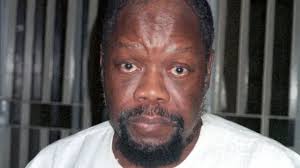
General Emeka Ojukwu breezed into the Green Eagles locker room to cheer them up before a game against Togo in Abidjan. That was in 1983, a year after he was granted Presidential pardon and the experience continues to thrill Paul Okoku.
The Eagles were pleasantly surprised to have in their midst a man they had heard so much about but knew quite little of, the warlord behind the long beards. Ojukwu had lived in exile as guest of President Felix Houphouet Boigny.
Okoku said: “The first time I met Ojukwu was in 1983 when we played against Togo in Cote d’Ivoire. Meeting with him was surreal. Growing up, the returning Igbo described Ojukwu in such mythical terms – saying his beard was so long, it touched the ground. That was exactly what I was expecting to see.”
Ojukwu was a perfect gentleman who did not wear the look of a warrior to scare the Eagles. He had played good rugby at Epson College, United Kingdom and even set a junior record in discus. At Lincoln College, Oxford, the General continued with the game and nearly earned a blue.
“I was struck by how different he was from that image”, Okoku continued. He was brought into our locker room, introduced to us and even took pictures with us. My God, what a moment that was. Unfortunately, someone stole those pictures before I even got to the United States.
“Onigbinde was our coach and Stephen Keshi served as captain. Mudashiru Lawal was also in the team and I vividly remember Onigbinde introducing Ojukwu to us in our locker room. It was a profound experience to meet someone so instrumental in shaping Nigerian History which cannot be told without mentioning Ojukwu’s role. I will never forget that moment – it was unexpected, humbling and deeply meaningful.”
The Ikemba enjoyed every minute he spent with the Eagles. He could speak Hausa and Igbo with Keshi, both were born in Northern Nigeria. Ojukwu was born in Zungeru, Keshi in Azare. The General could converse with Henry Nwosu in both Igbo and Yoruba.
Having moved to Epson College, from Kings College, Lagos, Ojukwu knew the exact Yoruba words to get the attention of Onigbinde, Muda, Ademola Adesina, Tarila Okoronwanta or Okoku. It did not matter that he was a Lagos Islander while some of the players grew up around the Mainland.
Rashidi Yekini was definitely at home with the August Visitor. Both could communicate in Hausa, having lived in Kaduna. The footballer was an automobile spray painter. The officer served in Third Battalion and his half sister, Esther, attended Kakuri Girls School. Ojukwu’s first daughter, Tenny Hamman, was at Queen Amina College.
Like Ojukwu, Bala Ali also spoke Hausa. Mama Eunice Ojukwu owned Jubilee Hotel, along Hospital Road, in the Sabon Gari area of Zaria. That was what the Ikemba left for Tenny in his Will. She grew up as Aisha Hamman, living with her step father, Alhaji Hamman Maiduguri, a retired Deputy Inspector General of Police. Her mother, Mary Theresa, converted to Islam and became Inna.
The Ghanaian duo of John Benson and Kingsley Paul, would have found the former Biafran leader interesting for he could say a few words in Akan. As a subaltern, Ojukwu taught at the military training school, Teshie.
One of Ojukwu’s students in Tactics and Military Law, was Murtala Mohammed. It was therefore remarkable that just before war broke out in 1967, Nigeria and Biafra tried to work out peace, at Peduase Lodge, Aburi. Ojukwu’s sister, Esther, was married to a Ghanaian, named Davies.
Unfortunately, Davies died in Zaria during the pogrom. He was killed at Jubilee Hotel. Ojukwu, after losing his brother in – law in Zaria, was bereaved again, during the war when Esther’s younger brother and his half brother, Tom Bigger, a pilot, died in an ambush around Nsukka fighting for Biafra.
Of the Eagles players, only Patrick Okala would have known Ojukwu, at least, fairly well. The goalkeeper was 10 years old when the Civil War broke out in 1967. His elder brother, Emmanuel, was a combatant and they lost a relation, Louis Chude Sokei.
Sokei was the first Biafran Chief of Air Staff. He bore the same first name as Sir Louis Odumegwu Ojukwu and was a Sandhurst course mate of Alphonsus Keshi, Brigade Major, 1 Brigade, Kaduna during the January 15, 1966 coup.
Sokei died on March 15, 1968 when shrapnel from a mortar shell, fired by Federal troops of the Second Division, led by Murtala, hit him at Afor Igwe Ochie Market, Ogidi. Two other senior Biafran officers, Cols Conrad Nwawo and Anthony Eze, were injured.
Okoku’s previous trip to Abidjan as a Flying Eagle, on the way to the Mexico 1983 FIFA Under 20 Championships, did not afford him the opportunity to see Ojukwu. The Nigerians were led by the Ikemba’s Nnewi brother, Chris Udemezue, who also spoke fluent Hausa.
The Flying Eagles, defeated their Ivorian counterparts to earn a place in Mexico. That turned out to be the first time a Nigerian team would hit the global stage in a FIFA tournament.
One prominent 1983 Flying Eagle was keeper Wilfred Agbonavbare who had to be flown from Benin after school certificate exams, to Mexico City. He was fit enough for the second game against Brazil, replacing Patrick Udoh, with scores at 3-0 against Nigeria.
Agbonavbare was also in the locker room when Ojukwu visited. It was against Togo that the Green Eagles were humiliated by the Hawks. Agbonavbare’s name changed to ‘Agbonabasket’ after that duel. He later returned to win African Nations Cup gold at Tunisia 1994.
First published in Saturday Vanguard