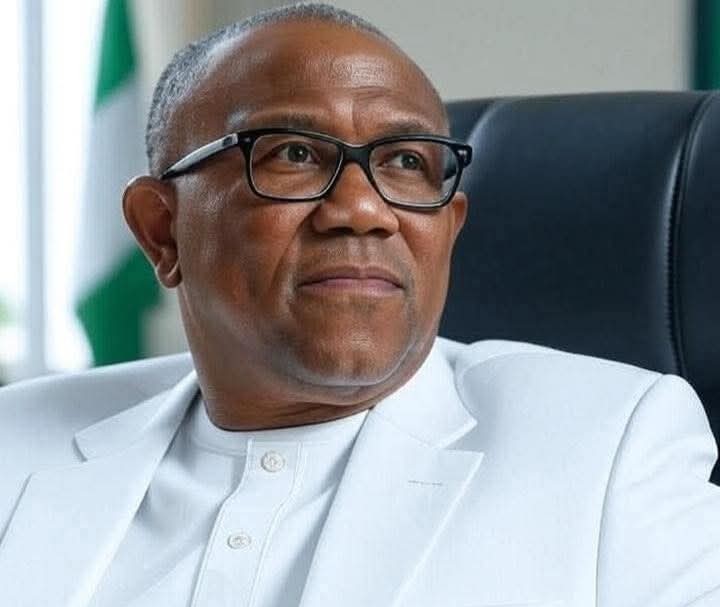
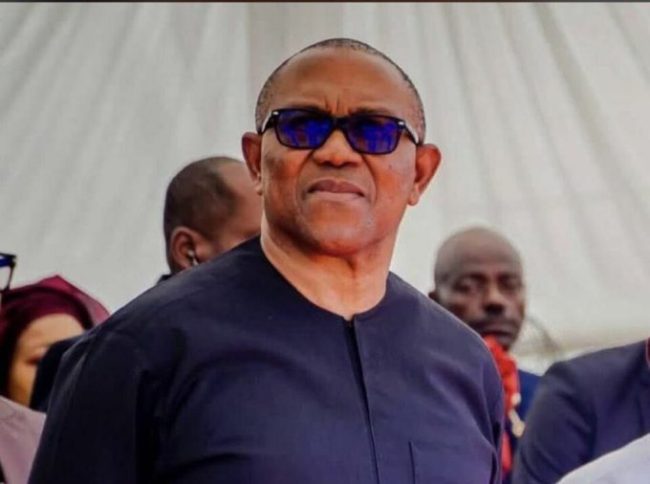
Peter Obi, former Governor of Anambra State and the Labour Party’s presidential candidate in the 2023 election, has continued to inspire intense debate in Nigeria’s socio-political discourse. But this time, manipulators of Nigeria’s democratic evolution are once again hard at work. They are attempting to derail the national conversation by introducing red herrings and irrelevant arguments designed to distract the masses from the central issues that matter most. One such recent ploy involved inundating the public space with discussion about whether Peter Obi was willing to serve only one term in office, like the example set by Nelson Mandela or some former American presidents. That was diversionary tactics, pure and simple. It was craftily designed to shift focus from the existential threats that are currently facing Nigeria as a nation. But trust Nigerians. They just won’t be fooled like that.
At a time like this in the country’s tortured history, the length of Obi’s potential presidential tenure is the least thing any real Nigerian would be bothered about because it is largely irrelevant. What matters to Nigerians is not whether their president serves for four or eight years. What they are desperate for is a government that is functional, responsive, accountable, and transformational. They want a leader who understands that the present system, defined by a constitution that was foisted upon the country by their military generals, is an albatross. This constitution was never a product of popular deliberation or democratic consensus. Rather, it was crafted to perpetuate the influence of military elites in the country long after they had ostensibly left the social stage. It still remains a foundational document riddled with contradictions and limitations that make meaningful development difficult to attain.
The truth is that a vast gulf exists between the bullet and the ballot. Therefore, the military, with its hierarchical structure, its command-and-control approach, and its preference for decrees, should not, by any stretch of the imagination, have reason to claim shepherding democracy in Nigeria. Democracy should be allowed to grow from its mistakes in order to evolve strong democratic institutions. Democracy thrives on consultation, consensus, open debate, and participatory governance. The Nigerian constitution, born of martial logic, still reflects the authoritarian instincts of its authors. As such, the call to radically overhaul the Nigerian constitution should be at the forefront of any serious political agenda. This is not a theoretical matter, it is a practical imperative if the country is to realize its full potential and take its rightful place on the African continent and in the comity of nations. Peter Obi, given the resonance of his ideas among Nigerian youths and working families, should be at the vanguard of this constitutional reawakening.
Nigerians are yearning for an electoral system they can trust. The Independent National Electoral Commission (INEC), rather than be an impartial arbiter of electoral fairness, has often been a tool in the hands of the ruling elite. Many Nigerians believe the 2023 elections were marred by irregularities and technical failures that betrayed their trust. Reforming INEC is not just about logistics or technology, it is about credibility, financial independence, and social integrity. A reformed INEC must be insulated from political interference and adequately equipped to discharge its duties with professionalism and transparency. This alone can restore faith in the democratic process and stem the tide of political apathy and cynicism that is sweeping across the land.
Closely related to this is the state of the Nigerian judiciary. Once revered as the last hope of the common man, the judiciary today is immensely struggling in the face of political manipulation, low morale, and allegations of corruption. For democracy to work, the rule of law must be supreme. And for the rule of law to be effective, the judiciary must be morally strong, financially independent, and committedly courageous. Nigerians are watching as court decisions are increasingly viewed through the lense of political loyalty rather than legal merit. This has deepened public distrust and has made a mockery of the very idea of justice in the country. Any serious reform agenda must therefore prioritize the redemption of the judiciary. It must be rescued from its current posture of sycophancy and restored to its rightful place as the guardian of the constitution and the protector of civil liberties.
Another major concern Nigerians expect Obi to deal with if he becomes the President in 2027 is the astronomically high cost of governance in Nigeria. The country continues to operate a bloated political structure that is not only unsustainable but immoral in a nation where millions live on less than one pound or N2,300 a day. The number of public officers who feed fat on the national treasury is staggering. Lavish convoys, redundant “special advisers”, and ostentatious public ceremonies have largely become the norm. Meanwhile, critical sectors such as health, education, and infrastructure are underfunded and neglected. Nigerians want a leaner government that prioritizes service delivery over self-enrichment. They want leaders who are sensitive to their plight and willing to make personal sacrifices in solidarity with the common people.
Population data is another area that has crippled effective planning and governance in Nigeria. The country has lacked credible census figures in the last two generations, making it difficult to allocate resources equitably or plan for growth. Every attempt at conducting a comprehensive population census has been politicized and marred by manipulation. Accurate population data is essential for everything from education and healthcare planning to infrastructural development and security operations. A serious presidential aspirant like Peter Obi must make it clear how his administration would conduct a credible, transparent, and universally accepted census. This will be foundational for evidence-based governance and development planning.
Beyond these structural issues, Nigerians are deeply concerned about basic necessities of life that are still largely unavailable to the majority. Safe drinking water remains a luxury in many parts of the country. Good roads are rare outside a few major cities, and even there, they are often riddled with potholes and poorly maintained. The public healthcare system is in shambles, leading to a situation where medical tourism, especially to India and the UK, has become the norm for those who can afford it. Affordable housing is non-existent for the average Nigerian, and the cost of rent in urban areas continues to soar beyond the reach of ordinary citizens. Meanwhile, Nigerian schools remain under-equipped, with poorly trained teachers and a curriculum that does not match the demands of the 21st century.
Above all, the question of security of life and property looms large over a nation where kidnapping, banditry, terrorism, and violent crimes are widespread. Entire communities have been displaced by conflict and subsequent insecurity. Farmers can no longer go to their farms with the assurance of safety. Children are randomly kidnapped from their schools. Investors are wary of putting money into a system where violence is rife and law enforcement is weak. Nigerians are crying out for a government that can protect their lives and property and restore order to a nation that is teetering on the edge.
In light of these concerns, Nigerians want presidential hopefuls to present detailed and realistic manifestos now—not at the last minute when campaign fever has already overtaken reason. They want to know not just what the candidates promise to do, but how they intend to do it. They want to know the timelines, the financing strategies, the nature of the party structures, and the policy reforms that would bring these promises to fruition. They want engagement, not tokenism; substance, not slogans. It is time to move beyond campaign rallies and social media trends to real policy conversations.
Given the landscape of Nigerian politics today, it is evident that all political parties carry their share of baggage. Corruption, godfatherism, and internal contradictions plague even the most progressive-sounding parties. And this fact raises an important question: should Peter Obi continue to align himself with the Labour Party as it currently stands, or is it time for him to forge a new path? Considering that his political ideology has struck a chord with young people, professionals, traders, and middle-class families across the country, it might be strategic for him to consider forming such a new political platform like the National Labour Party (NLP) or the Greater Labour Party (GLP). Such a party would bear the indelible mark of his unique political brand and philosophy and give fresh voice to the aspirations of his “Obidient” movement, which is passionate about creating a New Nigeria that is anchored on transparency, justice, and service to the common good.
But, forming a new party is not a walk in the park. It will require Peter Obi to do some serious groundwork. And time is of the essence. 2027 may seem far away, but in the political perception, it is just around the corner. Obi should start immediately to build the organizational structure of his proposed party from the ground up. He should begin by forging strategic alliances with the labour unions, the Nigerian Labour Congress and its affiliates, offering them policy influence or even key ministerial appointments. This will mandate the party with a strong grassroots presence but also reinforce its pro-people credentials.
Obi must mentor and energize the youth wing of the party, ensuring that young Nigerians are not just used as cheerleaders but are groomed for real leadership roles. The party must reach out to market men and women who represent a critical mass of the informal economy. It must establish a strong presence in student unions across Nigerian universities and polytechnics. It must speak the language of the people and understand their fears, their dreams, and their frustrations. It must present itself not merely as an electoral vehicle but as a social movement for national transformation, which is what the Obidients stand for.
Peter Obi must avoid the mistake of waiting for the “lastminute.com” approach that is so common in Nigerian politics. He cannot afford to begin preparations just months before the next general elections. To unseat a political juggernaut like Bola Ahmed Tinubu, who is not only a master strategist but a deeply entrenched figure in Nigerian politics, requires early preparation, bold innovation, and unyielding resolve. Tinubu has state machinery, financial war chests, and a complex web of political networks at his disposal. Dislodging such a figure will require more than wishful thinking. It will require strategic brilliance, organizational discipline, and a clear message that resonates across class, ethnic, and religious divides, that political power belongs to the ordinary people, the voters, and not to the rich and influential in the society.
Peter Obi has a rare opportunity. He has become the symbol of a possible new direction for Nigeria. But symbolism alone is not enough. He must transform that symbol into substance, that passion into policy, that movement into machinery. He must listen to Nigerians, not just his supporters but also his critics, and shape a political project that can truly rescue the country from its current path of stagnation and decline. The future of Nigeria depends not on rhetorical flourishes or electoral arithmetic, but on visionary leadership backed by concrete action.
So, the question Nigerians should be concerned with at this point in time is not whether Peter Obi will serve one term or two, if elected president. The real question is whether he will rise to the moment and focus on resolving the self-inflicted problems that have kept Nigeria in the shadows for far too long. He must not fall into the trap set by political manipulators. The Nigerian people are not asking for saints. They are asking for sincerity, competence, and courage. They want a leader who will put the nation first, who will rebuild broken institutions, who will carry the aspirations and hopes of a new generation on his shoulders. That, more than anything else, is the legacy Peter Obi must now strive to build.
Sir Asinugo, KSC wrote in from the UK.