
The recent announcement by the government of Ghana that it had abolished a number of taxes on selected commodities and imports has triggered an intense discourse among economists, manufacturers, and ordinary citizens. On the surface, this development appears to be a progressive step aimed at revitalizing the national economy by encouraging local production, attracting investment, and ultimately easing the cost of living for families. But beneath this layer of optimism lies a more complex question: will these tax cuts genuinely translate into broader social and economic benefits, or will they merely concentrate wealth among the already affluent families who dominate Ghana’s manufacturing sector and leave the poor consumer with little or nothing to celebrate about? The question is not rhetorical because it touches the very heart of how economic policies sometimes yield uneven outcomes, rewarding the privileged while offering crumbs to the vulnerable majority.
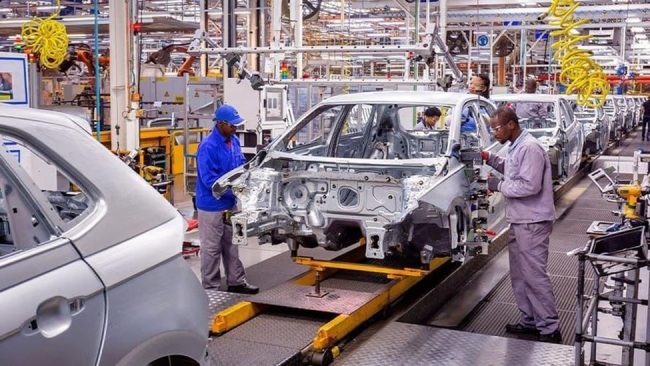
The government’s official position is clear. The rationale for these tax cuts is to enhance local production and make it more competitive, reduce the cost burden on importers and manufacturers, and allow industries to scale up operations. With reduced overheads, manufacturers are expected to lower the prices of finished goods, which should in theory benefit the ordinary Ghanaian consumer. The logic is straightforward: if the cost of production declines because businesses no longer have to pay hefty taxes on raw materials, intermediate inputs, or machinery, then the savings should cascade down to the price tags in the marketplace. In theory, this should set in motion a virtuous cycle where manufacturers expand, jobs are created, prices stabilize, and consumers have more disposable income to spend. Yet, history and experience across the developing world tell us that theory and practice may not always be compatible. The abolition of taxes does not automatically guarantee price reductions, especially in contexts where market structures are skewed, regulatory oversight is weak, and wealth inequality is already entrenched.
In Ghana, as in many African countries, manufacturing is dominated by a relatively small group of powerful families and conglomerates that have historically controlled access to capital, infrastructure, and markets. For these industrialists, tax cuts represent an immediate gain. They can now import machinery, raw materials, and in some cases finished products at lower cost, thereby boosting their profit margins. But the extent to which these savings are passed on to consumers depends largely on their willingness to reduce prices. And here lies the crux of the matter: businesses are motivated primarily by profit maximization. And so, unless there are strict regulatory frameworks or competitive pressures that force them to transfer savings to the public, manufacturers are more likely to pocket the difference rather than lower prices. In such a scenario, the wealth of manufacturing families grows while the cost of living for ordinary households remains stubbornly high. The net effect is a widening gap in terms of equality between the rich who own the means of production and the poor who rely on these goods to survive.
Moreover, Ghana’s economic structure presents a challenge to the optimistic assumptions of trickle-down economics. The country is heavily import-dependent, not only for finished goods but also for raw materials and machinery used in local production. When taxes are slashed on certain imports, it is true that manufacturers and importers face reduced costs. But this does not automatically neutralize the other structural challenges like high energy costs, poor infrastructure, currency depreciation, and inflationary pressures that continue to push up the cost of doing business. Even if manufacturers are willing to reduce prices, these other factors may offset whatever gains are made from tax abolition. In such an environment, the promise of cheaper goods for consumers becomes more of a hope than a guarantee.
For the ordinary Ghanaian families, therefore, the abolition of taxes may not translate into immediate relief at the marketplace. Prices of essential commodities could still remain high because of external shocks, currency fluctuations, or simply because businesses decide to preserve their profit margins. Moreover, by removing a revenue stream from the national treasury, the government risks constraining its own capacity to deliver such public services as healthcare, education, and social welfare programmes that directly benefit poorer households. Unless these revenue losses are offset by broader economic growth or by alternative revenue mobilization, the tax cuts could inadvertently deprive vulnerable families of the very social safety nets that shield them from destitution.
The danger here is that Ghana’s tax policy could deepen inequality by operating as a subsidy for the rich manufacturing families. While the wealthy manufacturing families enjoy reduced input costs and higher profits, the poor consumers might see little or no improvement in their purchasing power. This raises serious questions about equity in economic policymaking. Should fiscal reforms be designed primarily to favour those who already hold capital, or should they prioritize redistribution and inclusivity? The answer lies somewhere in between, because without strong industries, no country can thrive, but without strong consumer demand, industries themselves will eventually collapse. The government’s challenge, therefore, is to craft a policy framework that ensures both producers and consumers benefit equitably from these tax cuts.
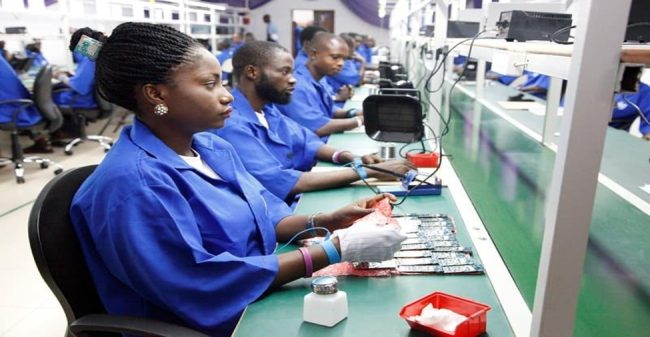
One potential reason to still believe in the possibility of cheaper goods is the role competition plays. If the market is sufficiently competitive, businesses may be compelled to lower prices in order to gain market share, especially when consumers can easily switch between brands. In such a situation, tax cuts could result in more affordable goods. However, Ghana’s manufacturing landscape is often characterized by oligopolistic structures where a few large players dominate entire sectors. In industries like cement, steel, food processing, and textiles, the lack of robust competitions reduces the incentive for manufacturers to lower prices. Instead, they might choose to collude, tacitly or otherwise, to keep prices high. In such circumstances, regulatory intervention becomes indispensable.
The government must therefore do more than simply abolish taxes. It must put in place deliberate mechanisms to ensure that the intended benefits of these policies trickle down to the consumer. This could involve setting up independent monitoring agencies to track whether price reductions actually occur in line with the lowered cost of production. Regulatory bodies must be empowered to intervene where businesses are found to be profiteering at the expense of the public. Transparency in pricing structures could be mandated, with periodic public reports that expose discrepancies between reduced input costs and stagnant consumer prices. Without such accountability mechanisms, the tax cuts risk becoming another example of elite capture of emotional blackmail where the people are excited that public policy disproportionately benefits the powerful few because they don’t know any better.
Another critical measure the government can adopt is to directly support poorer families through complementary social policies. For instance, revenue losses from the abolished taxes could be offset by expanding progressive taxes on luxury goods or high-income earners, ensuring that the wealthy shoulder a fairer share of the national tax burden. Simultaneously, the government could use part of the fiscal space created by these reforms to subsidize essential services such as healthcare, education, and transportation, thereby directly easing the cost of living for low-income households. By doing so, the government ensures that even if consumer prices remain high in the short term, poorer families still derive tangible benefits from the reforms.
Furthermore, the government must tackle the structural bottlenecks that keep the cost of doing business high. Energy costs, for example, remain a major burden on Ghanaian manufacturers. If electricity tariffs are unpredictable or excessively high, manufacturers may not reduce prices despite the abolition of taxes. Addressing these systemic issues through investment in stable energy supply, improved infrastructure, and macroeconomic stability would complement the tax cuts and make price reductions more likely. Similarly, enhancing access to credit for small and medium enterprises (SMEs) would democratize the benefits of the reforms, allowing smaller players to thrive alongside established manufacturing families. This would foster competition, break oligopolistic structures, and eventually drive down prices for consumers.
In addition to these economic interventions, the government must also consider the political economy of tax reform. Citizens are often skeptical of fiscal policies that appear to favour the wealthy, especially when poverty and unemployment remain widespread. To maintain public trust, the government must communicate clearly and transparently the rationale behind these tax cuts, the expected outcomes, and the measures being taken to safeguard the interests of ordinary families. Without effective communication, the policy risks being perceived as elitist and could trigger social unrest or political backlash.
Ultimately, the success of Ghana’s tax cuts will depend not only on the good intentions behind them but on the deliberate actions taken to ensure inclusivity. The government cannot assume that manufacturers will automatically act in the public interest. Profit motives alone are not sufficient to guarantee equitable outcomes. It must therefore design a comprehensive policy package that links tax cuts to concrete conditions, such as price reductions, employment creation, or investment in local communities. For example, firms that benefit from the abolition of certain import duties could be required to demonstrate how these savings are being reinvested in ways that benefit society at large. Such conditionality would ensure that tax cuts do not simply become windfalls for the wealthy but tools for shared prosperity.
There is also the question of long-term sustainability. Tax cuts, if not carefully managed, can create fiscal deficits that undermine macroeconomic stability. Ghana already faces challenges in revenue mobilization, with a relatively narrow tax base and high levels of public debt. Reducing taxes without simultaneously broadening the tax net or improving efficiency in collection could jeopardize the country’s fiscal health. This would eventually hurt the very poor whom the government seeks to protect, as cuts in public spending become inevitable. To avoid this, the government must pursue tax reforms alongside aggressive strategies to expand the tax base, plug leakages, and enhance compliance. This might include digitalizing tax administration, reducing exemptions for politically connected elites, and curbing corruption in revenue collection.
All said and done, the abolition of taxes on selected commodities and imports in Ghana is a bold policy move with the potential to stimulate manufacturing and attract investment. But whether it translates into cheaper prices and improved welfare for ordinary families is far from guaranteed. Without deliberate safeguards, the benefits are likely to accrue disproportionately to wealthy manufacturing families, thereby widening the base of inequality. The government must therefore go beyond mere tax cuts and implement complementary measures that ensure equitable outcomes.
These include strengthening regulatory oversight, promoting competition, subsidizing essential services for poorer households, addressing structural bottlenecks in the economy, and ensuring fiscal sustainability. Only then can Ghana’s tax policy achieve its dual objective of boosting manufacturing while protecting consumers. The ultimate goal of any economic reform must be inclusive growth that leaves no one behind. For Ghana, the challenge is clear: the success of its tax reforms will not be measured by the profits of manufacturers alone, but by the smiles of ordinary families at the marketplace who can finally afford the goods and services they need for a dignified life.
Chief Sir Asinugo, PhD., M.A., KSC writes from the UK