By Muhammad Nasir
Sokoto, Sept. 24, 2025
The new Country Representative of the United Nations Children’s Fund (UNICEF) in Nigeria, Mrs. Wafaa Sa’eed, has reaffirmed that the agency came to Nigeria with humility and commitment to addressing the nutrition needs of children.
Sa’eed stated this on Wednesday during her duty tour of Sokoto State, where she averred that Nigeria had a large economy and that the government was already making significant efforts to improve the standard of living of its citizens.
“Our collaboration is to provide a model that complements government’s commitment to ensuring a brighter future for children.
“UNICEF’s mandate is to work with governments so that children have the best start in life, and mothers have access to quality birth attendance,” she said.
Sa’eed assured that UNICEF would continue to support immunisation programmes aimed at eradicating polio in Nigeria, while also strengthening interventions to ensure children get the best nutrition.
“We know that by the age of two, a child’s brain is already 75 per cent developed. If proper nutrition is missed at that stage, the damage cannot be reversed.
“I am very impressed that the Sokoto State Government has committed N500 million to nutrition support.
“For every one naira released, UNICEF will contribute another one to double the impact of the intervention,” she added.
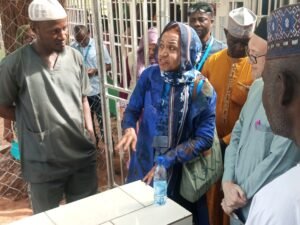
During inspections at the Gagi Primary Health Care Centre (PHC) in Sokoto South LGA and Rumbukawa PHC in Sokoto North LGA, Sa’eed commended the coordination and dedication of health workers, as well as the state government’s commitment to improving healthcare delivery.
She also visited UNICEF’s Digital Village at the Sultan Maccido Secondary School, where she interacted with students and tutors engaged in entrepreneurship programmes.
At a separate meeting with religious leaders from Sokoto State, Kebbi, and Zamfara, Sa’eed stressed the importance of promoting proper hygiene for a healthier society.
She also called on the leaders to discourage corporal punishment in schools and homes.
“Capital punishment of children is illegal. It harms their future rather than preparing them to be useful members of society,” she warned.
In his remarks, the Kebbi Commissioner for Religious Affairs, Alhaji Muhammad Aliyu, commended UNICEF’s interventions, particularly its advocacy on hygiene, which he said aligns with Islamic teachings.
He pledged that religious leaders would continue to promote the message across society.