Algeria’s economy is growing; Africa is continent of the future; IATF2025 was a resounding success – Algerian CEO, Abdelouhed Kerrar

The People’s Democratic Republic of Algeria recently hosted a hugely successful edition of the African Export-Import Bank (Afreximbank)’s Intra-African Trade Fair (IATF) in Algiers, its beautiful capital city.
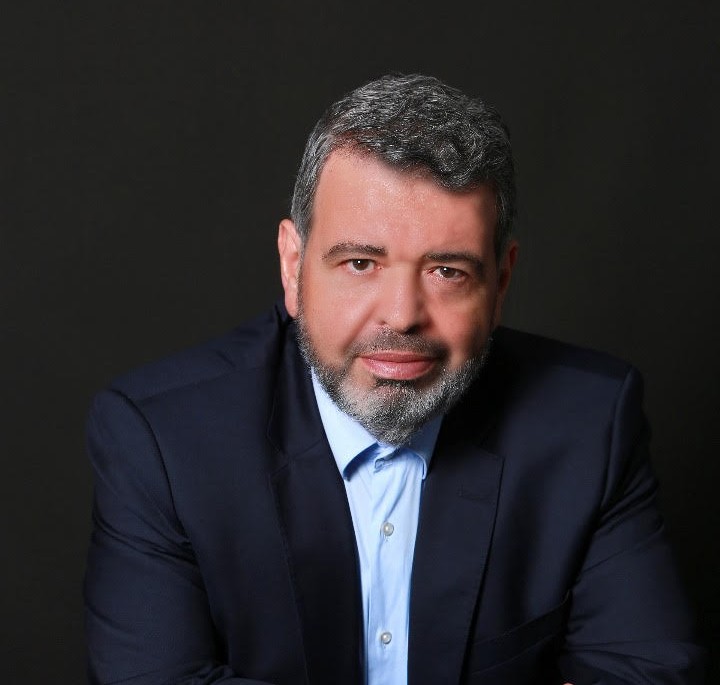
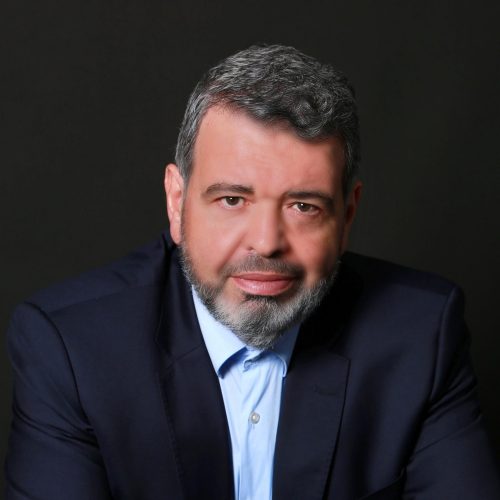
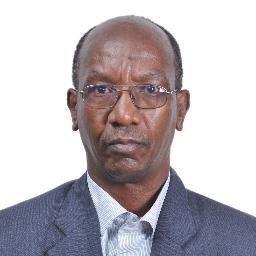
As part of the event, which was attended by Presidents, Heads of Government, business leaders and other major stakeholders from different countries in Africa, the Caribbean Community (CARICOM) and other parts of the world, Mr. Abdelouhed Kerrar, the Vice President of the Algerian Economic Renewal Council (CREA), granted an interview that covers a host of key issues.
Kerrar, the Chief Executive Officer (CEO) of Biopharm, a leading pharmaceuticals conglomerate in Algeria, is rated among the Top 100 Healthcare Leaders of 2024, and spoke with deep insight into the how Algeria’s and Africa’s economy must be positioned for maximum impact going forward.
Here are excerpts from the interview by a Senior Ethiopian journalist, Berhanu Tessema.
Q: What is the current state of the Algerian economy?
A: The Algerian economy has recorded steady and appreciable growth in recent years, despite a rather bleak global context marked by significant geopolitical tensions and growing threats of market fragmentation. This is clearly reflected in public reports issued by major international economic institutions such as the IMF and the World Bank.
That said, it is essential not to fall into any form of self-satisfaction. Algeria remains a developing and relatively fragile economy, given its still concerning dependence on revenues from the hydrocarbons sector. This explains the repeated calls by the country’s highest authorities for the diversification of the national economy, the revitalization of the industrial sector, and the strengthening of agricultural capacities to ensure greater food security.
In summary, while our current pace of economic growth is satisfactory, the real challenge lies in enabling our economy to rise to the major task of diversification in an increasingly unstable and risk-prone global environment.
Q: How did Algeria move from being an importer to an exporter of certain products?
A: At the core, the development of any industrial or agricultural sector aims primarily to meet the domestic needs of the population and the economy. However, production capacities often exceed internal demand, thereby creating growing opportunities for export to foreign markets.
These opportunities are precisely what our country has begun to seize gradually, and the results so far are quite encouraging. Nevertheless, the challenge of exportation goes far beyond a few products—it entails a comprehensive transformation of our external trade system to ensure the sustainable diversification of external revenue sources beyond hydrocarbons.
It is also worth noting that exporting requires a range of highly specialized professional skills that our companies must continue to develop and master in the coming years. Furthermore, the regulatory environment in which our exporting companies operate also calls for progressive modernization—an effort that should certainly be intensified and deepened.
Q: What are the main products Algeria currently exports?
A: Algeria mainly exports hydrocarbons, particularly crude oil and natural gas, which account for the bulk of its exports. The country also exports agricultural and processed goods such as dates and vegetables, as well as industrial products like cement, fertilizers, and steel, along with chemical derivatives from the oil and gas value chain.
It is worth emphasizing, however, that many non-hydrocarbon industrial products have begun to emerge in Algeria’s export portfolio. These include fertilizers, steel products, pharmaceuticals, cement, and various manufactured goods such as electrical appliances — televisions, refrigerators, and air conditioners, among others.
This process is still in its early stages, but there is strong optimism that it will intensify in the future.
Q: What is Algeria’s “secret” in moving from importer to self-sufficiency and then to exporter?
A: There is absolutely no secret to this achievement. It is simply the result of well-designed, carefully thought-out public policies implemented with diligence and efficiency. Everything else comes down to serious work, sustained long-term effort, and the continuous mobilization of all available national resources.
This is the same path successfully followed by other emerging developing economies, and it is the one Algeria must continue to pursue with determination and perseverance.
Q: Explain the role of the government, the private sector, and other stakeholders (including CREA).
A: In simple terms, the government defines the country’s economic policy, sets the objectives to be achieved, establishes the implementation framework, and ensures monitoring and evaluation.
Businesses, on their part, are the instruments through which public policies are executed. Certain activities are legally reserved for state-owned enterprises or related public bodies—such as those involving hydrocarbons or national security. However, there is no discrimination between public and private enterprises: both are governed by the same commercial laws and subject to the same rights and obligations.
As for the CREA, it is an employers’ organization that brings together public and private companies across all sectors and regions of the country. Operating within the framework of Algerian law. Its main mission is to defend the moral and material interests of its members through continuous and constructive dialogue with public authorities at all levels.
Fundamentally, we believe that the business community as a whole pursues the same objectives as public authorities, namely, to foster an attractive, transparent business climate that encourages wealth creation and economic prosperity. Consequently, dialogue and consultation remain the preferred path forward, and this is the approach freely chosen by the CREA. Other employers’ organizations exist and are, of course, free to define their own strategies.
Q: How do you assess the Intra-African Trade Fair (IATF) 2025 that held recently in Algeria? How can Africa develop intra-African trade and progress toward achieving Agenda 2063?
A: As a major continental event, the Intra-African Trade Fair (IATF) 2025 was a resounding success—both for Africa as a whole and for Algeria, which demonstrated the high quality of its infrastructure, its remarkable organizational capacity, and the expertise of its human resources.
This event was originally conceived by African leaders as a platform to bring together key economic players from across the continent, showcase their products and services, and foster tangible trade and investment projects at the continental level.
It also serves as a practical step forward in implementing the African Continental Free Trade Area (ZLECAF) agreement. This treaty is a landmark instrument that, according to leading analysts, provides a clear and viable roadmap for intensifying trade among African nations. It is worth noting that the ZLECAF goes far beyond the mere promotion of trade in goods. It also covers trade in services, investment facilitation, removal of administrative barriers, free movement of people, and dispute resolution mechanisms.
It is, therefore, a comprehensive project for integrating African economies, and it is no coincidence that Algeria, long committed to the continent’s development, aims to play a leading role in this endeavor.
More broadly, with regard to Agenda 2063, which marks the centenary of the creation of the African political organization (the OAU, now the African Union), it is important to recognize that Africa is indeed on the move. It is the region that has consistently recorded growth rates above the global average since the turn of the century. The continent’s image—once associated with poverty, famine, disease, and insecurity—is gradually giving way to one of economic dynamism, connectivity, and openness to the world.
The eagerness of major global powers to strengthen their presence on the continent speaks volumes: Africa is steadily asserting itself as the continent of the future for global economic growth.