

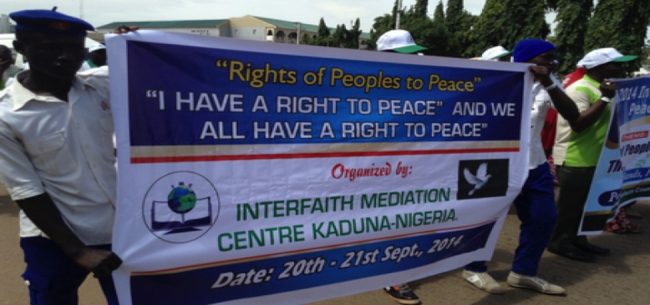
 The recent statement by the United States’ President, Donald Trump that he would literally invade Nigeria to rescue Christians who were alleged to have been continuously murdered in their thousands by Muslim fundamentalists has got the world talking and acting. Some Nigerians and their sympathizers are grateful to Trump for the offer. On their part, Human Rights campaigners have made it a duty to chronicle incidents of the gruesome murder of Christians, even in their Churches and farms and to hold these in evidence that indeed there is genocide going on in Nigeria. Others say that Trump’s offer cannot be free of charge and that it must come with a hidden price – possibly that he has his eyes on Nigeria’s vast oil, gas and solid mineral deposits. Whatever it is, the major questions we ought to be asking and answering should be: do the Bible and the Quran support Christian-Muslim conflicts? Are Christians and Muslims supposed to be friends or enemies?
But before I take a plunge at what the Bible and Quran say, it will be important to make two distinctions here. One points out the fact that the Nigerian President, Ahmed Tinubu is a devout Muslim and he is married to a Christian pastor and a senator of the Federal Republic. They have been married for 38 years, from 1987 to 2025 and lived peacefully because of the mutual respect that functions in their family. They don’t quarrel, at least not that the public is aware of any such happening. They have diligently trained their children to adulthood and they have continued to live as a happy family. So one might as well ask: if the Muslim Head of State of Nigeria, the Number One citizen, can successfully live in harmony with his Christian pastor wife for as long as they have lived together, what message is that family sending to other Christians and Muslims in the country?
Another point of note is that whether we are Christians or Muslims, we all share one basic truth: we were all indoctrinated into the religion we practise by our parents. Not many of us had the opportunity to choose the religion we wanted to believe in or practise. From Christianity, some have changed to other faiths and there is no punishment in doing that. But in some Muslim denominations, leaving the order for another often comes with severe punishments that could culminate even in death. And so, for fear of being killed, “believers” hang on to where their parents introduced them. Even this fact should have been enough reason to retard the friction between Nigerian Muslims and their Christian counterparts. But instead, it appears to inflame the situations they find themselves in, unfortunately.
We cannot possibly deny that the history of mankind is punctuated by the rise of faiths and philosophies that have shaped the moral, social, and spiritual destinies of humanity. Among these faiths, none has influenced human civilization more profoundly than Christianity and Islam. First is that both claim roots in the same Abraham paternity. Both highly respect many of the same prophets. Both teach the supremacy of one Almighty God who is merciful, compassionate, and just. Why then is it that through centuries, followers of these two great religions often see themselves as rivals instead of allies, as enemies instead of brothers. This is a tragic misunderstanding that has continued to fuel division and hostility in a world that desperately needs peace and mutual respect instead. And if God has finally sent Trump to bring back sanity into the Nigerian society, who would be right to blame him?
Come to think of it: Islam, as revealed to the Prophet Muhammad (Peace Be Upon Him), recognized Jesus (Isa) as one of the greatest prophets of Allah. The Quran acknowledged his mother, Mary (Maryam), as a woman of purity and virtue. The Quran speaks of them with utmost reverence and commands Muslims to believe in all prophets sent before Muhammad. Yet, some Muslims, either through ignorance or misguided teaching, label Christians who follow in the examples of Jesus Christ as infidels, unbelievers. This is a serious error of interpretation and not a directive of true Islam. The Quran is explicit about the position of Jesus in Islam.
In Surah Al-Imran (3:45-49), the angel said to Mary: “O Mary, indeed Allah gives you good tidings of a word from Him, whose name will be the Messiah, Jesus, the son of Mary, distinguished in this world and the Hereafter and among those brought near [to Allah]. He will speak to the people in the cradle and in maturity and will be of the righteous.” This passage, no doubt, reveals Islam’s deep respect for Jesus as one chosen by Allah and destined for greatness. Again, in Surah Maryam (19:16-21), the Quran narrates the miraculous conception and birth of Jesus, affirming that it was by Allah’s command, saying, “It is easy for Me. We will make him a sign to the people and a mercy from Us.”
So we see that the Quran does not only honour Jesus as a prophet, it also venerates his mother, Mary. In fact, Mary is the only woman mentioned by name in the entire Quran, and a chapter Surah Maryam is named after her. In Surah Al-Imran (3:42), Allah says: “And the angels said, ‘O Mary, indeed Allah has chosen you and purified you and chosen you above the women of the worlds.’” This exalted status given to Mary in the Quran should, in itself, be enough to show that Islam does not reject the holiness associated with the central figures of Christianity.
So, from where did the conflict arise between the Christian and Muslim communities that so worried President Trump that it gave him sleepless nights? There appears to be two beliefs in Christianity that Muslims are not comfortable with. The first is that Jesus Christ is the Son of God. They argue that God being Spirit did not have a wife and could not have possibly been said to have a son. What they failed to understand was that Christian did not apply Jesus’ sonship in a worldly way but in a spiritual way. Just as the Arabs are called sons of the desert because they know the in and out of the desert, so is Jesus called the son of God because he knows the in and out of God. Jesus never called himself the son of God throughout his ministry. Even though he often referred to God as his father, he always referred to himself as the son of man.
The second reason that Muslims are uncomfortable with the Christian Scripture is their belief in the Trinity. The Quran rejects the idea of associating partners with Allah, a concept known as shirk. In Surah Al-Ma’idah (5:72-73), Allah says: “They have certainly disbelieved who say, ‘Allah is the Messiah, the son of Mary’. They have certainly disbelieved who say, ‘Allah is the third of three.” Certainly, this verse was not a blanket condemnation of all Christians, but rather a rejection of the idea that Jesus is God or that God exists in a triune form as God the Father, God the Son and God the Holy Ghost, three coequal deities. Islam’s monotheism is absolute, and any belief that seems to compromise that oneness of God is considered a deviation.
Was it then right for some Muslims, despite these clear verses to still regard Christians as unbelievers or infidels? Or, could it be possible that the misunderstanding arose from the misinterpretation of certain Quranic verses taken out of context, particularly those that addressed the excesses or theological deviations of some groups in early Christian history.
Be that as it may, what must be emphasized here is that this theological difference should not necessarily translate into hostility or enmity between Christians who believe in the Trinity and Muslims who do not. In the Gospel of John, 14:6 Jesus himself cleared the air when he said: “I am the way, the truth and the life: no man cometh unto the Father, but by me.” Even the Quran makes a clear distinction between rejecting certain beliefs and persecuting the people who hold them. Allah commands Muslims to deal kindly and justly with the People of the Book, meaning Jews and Christians.
Surah Al-Mumtahanah (the woman to be examined), which is the 60th chapter of the Quran, addresses several themes about the relationship between believers (Muslims) and non-believers, especially during times of conflict and peace. It was revealed in Medina and contains 13 verses. And in those verses, Allah warns the believers not to form alliances or friendships with those who are enemies of Allah and the Prophet Muhammad (peace be upon him). The early Muslims were reminded not to reveal secrets or give aid to the Quraysh (the Meccans who fought them), even if they were relatives. “O you who believe! Do not take My enemies and your enemies as allies, extending to them affection…” (60:1). What this means is that believers must show loyalty to the community of faith and not compromise their belief with worldly ties or fear. Believers are told to take Prophet Abraham and his followers as role models. Abraham disassociated himself from his idolatrous people for the sake of Allah, showing strong faith, patience, and reliance on God. “There has already been for you an excellent example in Abraham and those with him, when they said to their people: ‘Indeed, we are disassociated from you and from whatever you worship besides Allah…’” (60:4). True believers are expected to stand firm in faith, even against opposition from family or tribe, and place their trust in Allah.
Even at that, Allah reminds believers that enmity can turn into friendship by His will. “Perhaps Allah will put, between you and those to whom you have been enemies among them, affection; and Allah is All-Powerful, All-Forgiving.” (60:7). This implies that believers should maintain righteousness and fairness, for Allah can change hearts. Faith should never lead to injustice or hatred. And so, Allah makes an important distinction here when Muslims are encouraged to treat kindly and justly those non-Muslims who do not fight them or drive them out of their homes. “Allah does not forbid you from those who do not fight you because of religion and do not expel you from your homes, from being righteous toward them and acting justly toward them. Indeed, Allah loves those who act justly.” (60:8). But He forbids believers from befriending or allying with those who actively persecute or fight against Islam. “Allah only forbids you from those who fight you because of religion and expel you from your homes… from befriending them.” (60:9). This means that believers must balance justice with loyalty to faith. They must be fair and compassionate, yet firm against oppression.
Even more compelling is the verse in Surah Al-Baqarah (2:62), which recognizes the possibility of salvation for all who sincerely believe in God and do righteous deeds, regardless of whether they are Muslim, Jew, or Christian: “Indeed, those who believed and those who were Jews or Christians or Sabeans, those [among them] who believed in Allah and the Last Day and did righteousness will have their reward with their Lord, and no fear will there be concerning them, nor will they grieve.” This verse lays devoid any claim that Islam considers all non-Muslims as condemned or devoid of faith. Islam does not.
The Bible, too, encourages a spirit of love and reconciliation toward others. In the Gospel of Matthew (22:37-39), Jesus summarized the essence of divine law: “You shall love the Lord your God with all your heart, with all your soul, and with all your mind. This is the first and greatest commandment. And the second is like it: You shall love your neighbour as yourself.” This commandment does not exclude anyone on account of the one’s creed. The parable of the Good Samaritan (Luke 10:25-37) reinforces this universal love, showing that true faith is measured by compassion and mercy, not by labels or divisions.
When viewed in light of these scriptures, we see that both the Quran and the Bible point to the same moral foundations of faith in one God, righteousness, compassion, justice, and love. The Prophet Muhammad himself treated Christians with profound respect. Historical records show that when a Christian delegation from Najran visited Medina, the Prophet received them in his mosque, allowed them to pray according to their tradition, and even engaged them in peaceful theological discussion. This act demonstrated his openness and his recognition of Christians as fellow believers in the same God. The Prophet warned against extremism and hatred in religion.
In one famous Hadith, he said: “Beware of extremism in religion, for it destroyed those before you.” (Sunan an-Nasa’i 3057). He also said: “None of you truly believes until he loves for his brother what he loves for himself.” The term “brother” here extends beyond the boundaries of flesh and blood. It encompasses the entire human family, which the Quran describes as descendants of Adam and Eve.
By the same token, Jesus taught forgiveness and peace even toward those considered as enemies. In the Sermon on the Mount, he declared: “Blessed are the peacemakers, for they shall be called children of God.” (Matthew 5:9). He urged his followers to love their enemies and pray for those who persecute them (Matthew 5:44). In this, both Jesus and Muhammad have their meeting point. Both emphasize that true faith does not manifest in hostility but in peace and compassion.
Even when we look deeper, we find that Christianity and Islam have much more in common than the things that differentiate them. Both believe in the creation of the world by one Almighty God. Both accept the reality of angels, divine revelation, moral accountability, and life after death. Both respect Abraham as the Patriarch of their faith. Both await a final day of judgment when every soul will be rewarded or punished in accordance with its deeds while here on earth. Both command fasting, almsgiving, and the pursuit of righteousness. Indeed, even the Quran declares in Surah Ash-Shura (42:13): “He has ordained for you the same religion which He enjoined upon Noah, and that which we have revealed to you, and that which we enjoined upon Abraham, Moses, and Jesus: to establish the religion and not be divided therein.” How come then that the so-called followers of these two intertwined faiths see each other as infidels?
It is paradoxical that throughout history, political ambitions, cultural pride, and ignorance have continued to distort divine messages. Religion has too often been used as a tool of suppression or division instead of a bridge of understanding. The Quran warns against this when it says: “And do not argue with the People of the Scripture except in a way that is best, except for those who commit injustice among them, and say, ‘We believe in that which has been revealed to us and revealed to you. And our God and your God is one; and we are Muslims [in submission] to Him.’” (Surah Al-‘Ankabut 29:46). And I sincerely think that this verse should serve as the guiding principle for modern interfaith relations. “Our God and your God is one.” That single truth erases centuries of prejudice and reminds us that beneath the theological details, both Christians and Muslims bow before the same Creator.
It is, therefore, time for Nigerian Muslim fundamentalists to return to the right spirit of their Founder and their Scripture. Instead of clinging forever to inherited hostility, Nigerians must emphasize their shared values of faith, justice, charity, and compassion. A Muslim who truly understands Islam cannot hate a Christian who truly follows the teachings of Jesus. Likewise, a Christian who understands the message of Jesus cannot make a Muslim who follows the will of Allah through Prophet Mohammad his enemy.
In today’s troubled world, where violence and mistrust are often justified in the name of religion, this understanding is more urgent than ever. Extremists on both sides exploit the ignorance of believers to sow the seeds of division. It is up to true believers to reject this inhumane manipulation. Allah says in Surah Al-Hujurat (49:13): “O mankind, indeed we have created you from male and female and made you peoples and tribes that you may know one another. Indeed, the most noble of you in the sight of Allah is the most righteous of you.” Here, it is clearly shown that righteousness, not religious label, is the measure of a person’s worth before God. The Bible echoes this truth in 1 John 4:7-8: “Beloved, let us love one another, for love is from God; and whoever loves has been born of God and knows God. Anyone who does not love does not know God, because God is love.” Love, not hatred, is the language of religion.
Nigerian Christians and Muslims must copy the example of their President and learn to live in peace and harmony. They cannot afford the foolishness of being enemies in a land that desperately needs and believes in peace and progress. They are brothers bound by faith in one Almighty Creator, by reverence for His prophets, and by the pursuit of righteousness. The divisions that separate them are man-made and must be undone by understanding, dialogue, and a sense of commitment to true nationalism. If they can return to the essence of their faiths, we will see that Christianity and Islam are two rays from the same divine light, different in expression, but united in purpose: to bring humanity closer to God and to one another.
With what is currently going on in Nigeria, should the Prophet Muhammad and Jesus Christ look upon their followers today, one can only imagine that they will be disappointed at how far their followers have strayed from their teachings of peace, mercy, and love. Now then, in the midst of all the storms from Nigeria and America is the time to listen again to the Quran, to the Bible, and to the still, small voice of our conscience that reminds us that Nigerian Christians and Nigerian Muslims are and will always remain brothers, not enemies.
Chief Sir Asinugo, PhD., M.A., KSC, writes from the UK


