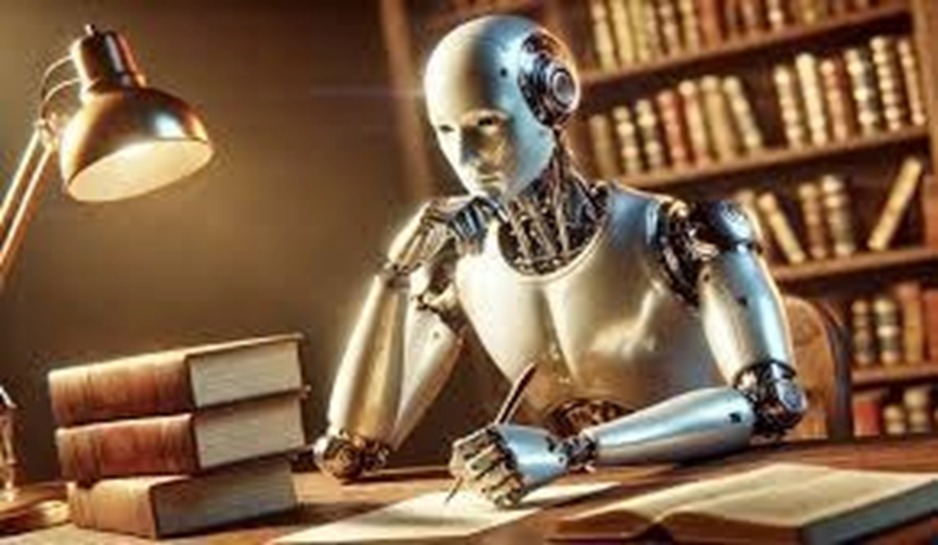

Thinking about this, I am completely convinced that unless artificial intelligence can command itself, it is difficult to see how it can ever supersede the full scope of human intellect. This simple axiom sits at the heart of the global debate surrounding AI, a debate often fuelled by exaggerated fears, futuristic projections, and a steady stream of sensational headlines predicting future mass unemployment following the impact of AI. While artificial intelligence has undoubtedly transformed many aspects of modern life, its limitations remain profound, structural, and deeply tied to the very nature of what intelligence means. The fact is that AI, far from being an autonomous force capable of displacing humanity, is fundamentally dependent on human agency, judgment, creativity, and moral direction.
Artificial intelligence does not possess consciousness. It does not possess self-awareness, or intent. It does not “think” the way humans do, nor does it understand meaning beyond statistical patterns. Every AI system, no matter how sophisticated, operates within boundaries set by human designers. It follows instructions, optimizes predefined objectives, and processes data according to algorithms written by people. Without human command, AI is inert. It cannot set its own goals, redefine its purpose, or decide independently what problems are worth solving. This dependency alone places a hard ceiling on its intellectual reach.
On the contrary, human intelligence is not merely computational; it is contextual, emotional, ethical, and adaptive. Humans reason under uncertainty, draw on lived experience, and navigate moral dilemmas that have no clear right or wrong answers. AI systems, by contrast, excel only within narrow, well-defined tasks. A programme that can diagnose diseases from medical images cannot write poetry with genuine emotional depth, negotiate peace between hostile communities, or comfort a grieving parent with authentic empathy. Even when AI mimics such abilities, it does so by pattern replication, not understanding.
One of the most persistent claims surrounding AI is that it will throw millions of people out of work. This fear is not new. Similar predictions accompanied the Industrial Revolution, the advent of electricity, the rise of computers, and the spread of the internet. In each case, technology altered the nature of work but did not eliminate the human need for labour. Instead, it shifted demand toward new skills, new industries, and new forms of value creation. Artificial intelligence follows this same historical pattern.
AI systems are tools, not workers in the human sense. They do not primarily assume their own responsibility, bear accountability, or face consequences for failure. In professions such as medicine, law, education, journalism, engineering, and public administration, accountability is central. A doctor cannot blame an algorithm for a misdiagnosis; a judge cannot delegate justice to software; a journalist cannot outsource ethical judgment to a machine. AI may assist, augment, or accelerate tasks, but final responsibility remains firmly human.
Moreover, many jobs require tacit knowledge that cannot be easily codified into data. Skilled artisans, caregivers, teachers, negotiators, community leaders, and entrepreneurs rely on intuition, interpersonal understanding, and situational awareness developed over time. These are not easily transferable to machines. A classroom teacher, for example, does far more than deliver information; they motivate, discipline, inspire, and adapt to the emotional climate of the room. AI lacks the social intelligence to perform such roles effectively.
Another overlooked limitation of AI lies in its dependence on data quality. Artificial intelligence systems learn from historical data, which often contains biases, errors, and blind spots. When these flaws are embedded into algorithms, they can reinforce inequality rather than eliminate it. Humans must constantly monitor, audit, and correct AI outputs to ensure fairness and accuracy. This oversight itself creates new forms of employment and underscores the impossibility of fully autonomous AI governance.
The idea that AI will replace millions of workers also ignores the economic reality that technology adoption is constrained by cost, infrastructure, regulation, and social acceptance. In many parts of the world, especially in developing economies, human labour remains more practical, flexible, and affordable than automated systems. Small businesses, informal sectors, and community-based enterprises rely heavily on human relationships and adaptability, areas where AI offers limited advantage.
Even in highly automated industries, AI tends to complement rather than replace human effort. Automation often removes repetitive, dangerous, or time-consuming tasks, allowing workers to focus on higher-value activities. This reallocation can increase productivity, job satisfaction, and economic growth. New roles emerge in system design, maintenance, data analysis, ethics oversight, and human-AI collaboration, roles that did not exist before the rise of artificial intelligence.
Creativity is another domain where AI’s limitations are evident. While algorithms can generate text, images, and music by recombining existing patterns, they lack originality rooted in lived experience. Human creativity is shaped by culture, memory, emotion, and personal struggle. A machine can imitate style, but it cannot originate meaning. The enduring value of art, literature, and innovation lies in human perspective, something no algorithm can truly replicate.
There is also the question of moral reasoning. AI does not possess values; it reflects the values of its creators. Ethical decision-making requires judgment, compassion, and accountability, qualities that cannot be automated. As societies grapple with issues such as privacy, surveillance, warfare, and social justice, human oversight of AI becomes not just necessary but indispensable. The more powerful AI becomes, the greater the need for human restraint and wisdom.
The fear of mass job loss often stems from viewing intelligence as a zero-sum contest between humans and machines. In reality, intelligence is collaborative. AI extends human capability but does not replace human purpose. It amplifies what people can do, not who they are. The future of work is not one where machines dominate humans, but one where humans who understand and guide machines gain advantage.
Ultimately, artificial intelligence cannot command itself. It cannot redefine its own existence, question its assumptions, or imagine alternative futures beyond its training data. Humans, on the other hand, can reflect, doubt, rebel, and reinvent. These qualities are the essence of intellect and progress. As long as AI remains a tool shaped by human intent, it will remain limited by that relationship.
Therefore, rather than fear artificial intelligence as a job-destroying force, society would do better to focus on education, adaptability, and ethical governance. History shows that human ingenuity consistently finds ways to integrate new tools into meaningful work. AI is no exception. Its limitations ensure that humanity remains not only relevant but central to the unfolding technological story.
Chief Sir (Dr.) Asinugo, PhD., M.A., KSC, is a veteran journalist.