There is no gainsaying that Nigeria, as a nation, is on crossroads that is bearing toward a failed nation. The crisis is not merely a failure of individual presidents; it is the cumulative weight of decades of structural neglect, institutional decay, and a political economy designed to extract rather than empower. When a nation reaches 65 years of independence and still struggles to provide stable electricity, functioning public schools, reliable healthcare, good roads, safety of human lives, and meaningful employment for its youth, the problem is no longer episodic, it is systemic.
There is no doubt that many of our leaders have lacked intellectual rigor, moral courage, and visionary capacity needed to build a strong institution and nation. But focusing solely on our past and present presidents obscures the deeper machinery of dysfunction. It needs to be recognized that the continued demise of Nigeria’s political economy can be attributed to the fact that it has been built on patronage networks, not merit; resource extraction, not productivity; rent-seeking, not innovation; ethnic bargaining, not national planning; maximal extortion not entrepreneurship, and this means that even a well-intentioned leader can easily be swallowed by this system that rewards loyalty over competence and silence over accountability.
It must be noted that the real crisis of the Nigerian economy lies in the fact that it is not just an extractive economic system that is based on corruption but one that weaponizes corruption against its citizens. This can be seen in three distinctive ways: the unabashed and unpunished embezzlement of public funds that should build schools, hospitals, and infrastructure; the ease of settlements and political patronage that reward mediocrity and punish reform and talent; and the economic policies that enrich a small elite while suffocating the productive capacity of the many. This is why inequality continues to widen even as our economy is seemingly expanding.
So, poverty in Nigeria is not accidental. It is politically useful. Why? Because a population struggling for daily survival has little time to demand for accountability, is easily manipulated with small handouts, becomes dependent on political benefactors, and is too exhausted and ill-equipped to resist injustice. When poverty becomes a political weapon, democracy becomes a tool for the perpetuation of injustice. No democracy can survive institutional weaknesses—a corrupt Judiciary more sensitive to Ghana-must-go allotments than to justice, lack of check and balances in local, state, and governmental institutions and agencies; opaque budget allotments, expenditures, and accountability; and the politicization of anti-corruption agencies and their mobilization for retribution, intimidation, and coercion. When corruption becomes normalized, the rule of law becomes optionalized, and when the rule of law is optionalized, democracy becomes compromised, ornamental, and dysfunctional.
Unfortunately, our Nigerian nation is dangerously close to this precipice. One may think that wealth – taxes could fix this problem and reduce inequality. But that, in this opinion, is a misguided thought, for the ruling cabal would exploit all possible loopholes, move assets offshore, manipulate valuations, and mortgage and capture regulatory agencies. Simply put, a wealth-tax, in a captured state, is nothing but an avenue for deeper corruption, not a tool for justice and equitability.
The question then is: What is our real path forward? Inclusive growth and human capital. Nigeria’s greatest resource is not oil, but its people—a highly educated, talented, resourceful, creative, and innovation population, not minding the disparate spread, however it may be, along our national grid and ethnicity. The fact is that people cannot contribute to national growth when they are marginalized, lack skills, opportunities, access to capital, reliable infrastructure, and a predictable business environment. A nation grows when its people grow, and to make that happen, what we need is a national strategy for job creation, unlocking the resources of our human capital irrespective of ethnicity and regionality; massive investment in technical and vocational education; digital literacy and innovation backed with incentives and rewards; Agric modernization leading to value-chain development, local sustenance, and exportation; support for small and medium scale enterprises with regulatory policies that are friendly to investment and entrepreneurship; transparent Local, State, and National-level budgeting and fiscal responsibility; a steady supply of power for productivity and innovation; access to local and major markets for distribution and the transportation of goods. What we do not need is political slogans. When citizens are empowered to create value, the economy becomes productive rather than extractive.
Unfortunately, the social contract between Nigerians and their government has been broken, unabated, for 65 years. But a nation survives only when its people believe—believe that justice is possible, that effort and education is rewardable, that governmental institutions will protect them, that their leaders are in the business of serving and creating opportunities for all, that their vote counts and that they can speak through it. At this point in time, one can assuredly assume that many Nigerians do not believe these things, because democracy has never been sustained by elections but by trust. The question then is, where do we start? One step at a time gets one to Rome, as they say. Rebuilding political trust and leadership in Nigeria will require civic education, community-level accountability mechanisms, youth inclusion in governance, transparent public procurement, and a culture of national responsibility over ethnic loyalty.
But beyond politics and economics, there is also a spiritual and moral crisis to be addressed, for a nation cannot thrive when corruption is normalized, injustice is institutionalized and tolerated, the poor are exploited, the rich and powerful are unrestrained, and poverty is weaponized at every level of governance and existence. So, the healing of Nigeria requires not only policy reforms but a moral awakening—a collective decision to reject the culture of impunity and embrace the values of justice, stewardship, and shared prosperity. Put simply, our nation must shift toward inclusive growth, accountability, and human capital development, if not, this democratic project, called Nigeria, will continue to erode toward a demise. Our way out is not through slogans, not through the capitally enshrined cabal, not through the mediocrity of the heavily enriched, but through a new social contract built on trust, initiative innovations, justice, opportunity, shared sense of responsibility, and an incorruptible institutionalized check and balance system. The ill of our nation is not external; it is internal, and the future of our survival, as a nation, is in our hands.
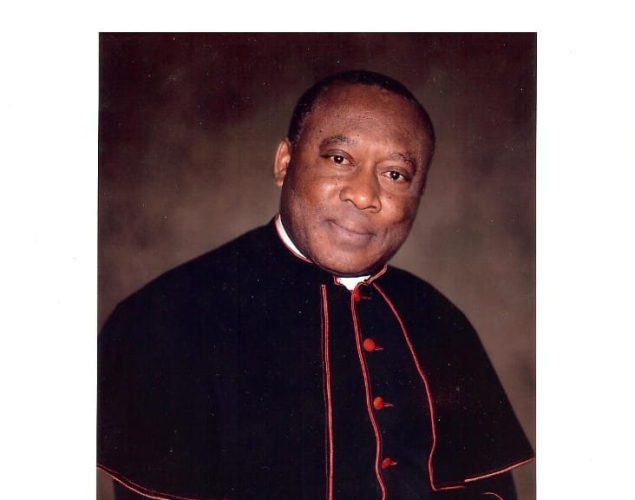
Monsignor (Dr. ) Nwaorgu, a highly respected Cleric, is based in New Jersey, USA