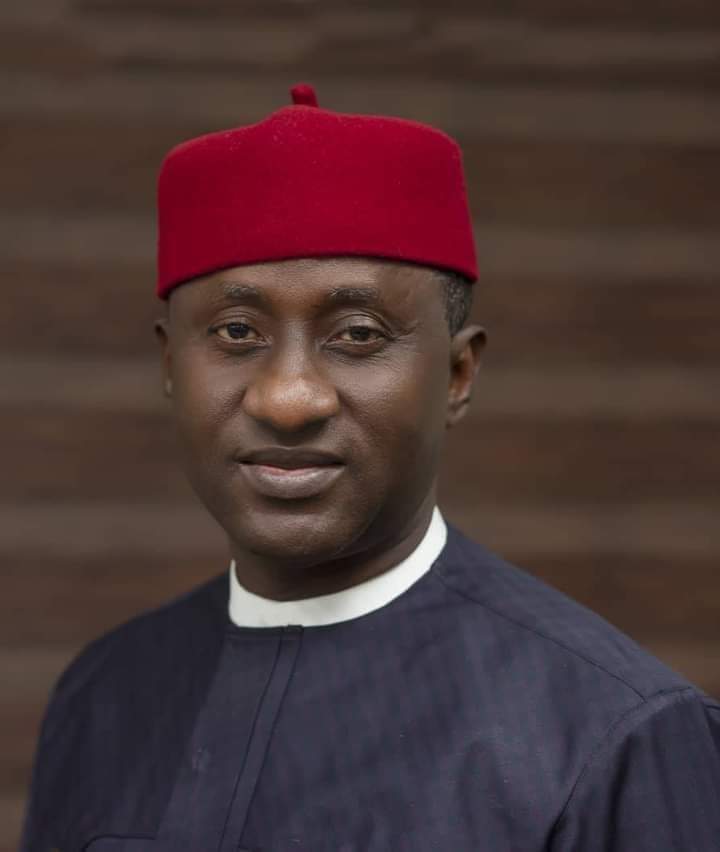
‘What happened to ADC in Edo State was a dirty slap on the face of democracy: It should not happen again By Chief Emeka Asinugo



What happened in Edo State most recently was not just another incident of political rascality, it was a brutal reminder to all Nigerians of how fragile our democracy can become when intolerance, impunity and thuggery are allowed to fester in the country’s body politic. The violence that erupted around the activities of the African Democratic Congress (ADC) in the state was not merely an attack on a political party. It was an attack on the constitutional right of Nigerians to assemble, to campaign, to disagree and to aspire. It was a dirty slap on the face of Nigerian democracy. And if that level of Anti-Social Behaviour (ASBO) is not decisively addressed, it will definitely embolden worse assaults in the months leading up to the 2027 general elections, and perhaps, in the years ahead.
From accounts that emerged, what was meant to be a routine political engagement suddenly degenerated into social chaos. Gunshots rang out. Supporters scattered. Tension gripped communities. The atmosphere of fear that followed was thick and suffocating. In a state known for its rich cultural heritage, intellectual pedigree and political sophistication, the descent into that level of violence felt particularly worrying.
Where were the security agencies when the shooting started and continued? Where were the men and women of the Nigeria Police Force, whose constitutional duty is to protect lives and property without fear or favour? How could armed individuals unleash terror in broad daylight without immediate and decisive intervention by government agencies? These are not rhetorical questions: they are fundamental to the survival of Nigerian democracy.
Security agencies are not cosmetic institutions. They are funded with taxpayers’ money. They are clothed with the authority of the state. When political violence erupts and citizens are left to run for cover, the credibility of these agencies suffers. When government agencies are silent, indifferent or opt for selective enforcement of the law, they send a dangerous signal that might is right, and that the gun, not the ballot, should finally determine political outcomes.
The government of Edo State must answer tough questions. Governance is not only about infrastructure projects and public ceremonies: it is also about maintaining peace, fostering inclusion and guaranteeing the rule of law. So, why should violence even erupt in Edo State? Why should any political group, regardless of affiliation, feel threatened or attacked for exercising its democratic rights? Edo is not an obscure territory on the margins of the Nigerian federation. It is home to one of Africa’s most revered traditional institutions, led by the globally respected Oba of Benin. The Benin monarchy commands international admiration for its history, artistry and continuity. To allow political brigandage to stain the soil of such a historic land is to metaphorically paint the face of the Oba with charcoal. It diminishes not just the reputation of the state but the cultural dignity of its people. The symbolism matters. When violence becomes normalized in a place steeped in tradition and pride, it erodes more than public order. It corrodes identity. The Oba of Benin stands as a custodian of history, a bridge between the past and the present. Political actors, whatever their ambitions, must recognize that their conduct reflects on institutions far older and more enduring than any elected office.
But even beyond symbolism lies a more urgent concern: accountability. What efforts are being made to fish out the culprits? Have arrests been made? Are investigations transparent? Are the masterminds, not just the foot soldiers, being identified and questioned?
Nigerians have grown weary of the familiar pattern: violence erupts, condemnations are issued, committees are announced, and then silence descends. Files gather dust. Perpetrators melt into the background. The next election cycle approaches, and the script repeats itself. And so, if this ugly show of attacking the ADC with guns is swept under the carpet, it will signal what Nigerians should expect during the 2027 elections: a grim “do-or-die” contest in which ballots are secondary to bullets. Democracy cannot survive under such conditions. Elections are meant to be competitive but peaceful. They are meant to be contests of ideas, records and visions, not rehearsals for civil strife.
The political class must remember that Nigeria’s democratic journey has already paid a heavy price. The tragic illness and eventual death in office of former President Musa Yar’Adua created a moment of national uncertainty. It was a test of constitutional resilience. Power eventually transferred to his deputy, Goodluck Jonathan, but not without tension, speculation and regional anxieties. That episode should have taught the political elite a sobering lesson: power is transient, and the stability of the Republic is more important than any individual politician’s ambition.
Today, as Nigeria looks forward to the elections of 2027, political calculations are already underway. Alignments are being formed. Rhetoric is sharpening. At the centre of these manoeuvres, dangerous narratives are circulating about regional agendas, succession strategies and health speculations concerning the Nigerian leader. President Bola Ahmed Tinubu, like any public figure, has been the subject of public scrutiny and commentary, including discussions about his health and capacity to finish his second tenure if he gets one. In all of this, however, it is important, to separate verified information from rumour. Democracies are not strengthened by gossip or morbid speculation. They are strengthened by transparency, institutional safeguards and respect for constitutional processes.
Under Nigeria’s constitution, if a sitting President is unable to continue in office, the Vice President assumes the role. That is not a conspiracy, it is a legal provision designed to ensure continuity. The current Vice President, Kashim Shettima, would constitutionally step in if such a circumstance arose. But to frame every political contest as a covert scheme or to reduce governance to a game of regional chess is to cheapen the seriousness of national leadership. What Nigerians demand is not intrigue but integrity. They are not asking for succession scheming but service delivery. Not thuggery but tolerance. The disturbing aspect of the Edo incident is that it mirrors a broader pattern in Nigerian politics: the weaponization of youth, the privatization of violence and the monetization of loyalty. So, the public should watch out for politicians who recruit and arm young men as thugs when they should be in schools, workshops and innovation hubs building a meaningful future for themselves. These youths are deployed as enforcers during rallies and elections. When the dust settles, they are abandoned and they become jobless, embittered and more deeply entrenched in cycles of violence.
It is easy to blame “thugs” in abstract terms, but thuggery does not emerge from thin air. It is financed, directed and protected. Until sponsors are exposed and punished, the culture will persist. Law enforcement must go beyond arresting a few expendable actors. It must follow the chain of command. Who supplied the weapons? Who provided the logistics? Who issued the orders? Equally troubling is the normalization of inflammatory rhetoric. Words matter. When politicians describe elections as wars, opponents as enemies and victory as conquest, they prime supporters for confrontation. Leaders must model restraint. The tone set at the top often cascades downward.
Citizens also have an important role to play. Voters must refuse to be mobilized for violence. Communities must ostracize those who trade in chaos. Religious and traditional leaders must speak clearly and consistently against political bloodletting. The media must investigate fearlessly and report responsibly, avoiding sensationalism that could inflame tensions.
There is another dimension that demands reflection. Nigeria’s political landscape has evolved. The notion that any region or demographic bloc can be treated as politically passive or easily manipulated is increasingly outdated. Across the country, including in the North, political awareness has deepened. Voters are more connected, more vocal and more discerning. They are scrutinizing records, asking hard questions and challenging assumptions. This shift should be welcomed, not feared. A politically conscious electorate is the lifeblood of democracy. But it also means that political actors must abandon outdated strategies rooted in intimidation and patronage. The era of treating citizens as pawns must give way to an era of engaging them as partners. If the violence in Edo is ignored, it will reinforce cynicism. It will tell citizens that their safety is negotiable, that their votes are secondary and that their leaders are more interested in power than peace. Such cynicism is corrosive. It breeds apathy, and apathy is democracy’s silent killer.
The governor of Edo State, as the chief security officer in practical terms, must lead from the front. Public condemnations are necessary but insufficient. Concrete actions like transparent investigations, prosecution of offenders and collaboration with federal security agencies are essential. The message must be unambiguous: violence will not be tolerated, regardless of who benefits politically. The Nigeria Police Force must also introspect. Rapid response mechanisms must be strengthened. Intelligence gathering must improve. Community policing initiatives must be revitalized. Trust between citizens and law enforcement must be rebuilt. When people believe that the police will act swiftly and fairly, they are more likely to cooperate and provide information.
At the federal level, there must be a renewed commitment to electoral reform and security preparedness ahead of 2027. Early warning systems should be activated in flashpoint states. Political parties should be required to sign and adhere to enforceable peace accords. Security deployments during political events must be proactive rather than reactive. Above all, Nigeria must rediscover the principle that politics is not war. The ambition of Goodluck Jonathan for a second tenure at the presidency and his subsequent concession to General Muhammadu Buhari even before the total result of the presidential election was announced was a test for the Federal Republic, and it demonstrated that constitutional order can prevail over an individual politician’s quest for public office. That lesson should not be forgotten so easily. No political ambition should be worth wasting the blood of a single Nigerian.
What happened to ADC in Edo State should serve as a wake-up call. It should galvanize institutions, awaken consciences and reset priorities. The Oba’s ancient kingdom deserves peace. Edo citizens deserve safety. Nigerians deserve elections that are decided by ideas, not intimidation. Democracy has no capacity for self-sustenance. It requires vigilance, courage and accountability. If the perpetrators of this violence are brought to justice, if security agencies reform and respond, if political leaders temper their rhetoric and discipline their supporters, then this dark chapter can become a turning point.
But if it is ignored or rationalized as “politics as usual”, then the road to 2027 will be eminently paved with fear. And that would be the greatest insult of all to a country that has struggled for so many decades, sacrificing and persevering to keep its democratic flame alive. What happened in Edo was a dirty slap on Nigerian democracy and it must not happen again. Not in Edo. Not in any other Nigerian state. Nigerians and their friends are watching to see a proactive police and the security forces at work.
Chief Asinugo, PhD., M.A., KSC, is a highly respected commentator on national and international affairs.