
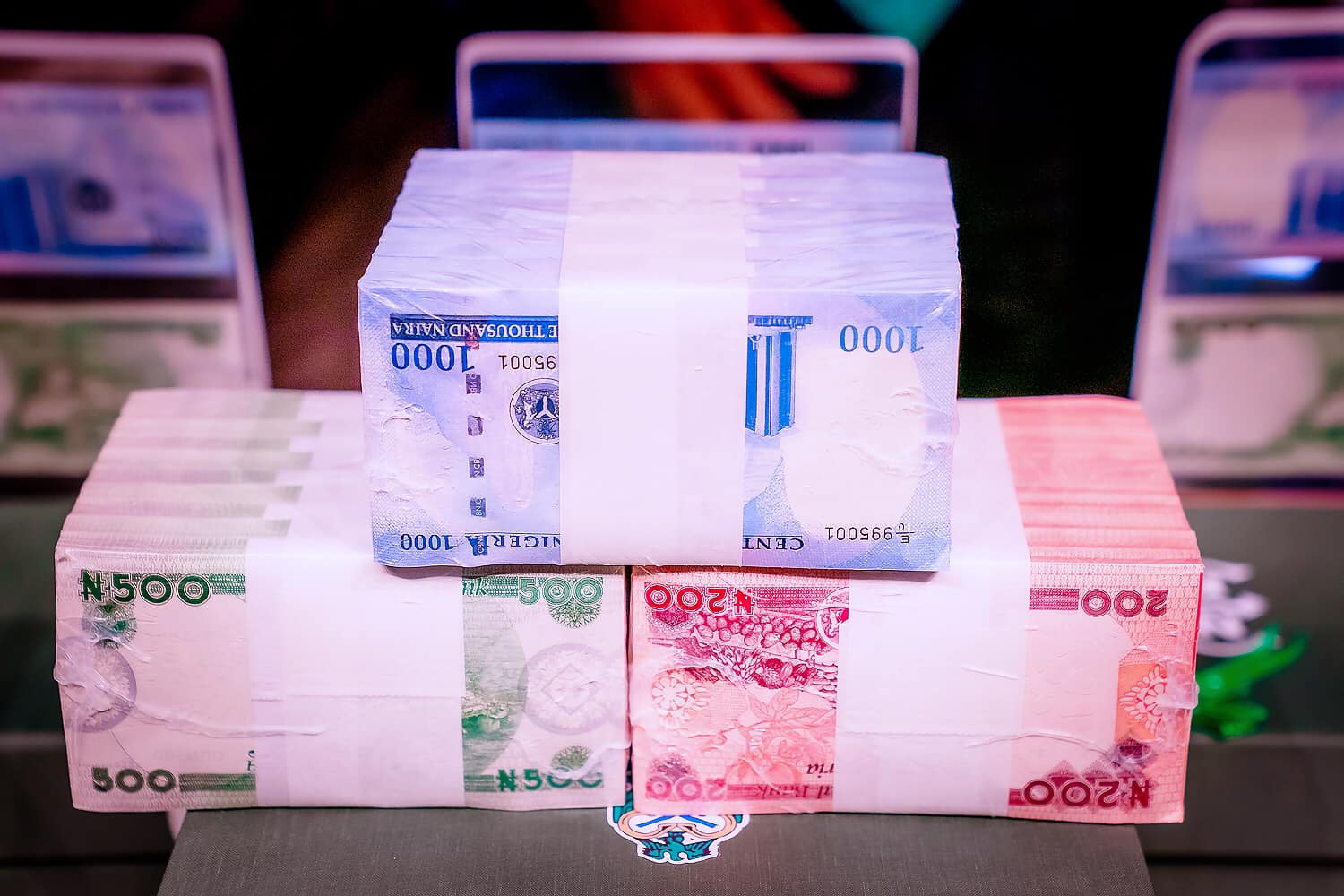
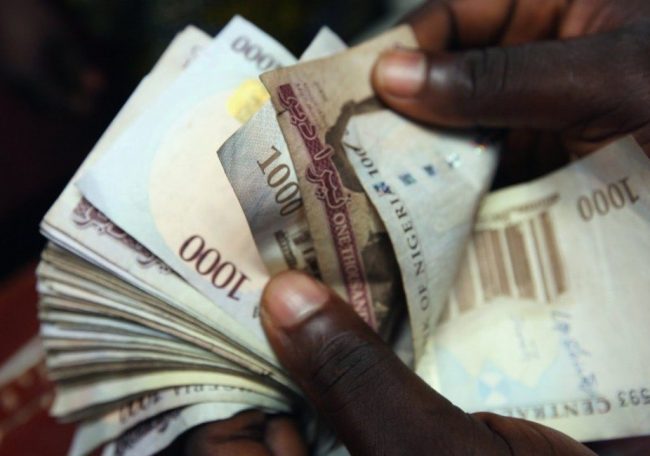
In recent weeks, social media platforms have been awash with alarming claims that the Nigerian naira would cease to exist by 2027. It would be replaced by a new regional currency known as the Eco. Short videos, sensational blog posts and forwarded messages on WhatsApp declared, often with dramatic certainty, that the naira was on the verge of extinction. For many ordinary Nigerians already grappling with economic uncertainty, inflationary pressures and exchange rate volatility, such claims naturally provoked anxiety. Yet, when the noise is stripped away and the facts carefully examined, one conclusion stands clear: the assertion that the naira will automatically cease to exist by 2027 is misleading.
To understand what is actually happening, it is necessary to separate three different issues that are often carelessly merged into one. The first is the status of the naira as Nigeria’s legal tender. The second is the long-standing regional ambition to establish a single West African currency called the Eco. The third is the timeline and conditions attached to that proposed regional currency. Confusion arises when commentators present an aspirational regional project as though it were an immediate and irreversible domestic policy decision.
Nigeria’s national currency, the naira, remains the sole legal tender of the Federal Republic of Nigeria. It is issued and regulated by the Central Bank of Nigeria under the legal framework established by Nigerian law. No official statement has so far been issued by the Federal Government of Nigeria or by the Central Bank announcing that the naira would be scrapped by 2027. There is no gazette, no legislative amendment, and no binding monetary directive confirming such a plan. Therefore, any claim presented as a settled decision is not grounded in officially communicated policy.
In actual fact, the Economic Community of West African States (ECOWAS) has, for over two decades, pursued the idea of deeper economic integration among its member states. One of the most ambitious elements of that integration agenda was the creation of a common regional currency, to be known as the Eco. The rationale is straightforward: a single currency could potentially enhance intra-regional trade, reduce transaction costs, stabilize exchange rate fluctuations within the bloc and strengthen West Africa’s collective bargaining power in global markets.
The proposal for an Eco currency is not new. It has been discussed, delayed, revived and recalibrated multiple times. At various summits, ECOWAS leaders set tentative target dates for its introduction. In recent communiqués, 2027 was mentioned as a possible year for progress toward implementation. However, a target date within a regional communique is not the same as a binding domestic policy that abolishes national currencies overnight. The ECOWAS bloc comprises fifteen countries: Benin, Burkina Faso, Cabo Verde, Côte d’Ivoire, The Gambia, Ghana, Guinea, Guinea-Bissau, Liberia, Mali, Niger, Nigeria, Senegal, Sierra Leone and Togo.
These countries differ widely in economic structure, fiscal discipline, inflation rates, external reserves, public debt profiles and political stability. It is precisely because of these differences that the Eco has been repeatedly postponed. Before any country can adopt the Eco, it must meet specific macroeconomic convergence criteria. These criteria typically include single-digit inflation, limits on fiscal deficits as a percentage of gross domestic product, manageable public debt levels, and adequate external reserves.
In reality, many member states have struggled to meet these benchmarks simultaneously. Economic shocks which include the COVID-19 pandemic, global supply chain disruptions, commodity price volatility and regional security challenges have further complicated convergence. The idea that all fifteen ECOWAS members will seamlessly meet these criteria and simultaneously abolish their national currencies by 2027 ignores the practical complexities involved.
Moreover, even if the Eco were introduced by 2027, it would not automatically mean that the naira “ceases to be.” Monetary unions often operate transitional arrangements. The introduction of the euro in Europe, for instance, followed years of preparation, dual pricing, phased withdrawal of legacy currencies and extensive public education campaigns. The transition required institutional harmonization, banking reforms and coordinated fiscal frameworks. West Africa would require similar groundwork, including the establishment or empowerment of a regional central monetary authority and the alignment of domestic financial systems.
There is also the structural reality that Nigeria is by far the largest economy within ECOWAS. Its GDP, population size and financial sector scale mean that its participation would heavily influence the viability of the Eco. Any decision by Nigeria to relinquish monetary sovereignty would require careful constitutional, economic and political consideration. It is not a step that can be assumed or inferred without explicit governmental confirmation.
Therefore, it is important for Nigerian citizens to appreciate that discussions about a regional currency do not equal immediate currency replacement. The Eco remains a proposal subject to conditions. Until Nigeria formally announces accession to a binding monetary union agreement, passes enabling legislation and communicates a transition framework, the naira remains Nigeria’s legal tender. Speculation cannot in any way substitute statutory action.
Be that as it is, the spread of the 2027 claim highlights a broader challenge in the digital age: the speed at which misinformation can travel. A short, emotionally charged video can reach millions in hours. Algorithms reward engagement, not accuracy. Unfortunately, economic misinformation can have tangible consequences. Rumours about currency abolition can trigger panic withdrawals, distort consumer behaviour, disrupt business planning and undermine confidence in financial institutions. Content creators, bloggers and social media influencers must recognize that with reach comes responsibility. It is one thing to analyze policy trends or debate the prospects of regional integration; it is another to present conjecture as confirmed fact. Nigerian law contains provisions against the deliberate spread of false information capable of causing public panic or undermining public order. Overzealous pursuit of followers and monetization does not excuse the dissemination of misleading claims. Misinformation, particularly when it affects financial stability, can attract regulatory scrutiny and, in extreme cases, prosecution in court.
For the ordinary Nigerian, the prudent approach is to rely on verified sources. Official statements from the Central Bank, communiqués issued by ECOWAS, and reports from reputable financial institutions provide a more reliable picture than viral clips. Economic reforms and currency transitions are not implemented in secrecy. They require legal frameworks, institutional adjustments and public communication.
Of course, this does not mean that the Eco project should be dismissed. Regional economic integration remains a legitimate policy objective. If successfully implemented, a common currency could deepen trade within the West African sub-region, reduce exchange rate uncertainties and potentially strengthen macroeconomic coordination. However, the journey from aspiration to implementation is long and technically demanding. It involves harmonizing banking supervision, payment systems, fiscal rules and statistical reporting standards across multiple sovereign states.
Citizens should also understand the implications of monetary sovereignty. A country that adopts a common currency surrenders control over independent monetary policy. Interest rates, money supply and currency valuation are determined at the regional level. For some economies, this can promote discipline and stability; for others, it can limit flexibility in responding to domestic shocks. These trade-offs must be openly debated and carefully weighed. At present, there is no official directive abolishing the naira by 2027. There is no timetable published by the Central Bank of Nigeria indicating the withdrawal of naira notes and coins. There is no legislative amendment repealing the legal tender status of the naira. What exists is a regional aspiration, conditional and subject to economic benchmarks, to move toward a common currency.
The difference between aspiration and enactment is critical. Aspirations can change. Target dates can shift. Economic realities can intervene. Policy decisions can be revised. Until the government of Nigeria formally commits to a monetary union under clearly articulated terms, any claim that the naira will cease to exist by 2027 remains speculative and misleading.
In times of economic uncertainty, clarity is a public good. Citizens deserve accurate information, not sensationalism. Regional integration is a serious matter requiring informed discourse, not viral exaggeration. As discussions about the Eco continue within ECOWAS, Nigerians should remain attentive but not alarmed. The naira remains Nigeria’s legal tender. Any fundamental change to that status will be announced through official channels, debated in public forums and implemented through structured legal processes. And until such time, the narrative that the naira ceases to be in 2027 should be recognized for what it is: a misrepresentation of an ongoing regional conversation, not a confirmed domestic decision.
Chief Asinugo, PhD., M.A., KSC, is a veteran Journalist


