Nigeria’s forgotten heroes: The rise and fall of General Aguiyi Ironsi By Chief Emeka Asinugo

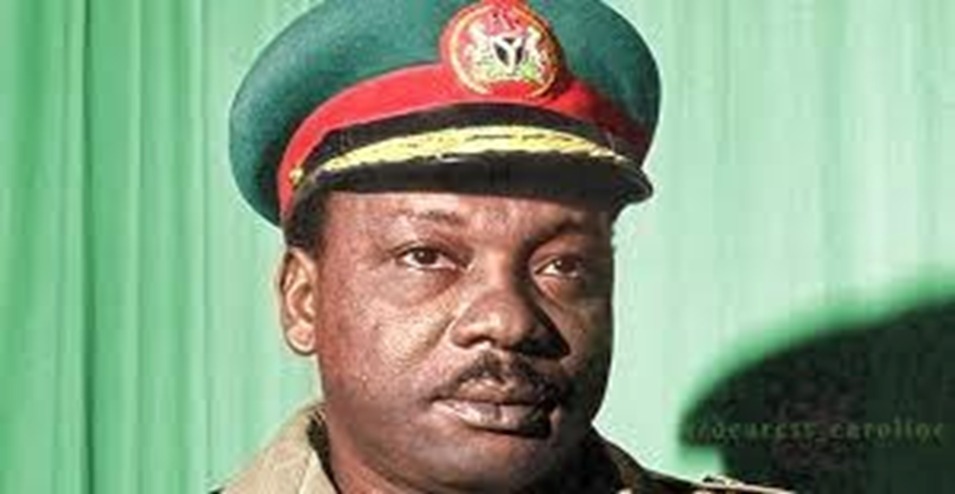
I should have published this reflection five days ago, on his birthday anniversary which is 3 March. But somehow, for reasons that I cannot even understand, I did not, and I blame myself for that. For indeed, any man that tells the story of Nigeria without mentioning the name and times of General Aguiyi Ironsi must know that he is not talking about Nigeria at-all. Nigeria’s history is punctuated by moments of high drama, hope, betrayal and bloodshed. And among its most tragic figures stands Johnson Thomas Umunnakwe Aguiyi-Ironsi, the country’s first military Head of State, whose brief tenure in 1966 embodied both the promise of national unity and the danger of ethnic suspicion.
His rise to power was swift, unexpected, and it emanated from chaos. His fall was violent, humiliating and fatal. He died on 29 July 1966, in circumstances that remain one of the most painful and controversial chapters in the history of Nigeria. Allegations have long linked Theophilus Danjuma to his capture, though the events of that night involved several officers and unfolded in the face of mutiny and rage. In life and in death, Ironsi became a symbol of unity to some, of domination to others, but undeniably of sacrifice to the Nigerian experiment.
Born on 3 March 1924 in Umuahia, in present-day Abia State, Ironsi joined the Nigerian Regiment of the British colonial army as a young man. He rose steadily through the ranks at a time opportunities for indigenous officers were grossly limited. Discipline, physical courage, and an imposing presence defined him. Standing well over six feet tall, he cut an impressive figure in uniform. By 1965, he had become the General Officer Commanding the Nigerian Army, one of the highest positions attainable by a Nigerian soldier at the time. By the time Nigeria gained independence in 1960, the military was still finding its identity. Ironsi was among those who believed that the army could serve as a unifying national institution, towering above ethnic and political allegiances.
The Nigeria of the 1960s was fragile. Regional tensions between the northern, western and eastern regions had deepened. The political crisis in the western region, election controversies, and allegations of corruption eroded faith in civilian rule. And on 15 January 1966, a group of young army officers led by Major Chukwuma Kaduna Nzeogwu launched Nigeria’s first coup. The coup was bloody. Prime Minister Abubakar Tafawa Balewa, Northern Premier Ahmadu Bello, Western Premier Samuel Ladoke Akintola and several senior military officers were assassinated. The coup plotters claimed they sought to end corruption and tribalism.
Ironsi, then the most senior surviving officer, moved swiftly to contain the mutiny. He ordered loyal troops to suppress the rebellion and arrest the coup leaders. Though the coup failed to establish its revolutionary government, its ethnic coloration proved toxic. Many of the slain political and military leaders were northerners and westerners, while most of the coup plotters were Igbo officers. In the north, suspicion quickly spread that the coup was an Igbo conspiracy for the domination of the country. With civilian authority shattered and the political class in disarray, Ironsi was invited to assume control. On 16 January 1966, he became Head of State and Supreme Commander of the Armed Forces of Nigeria. It was a reluctant accession, but one he believed was necessary to preserve order and unity in the country. He suspended parts of the constitution and dissolved the regional governments, promising stability and reform.
Ironsi’s philosophy was simple and yet profound: Nigeria must survive as one nation. He saw the regional structure as a breeding ground for ethnic rivalry. In May 1966, he promulgated Decree No. 34, which abolished the federal structure and replaced it with a unitary system of government. The decree aimed to centralize authority, unify the civil service and diminish regional loyalties. To Ironsi and his supporters, it was a bold step toward national cohesion. But to many northerners, the move confirmed their fears of Igbo domination.
The atmosphere grew tense. Rumours circulated that the January coup plotters were being treated leniently. The north erupted in protests. Anti-Igbo riots broke out in several northern cities, leading to tragic loss of lives. Ironsi’s critics accused him of failing to punish the coup conspirators decisively and of advancing policies that marginalized other regions. Among younger northern officers in the army, resentment hardened. They felt humiliated by the January coup and suspicious of Ironsi’s intentions. The seeds of revenge became sown. As tensions escalated, a counter-coup was quietly planned.
Unsuspectingly, Ironsi embarked on a nationwide tour by July 1966. He aimed at fostering reconciliation. He believed dialogue and presence could calm frayed nerves. It was in this spirit that he travelled to Ibadan, in the western region, to meet traditional rulers and political leaders. He lodged at the Government House in Ibadan as a guest of the western military governor, Lieutenant Colonel Adekunle Fajuyi.
But in the early hours of 29 July 1966, mutinous soldiers struck. Northern officers had succeeded in launching a counter-coup. Communications were seized. Loyalists were overwhelmed. The Government House in Ibadan was surrounded. Accounts differ in detail, but it is widely held that troops under the influence of officers including Lieutenant Colonel Murtala Mohammed and others participated in the revolt. Allegations have since persisted that then-Major Theophilus Danjuma was among those who confronted Ironsi at the Ibadan Government House, though interpretations of his precise role vary in memoirs and testimonies.
What remains consistent in historical narratives is that Ironsi and Fajuyi were arrested. Fajuyi, in a remarkable act of loyalty, refused to abandon his guest. He chose to accompany the Head of State into captivity rather than accept offers of safety. The two men were taken away from Government House by mutineers. Ironsi reportedly believed, until late in the ordeal, that reason would prevail. He had staked his leadership on the unity of Nigeria and the integrity of the armed forces. He is said to have reminded his captors that he had spared many lives in January and sought reconciliation rather than vengeance. But the counter-coup was driven by fury and an unrelenting sense of vengeance.
Later that day, 29 July 1966, Ironsi and Fajuyi were killed near Ibadan. The precise details of their execution remain murky, shrouded in conflicting testimonies and the fog of mutiny. What is undisputed is the brutality. Nigeria’s first military Head of State was murdered by his own soldiers, barely six months after taking office. His body was buried in secrecy. The nation he sought to unify was plunged deeper into crisis as a result.
News of his death sent shockwaves across the country. In the north, the counter-coup leaders consolidated control. Lieutenant Colonel Yakubu Gowon eventually emerged as the new Head of State. In the East, outrage and fear intensified. The cycle of suspicion accelerated toward the Nigerian civil war that erupted in 1967.
Ironsi’s death was pathetic not merely because it was violent, but because it symbolized the collapse of trust among the regions. He had tried to steer Nigeria away from ethnic fragmentation. His Decree No. 34, though controversial, sprang from a conviction that the country must transcend tribal loyalties. He underestimated, perhaps fatally, the depth of regional fears. In seeking unity through centralization, he triggered the very fragmentation he hoped to prevent.
For many Igbo Nigerians, Ironsi became a martyr, an officer who tried to hold Nigeria together and paid with his life for that attempt. For others, especially in the north at the time, he was seen as a leader who failed to address grievances and whose policies threatened balance. History, however, tends to soften immediate passions. With the benefit of decades, Ironsi appears less as a partisan figure and more as a tragic pioneer caught in the middle of a cold war. In life, his physical presence had projected authority but in death, it evoked vulnerability. The towering general who commanded battalions could not command the loyalty of a divided army. The Supreme Commander who abolished federalism could not abolish mistrust. The soldier who suppressed Nigeria’s first coup could not survive its second coup. Yet his legacy endures. He was the first Nigerian to occupy the office of military Head of State. He navigated the immediate aftermath of a traumatic coup with relative restraint. He attempted administrative reforms. He travelled across regions preaching unity. He demonstrated personal courage by refusing to flee when danger loomed. And he inspired loyalty in men like Fajuyi, whose solidarity unto death remains one of the noblest narratives in Nigerian history.
The allegations surrounding General Danjuma’s role have persisted in public discourse, especially given his later prominence in Nigeria’s military and political life. As a senior officer in subsequent years and later as Minister of Defence, Danjuma became an influential figure. Interpretations of his involvement in July 1966 have varied, shaped by memoirs, interviews and political alignments. What is beyond dispute is that Ironsi’s removal was not a lone act but a collective mutiny reflecting widespread anger among Northern officers.
The tragedy of 29 July 1966 deepened Nigeria’s descent into chaos. In the months that followed, massacres of Igbo civilians in the North intensified. The Eastern Region, under Lieutenant Colonel Chukwuemeka Odumegwu Ojukwu, would eventually declare the independent Republic of Biafra in 1967. The civil war that ensued cost over three million lives. The seeds of that catastrophe can be traced in part to the unresolved grievances and mistrust surrounding both the January coup, Ironsi’s assassination and Nigeria’s denegation of the Aburi Accord, led by Gen. Yakubu Gowon.
Ironsi believed in one Nigeria. He envisioned a nation where merit outweighed ethnicity and where the army stood as guardian of unity rather than instrument of division. His methods may be debated. His intentions, many argue, were patriotic. His life story—from colonial recruit to General Officer Commanding, to Head of State—mirrors Nigeria’s own turbulent transition from colony to Republic. But there was an irony in his fate. He rose to power because he defended the constitutional order against mutiny. He died because others believed mutiny was the only remedy left to them. In life, he sought to end tribalism, but his death intensified it. He tried to centralize authority but his assassination fractured that legitimacy.
On that fateful day, 29 July 1966, Nigeria lost not only its first military ruler but also an opportunity, however imperfect, for a different trajectory. Whether Decree No. 34 would have healed or harmed the federation in the long term remains speculative. What is certain is that the manner of his removal entrenched the logic of violence in Nigerian politics. Today, decades later, Ironsi’s name evokes reflection. Streets and institutions bear his memory. Historians revisit his decisions with nuance. Citizens debate his legacy with renewed perspective. In the grand tapestry of Nigeria’s past, he occupies a chapter marked by ambition, controversy, loyalty and sacrifice.
He was neither saint nor villain, but a soldier thrust into supreme command at a moment of national fracture. His life was interesting for its ascent against colonial odds, its embodiment of military professionalism, and its dramatic assumption of power. His death was pathetic for its betrayal, its brutality, and its consequence.
Nigeria’s forgotten heroes are often those whose stories resist simple categorization. Major General Johnson Aguiyi-Ironsi belongs among them. He rose believing he could bind a fragile federation into a stronger whole. He fell because the federation’s wounds were deeper than he imagined. And he died, on 29 July 1966, still professing faith in a united Nigeria—a faith that history has tested repeatedly, yet which endures as both aspiration and challenge.
Chief Asinugo, PhD., M.A., KSC, is a highly respected commentator on national and international affairs.