
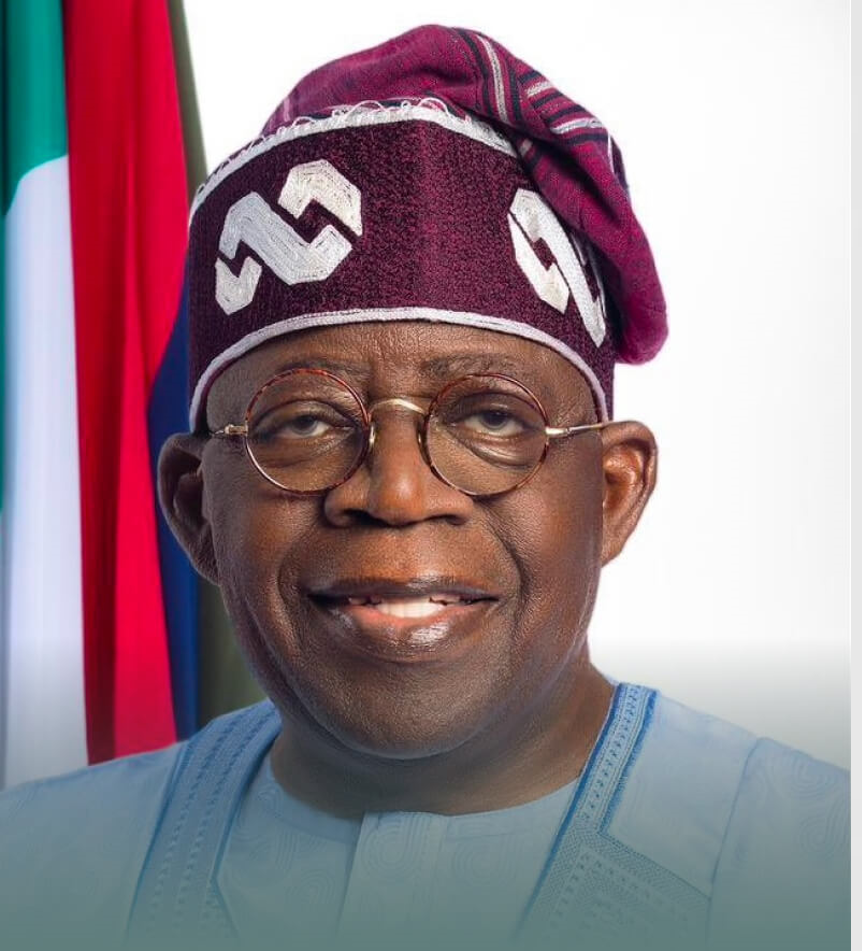
In every democratic society, the discourse on whether an incumbent leader deserves a second mandate is both inevitable and necessary. It is a question that is rooted in performance, accountability, public trust, and the perceived direction of national progress. In Nigeria today, that question has become increasingly pressing as citizens reflect on the administration of President Bola Ahmed Tinubu and as they weigh the realities of their daily lives against the promises that accompanied his rise to power.
The answer to whether President Tinubu should be voted for a second tenure cannot be approached with sentiment or partisan loyalty alone. It must be grounded in a careful examination of policy decisions, economic outcomes, governance style, and the lived experiences of ordinary Nigerians. While some prominent political figures, including influential voices from the South East like Anambra state governor, Professor Chukwuma Soludo and Works Minister, Engineer Dave Umahi have publicly commended the President and signalled support for his continuity in office beyond 2027, the broader national mood appears far more complex and, in many respects, deeply conflicted.
At the heart of this complexity lies a paradox that has become increasingly difficult to ignore. On paper, Nigeria under the administration of President Tinubu has recorded certain macroeconomic shifts that are often presented as signs of reform. Yet, for millions of citizens, these shifts have only deeply translated into an unprecedented cost-of-living crisis. The removal of fuel subsidy, one of the administration’s earliest and boldest decisions, was widely defended by economists as a necessary step toward fiscal sustainability. However, the immediate and cascading effects of that decision have been profound. Petrol prices surged, transportation costs followed suit, and the price of goods and services rose sharply across board. For the average Nigerian, the consequence has been a steady erosion of purchasing power.
Food prices have climbed beyond the reach of many households. Rent has become unaffordable in urban centres. School fees have increased, pushing education further out of reach for low-income families. Even such basic commodities as cooking gas and mobile communication services now consume a disproportionate share of household income. In such an environment, the claim that the nation is now making more money than before rings hollow to those who cannot afford three meals a day. And they are in their millions.
This widening gap between economic indicators and the lived realities of most Nigerian citizens raises fundamental questions about the inclusiveness of the administration’s policies. Economic reforms, no matter how theoretically sound, must ultimately be judged by their impact on human welfare. If growth does not translate into improved living standards for every citizen, then it risks being perceived as growth without purpose. For many Nigerians, the current situation from community to community feels less like a transition toward prosperity and more like a descent into more hardship.
One of the most visible manifestations of this hardship is the persistence, and in some cases, apparent increase, of child labour. Across major cities and rural communities in Nigeria, children who should otherwise be studying in their classrooms are instead found on the streets, hawking goods under harsh conditions. From early morning until late in the evening, they navigate traffic, endure exploitation, and sacrifice their education in the struggle for family survival. This is not merely an economic issue, it is a moral and social crisis that speaks to the failure of a system that should have been designed to protect the most vulnerable.
Closely tied to this is the broader issue of youth unemployment. Each year, thousands of graduates emerge from secondary schools, polytechnics, and universities with hopes of contributing meaningfully to society. Yet, many find themselves without opportunities, trapped in a cycle of frustration and disillusionment. In the absence of legitimate avenues for advancement, some are drawn into criminal activities such as armed robbery, kidnapping for ransom, and cybercrime. Others fall prey to dangerous practices, including money rituals, driven by desperation and the illusion of quick wealth.
Security remains a critical area of concern. While the Tinubu administration has made efforts to address insecurity, particularly in regions affected by insurgency and banditry, the overall situation remains extremely fragile. In parts of northern Nigeria, communities continue to live under the threat of violence. Farmers are unable to cultivate their land safely, a situation that has gravely contributed to food shortages and further inflating prices. The persistence of insecurity undermines not only economic stability but also public confidence in the state’s ability to fulfill its most basic responsibility: the protection of lives and property.
In assessing whether President Tinubu deserves a second tenure, it is also important to consider the question of structural reform. For decades, there has been an ongoing debate on the need to decentralize security and economic power from Abuja. Advocates argue that the current centralized system places too much authority in the federal government and that is stifling regional initiative and slowing development. Comparisons are often drawn to countries like the United States and the United Kingdom, where subnational units enjoy significant autonomy while they remain part of a unified national framework.
In Nigeria’s case, proposals have included granting greater economic and security powers to states or geopolitical zones, allowing them to harness local resources more effectively and respond to local challenges with greater agility. Such reforms could potentially address longstanding grievances related to resource control, governance inefficiency, and regional inequality. However, progress in this area has been limited, and many citizens feel that the political will to pursue meaningful restructuring is woefully lacking. And they had hoped that on ascension to the Presidency, Tinubu would have addressed such issues with the expedition they deserve. But he has not done so.
Another dimension that cannot be ignored is public trust. Leadership is not only about policies and programmes, it is also about credibility. During his campaign, President Tinubu made several commitments, including ambitious promises regarding electricity supply. Reliable power has long been one of Nigeria’s most critical infrastructural deficits, affecting everything from industrial productivity to quality of life. While efforts have been made to improve the power sector, the reality remains that many Nigerians continue to rely on generators and alternative energy sources. The perception that even the highest seat of government has resorted to the use of solar power underscores the scale of the challenge.
In a democracy, voters are entitled to hold leaders accountable for their promises. If leaders explicitly state that failure to deliver on key commitments should disqualify them from future support, then it is only reasonable for citizens to take such statements seriously. The principle of accountability demands nothing less.
Yet, despite these challenges or perhaps because of them, the argument for continuity is not without its proponents. Supporters of the administration contend that the reforms currently underway are long-term in nature and require time to yield results. They argue that difficult decisions, such as subsidy removal, were necessary to prevent economic collapse and that the initial pain is part of a broader process of stabilization and recovery. From this perspective, a second tenure would provide the continuity needed to consolidate gains and complete ongoing reforms. There is also the political reality that governance is rarely a matter of instant transformation. Structural problems that have accumulated over decades cannot be resolved within a single term. Those who advocate for giving the President another chance often emphasize the importance of patience and the risks associated with policy discontinuity.
However, patience has limits, especially when it is demanded from those who are already struggling to survive. For many Nigerians, the question is not whether reforms take time but whether there is tangible evidence that these reforms are moving the country in the right direction. Hope, while powerful, must be anchored on visible progress.
Ultimately, the decision to support or reject a second tenure for President Tinubu rests entirely with the Nigerian people, in the absence of official corruption. It is a decision that must be informed by critical thinking, honest reflection, and a clear understanding of the issues at stake. Democracy thrives when citizens engage actively with the process, demand accountability, and make choices that are based on evidence rather than emotion. Therefore, whether President Tinubu should be voted for a second tenure must be seen as less about providing a definitive answer and more about prompting a national conversation. It challenges both supporters and critics to articulate their positions clearly and to engage with the realities on the ground. If the administration can demonstrate measurable improvements in such key areas as cost of living, employment, security, education, healthcare, and infrastructure, then the case for continuity becomes strong. If, on the other hand, the gap between promise and reality continues to widen, then the argument for change gains momentum.
Democracy is not about blind loyalty or perpetual opposition, it is about choice. It is about the power of the people to decide the direction of their nation’s compass. As Nigeria approaches another electoral cycle, that power will once again be tested. The outcome will not only determine the future of one administration but also shape the trajectory of the country for years to come. Whether President Tinubu secures a second tenure or not, the broader lesson remains clear: governance must be people-centered, reforms must be inclusive, and leadership must be accountable. Anything less risks deepening the very challenges that the nation seeks to overcome.
If President Tinubu is to make a compelling case for a second tenure, it cannot be through the endorsements of political heavyweights who are insulated from the price of petrol. It must be through a radical, visible shift in the quality of life for the ordinary citizen. He must address the visceral hunger of the people, the insecurity that keeps farmers from their fields, and the structural imbalances that make Nigeria a “deeply paradoxical” nation. Unless there is an immediate move to lower the cost of basic commodities, abolish the seeming necessity for child labor through social safety nets, and decentralize power away from the greedy centre in Abuja, the voting masses may simply choose to take the President at his own word. If the lights are not on by 2027, the people may decide that “Renewed Hope” was merely a delayed disappointment, and that a second chance is a luxury that a starving nation cannot afford.
Chief Asinugo, PhD., M.A., KSC, is a highly respected commentator on national and international affairs.