


There was a time in the history of Nigeria when the Igbo community stood on a firm moral foundation, held together by clearly defined cultures and traditions, shared values, and a deep sense of community responsibility. These traditions were not arbitrary, based on personal choices, random decisions or convenience. They were practical systems designed by Igbo elders to ensure community survival, equity, and family continuity. One of such enduring systems was the family structure that placed responsibility on the first son in less privileged homes. Where parents could not afford to train all their children, they invested heavily in the first son, often at great personal sacrifice, selling lands, economic trees, and treasured possessions to enable them position the first son properly. The son, in turn, was duty bound to lift his siblings, ensuring that they too found their footing in life before he can settle into his own personal family responsibilities.
This was not exploitation, it was the chain of survival. It was a communal investment model, rooted in trust, duty, and eventual reward. The first son understood that his sacrifice was temporary, and his efforts would strengthen the entire family unit. His siblings, in turn, respected and supported him. This system ensured that no member of the family was left behind, even in poverty. It created resilience, unity, and a sense of shared destiny. Over time, however, this system evolved. Society recognized that delaying marriage for the first son could slow down family progress. And so, the modified approach allowed him to marry earlier, bringing in a partner who would join hands with him to shoulder the responsibility of training his siblings either at school or in trade. This adaptation was both practical and humane. It acknowledged that two working hands could quickly achieve more than one, and that a supportive spouse could accelerate the growth of the entire household.
On the other hand, in families where resources were sufficient, parents took full responsibility for training all their children. In such homes, the burden did not fall on the first son. Each child was given a fair start in life, and the son was free to marry early and focus on building his own immediate family. These two systems, one born out of necessity and the other out of abundance, were never meant to compete. They were complementary realities, shaped by circumstance, not superiority.
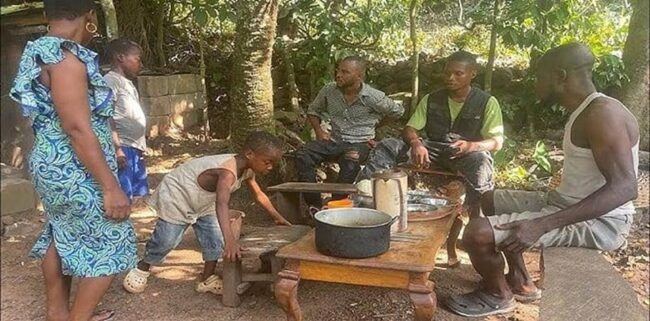
However, in recent times, there appears to be a dangerous misunderstanding of these traditions. What was once a balanced system has now been twisted into a silent rivalry. Sons from affluent backgrounds sometimes look down on those who had to struggle through the traditional responsibility route, while those from less privileged homes feel entitled or burdened in ways that breed resentment. This “flexing of muscles” is not only unnecessary but also deeply harmful. It erodes the very unity that these traditions were designed to preserve and uphold.
The real tragedy is not just the misunderstanding of these family ethics, but the wider erosion of Igbo values. There is a noticeable drift away from the moral compass that once guided behaviour among Ndigbo. For example, respect for older persons, which was once automatically accorded to age, wisdom, and integrity, is now increasingly being tied to wealth. The elderly, who were once revered as custodians of tradition and wisdom, now often find themselves sidelined if they lack financial influence. A young wealthy individual would command more respect in a gathering than an elder who has lived a life of experience and service. This shift is not just anti-cultural, it is dangerous for Igbo unity.
When a society begins to measure the worth of its people primarily by monetary values, it loses its moral anchor. Wisdom is no longer sought because it has been replaced by material display. Decisions are made based on individual financial strength rather than communal benefit. The younger generation, observing this pattern, grows up believing that wealth is the ultimate measure of success, regardless of how it is acquired. This mindset opens the door to all kinds of ethical compromises.
Another disturbing trend is the increasing willingness of individuals to betray one another for financial gain. In the past, such behaviour was considered a grave taboo in Igboland among Ndigbo. The idea that one could harm a brother, friend, or kinsman for money or because of jealousy was almost unthinkable. Trust was the currency of relationships, and betrayal carried severe social consequences. Today, however, stories of deceit, fraud, and exploitation among kinsmen have become alarmingly common. People are willing to undermine one another’s businesses, sabotage opportunities, or even engage in criminal activities that harm their own community members.
Just this week, I had a hospital appointment with my doctor. My wife dropped me off at Goodmayes station which is the nearest train station to our residence. When I got to the station, the barrier was open. Being a senior British citizen who carried a Freedom Pass, I walked through and got into a waiting train. Unknown to me, a black man was making a call to the Transport Police to inform them someone boarded the train without a pass. They should arrest me at the point of my disembarkment which was in Stratford. Just as I got to the barrier, I heard the man who had followed me all the way from Goodmayes station suddenly speaking Igbo and telling someone the police would soon catch a cheat. By the time I got to the barrier, there were five heavy looking officers waiting to possibly arrest me. I brought out my Freedom Pass, torched it on the turnstile, the barrier opened and I walked out of the station. But as soon as the police officers saw I had a Freedom Pass, all of them immediately walked away from their position, possibly disappointed. And my fellow Igbo man, he walked past me and muttered, ‘I am sorry’. The incident kept me thinking. Why would fellow Igbo man want to blackmail in a faraway foreign land? But let that be the story for another day.
The important thing is that this erosion of trust has far-reaching consequences. It weakens the fabric of the community, making collaboration difficult and progress slower. When people cannot trust one another, they become isolated, defensive, and less willing to invest in collective growth. The communal spirit that once defined Igbo society begins to fade, replaced by individualism, driven by suspicion and competition. Furthermore, the traditional apprenticeship system, which was once a cornerstone of Igbo economic success, is also being diluted. In its original form, this system allowed young individuals to learn trades under the guidance of established masters, who would eventually “settle” them to start their own businesses. It was a system that was built on trust, patience, and mutual benefit. Today, however, there are increasing reports of exploitation on both sides. Some masters fail to honour their settlement agreements, while some apprentices lack the discipline and loyalty required to complete their training. This breakdown further reflects the larger moral decline.
The loss of accountability is another worrying sign. In the past, community leaders and elders played an active role in maintaining order. Disputes were resolved through established channels, and individuals were held accountable for their actions. Today, the authority of these traditional structures is weakening. People increasingly bypass communal systems, either taking matters into their own hands or relying solely on external institutions that may not fully understand or respect local values.
Social media and modern influences have also played a role in accelerating this drift. While these tools have been beneficial, they have also amplified materialism and superficial success. Young people are constantly exposed to images of wealth and luxury, often without context. This creates unrealistic expectations and pressures, leading some to pursue quick money through questionable means. The emphasis shifts from building a legacy to showcasing a lifestyle.
Even in family settings, the sense of duty is changing. The idea that one should sacrifice for the collective good is gradually being replaced by a more individualistic approach. The point is that while personal growth and independence are important, they should not come at the expense of family cohesion. The balance that once existed between individual ambition and communal responsibility is being lost and that should not be so. It is important to note that change itself is not the problem. Societies must evolve to remain relevant. The issue arises when evolution leads to the abandonment of core values without replacing them with equally strong principles. The Igbo tradition has always been dynamic, capable of adapting to new realities while preserving its essence. What we are witnessing now, however, is not thoughtful evolution but a gradual erosion.
To address this drift, there must be a conscious effort to reconnect with the foundational principles that once defined Igbo society. Families need to revisit the values they pass on to their children, emphasizing integrity, respect, and responsibility alongside ambition. Elders must find ways to remain relevant, not just by demanding respect but by actively engaging with the younger generation and sharing their elderly wisdom in relatable ways. And at the same time, the younger generation must learn to appreciate the depth of the traditions they are inheriting. These systems were not created out of ignorance, they were carefully developed responses to real challenges. Understanding their purpose can help in adapting them meaningfully rather than discarding them entirely.
The perceived conflict between different family structures must also be addressed with clarity and empathy. There is no superiority in coming from a wealthy or a struggling background. Each path comes with its own challenges and lessons. Recognizing this can help reduce unnecessary tension and foster mutual respect. Ultimately, the question is not whether the Igbo are changing. In every society, change is inevitable. The question is whether the direction of that change is sustainable. A society that loses its sense of identity, its respect for wisdom, and its commitment to communal well-being risks losing far more than it gains.
If the current trend continues unchecked, future generations will definitely inherit a fragmented culture, one where wealth replaces wisdom, and individual success overshadows collective progress. But this outcome is not inevitable. With deliberate effort, reflection, and a renewed commitment to core values, it is still possible to restore a genuine sense of communal direction among Ndigbo. The Igbo have always been known for resilience, innovation, and a strong sense of community. These qualities have not disappeared, they have merely been overshadowed. Bringing them back to the forefront requires awareness, honesty, and a willingness to correct course. Only then can the drift be halted, and the path to real integrity and dignity rediscovered. The question is: are Senator John Azuta-Mbata and his team in Ohanaeze Ndigbo ready to rescue their own from sinking deeper into abysmal failure?
Chief Asinugo, PhD., M.A., KSC, is a veteran journalist and author. He’s based in the UK.