After God breathed into man’s nostrils to give him life, God said in the Biblical Book of Genesis 1: 26: “Let us make mankind in our image, in our likeness…” and in verse 27, it continues, “So, God created mankind in his own image, in the image of God he created them, male and female, he created them.”
This is interesting. But how many of us have ever wondered who the “us” were, that God spoke about when he said “let us”? Let us not forget that God is Spirit (and they that worship him must do so in spirit and truth). We will also remember that the spirit of God was not alone, and has never been alone since creation. It has had, and still has, an opposition party, headed by the spirit of Satan. In a true sense of democratic dispensation, God did not destroy his opponent. He did not destroy Satan in order to impose his governance on mankind. Instead he allowed Satan to work side by side with him, possibly, to enable him sift those who truly believed in him. This is a big lesson for our global politicians, from America to African countries.
And because of the presence of his opposition party that he allowed to exist, God endowed man with the gift of freewill, to choose between His Spirit and the spirit of Satan, which way to go, the way of life which is the way of God or the way of death which is the way of Satan; the way of good, which is the way of God or the way of evil which is the way of Satan. God gave mankind that freedom to choose what spirit would control his life and actions and ultimately determine his destiny.
In Deuteronomy 30:19 God confirms this gift of choice when he declares: “I call heaven and earth to record this day against you, that I have set before you, life and death, blessing and cursing: therefore choose life, that both you and your seed may live.” God presented a clear choice between life, which involved obedience and blessing and death which implied disobedience and its consequences. And then, God advised His people to choose the path that leads to life, not just for themselves but for future generations.
So, it was God that actually instituted the foundation of democracy, not only as a sociopolitical compass for mankind, but more importantly as a divine principle that took its root from the creation of humanity. From the beginning of the creation of mankind, God established this system of choice, responsibility, and moral accountability. The divine framework is clearly reflected in the scriptural declaration: “I have given you this day, to choose….” This profound statement does not only reveal the origin of humanity’s challenge to choose, but also the nature of human existence as a being that was created with the capacity to discern, to decide and to choose.
When we take a cursory look at the phrase “let us”, we find that it embeds a deep spiritual significance. It points to a realm beyond the physical, where the forces of good and evil are present and actually co-exist. In that context, humanity was created in an environment where both righteousness and rebellion existed, where the Spirit of God, still representing empathy, truth, life, and order, and the opposing spirit of Satan, representing deception, darkness, and disorder must always struggle for the soul of mankind. Yet, in the face of these opposing influences, God did something remarkable. He gave man freewill to choose who would be his master, God or Satan.
And today, that freewill has become the cornerstone of democracy. It is the divine right granted to every individual to choose their path. Without the expression of freewill, there can be no measurable co-existence, no genuine love, and no true obedience. God did not create humanity as robots programmed to follow a predetermined path. Instead, He endowed man with the ability to choose between good and bad, between life and death, between obedience and disobedience. But this freedom was not only a gift but also a responsibility, and we should understand that.
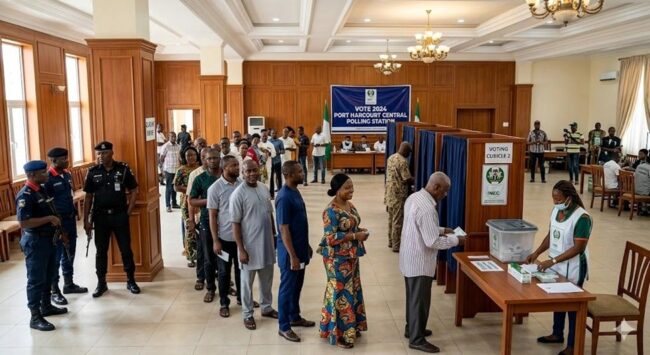
This principle is further emphasized in Deuteronomy 30:19, where God declares: “I call on heaven and earth as witnesses against you today, that I have set before you life and death, blessings and curses. Now choose life, so that you and your children may live.” In this powerful statement, God establishes the ultimate democratic principle, the right to choose. He does not impose His will by force, rather, He presents options and calls on man to decide. And herein lies the divine origin of democracy. Democracy, in its purest form, is a system that respects the individual’s right to choose. It is a reflection of God’s own method of governance. Just as God allows humanity to choose their spiritual destiny, democracy allows citizens to choose their leaders, their policies, and their direction as a society. This is not merely a political arrangement, it is a spiritual echo of divine order. And politicians who violate this principal must understand that they are ungodly people.
The idea that man was created in God’s image implies that humans possess such attributes as reasoning, judgment, and moral awareness. These qualities are essential for making choices. In a democratic system, these same attributes are exercised when people vote, debate, and participate in civic life. The act of choosing leaders or policies is, therefore, not just a civic duty but a reflection of the divine nature of humanity.
On the flip side, the gift of choice also introduces the possibility of error. Just as individuals can choose wrongly in their personal lives, societies can make poor decisions in governance. Democracy does not guarantee perfection, rather, it provides a framework within which choices can be made and corrected over time. This mirrors the spiritual journey of humanity, one in which mistakes are bound to be made, lessons learned, and growth made possible. This is why democracy must be allowed to make its mistakes, learn its lessons and devise ways of not making the same mistakes over and over again. And also why the military should stop playing God by arrogating themselves as the shepherds of democracy.
The coexistence of good and evil in the world reinforces the need for freewill. If only good or only bad existed, there would be no scope for choice. It is the presence of alternatives that gives value to choice and to decisions. In the same way, democracy thrives on diversity, of thought, opinion, and perspective. It allows different voices to be heard, even when they conflict. This diversity, while sometimes challenging, is essential for a vibrant and dynamic society. God’s decision to call on heaven and earth as witnesses in Deuteronomy 30:19 underscores the seriousness of human choice. It is not a trivial matter, it carries consequences that extend beyond the individual to future generations. Similarly, in a democratic society, the choices made by citizens affect not only their present circumstances but also the future of their nation. Elections, policies, and leadership decisions shape the destiny of societies in profound ways.
Another important aspect of this divine framework is accountability. While God grants freewill, He also holds individuals accountable for their choices. This balance between freedom and responsibility is essential for any functioning system. In democracy, leaders are accountable to the people, and citizens are accountable for the decisions they make. This mutual accountability helps to maintain order and to prevent abuse of power. It is also worth noting that God, despite His sovereignty, does not override human choice. He guides, instructs, and warns, but He ultimately allows individuals to decide. This approach demonstrates a profound respect for human dignity. In the same way, true democracy respects the dignity of every citizen, recognizing their right to participate in shaping their society.
The challenges faced by democratic systems today, which include but are not limited to corruption, manipulation, apathy, and division, can indeed be traced back to a misunderstanding or misuse of freewill. When individuals prioritize selfish interests over the common good, the system suffers. This is not a failure of democracy itself but a reflection of human weakness. So, the solution does not lie in the possible abandonment of democracy but in returning to its divine foundation, using freewill wisely and responsibly.
Civic education and moral development also play a crucial role in the process. For democracy to function effectively, citizens must be informed and guided by strong ethical principles. This aligns with the spiritual understanding that knowledge and wisdom are essential for making informed choices. Without these, freewill can lead to chaos rather than order. Furthermore, the call to “choose life” in Deuteronomy 30:19 serves as a guiding principle for both individuals and societies. It is an invitation to make decisions that promote well-being, justice, and sustainability. In a democratic context, this means electing leaders who prioritize the welfare of the people, supporting policies that foster growth and equity, and engaging in actions that build a better future for everyone.
Democracy, therefore, is not just about the mechanics of voting or governance, it is about the exercise of freewill in a way that aligns with higher principles. It is about making choices that reflect the values of truth, justice, and compassion. When these values are upheld, democracy becomes a powerful force for good. When they are ignored or violated, it becomes a tool for division and oppression.
All told, the foundation of democracy is deeply rooted in the divine act of creation and the gift of freewill. God’s declaration, “Let us make man in our own image,” and His call in Deuteronomy 30:19 establish a framework of choice, responsibility, and accountability that is mirrored in democratic systems. By understanding and embracing this connection, we can better appreciate the true purpose of democracy and strive to uphold its principles in our lives and societies. Ultimately, democracy is a reflection of God’s trust in humanity, a trust that we will use our freedom to choose wisely, to seek justice, and to build a world that reflects His divine intention.
Chief Asinugo, PhD., M.A., KSC, is a UK-based veteran journalist and author.