‘Even some NADECO members wanted me to stay longer’ – General Abdusalami A. Abubakar

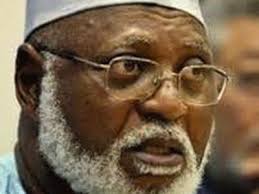
General Abdusalami A. Abubakar’s autobiography, which will be publicly presented on June 13, 2026 to mark the 84th Birthday of the Army General who handed over to President Olusegun Obasanjo on May 29, 1999 is the focal point today. General Abubakar has functioned remarkably as a global Peace Ambassador to several world bodies from ECOWAS to the United Nations as a result of his fidelity to the yearnings of Nigerians who wanted democracy, following years of dubious transition agenda from 1985 to 1999.
Inside the autobiography to be unveiled are stories of some African leaders, local activists for democracy and even military politicians he claims mounted pressure on him to scuttle the transition to democracy we now enjoy. You will also find un-put-down-able how the controversial Mamman Vatsa’s coup story allegedly traced to Rivers State nearly implicated him because he as a visitor briefly participated in a party organised by the then Brigadier Victor Malu in Port Harcourt. Here are some excerpts…
‘Transition to Democracy’
‘…Before the death of General Sani Abacha, he had announced that Nigeria was going to transition from military rule to democracy by 1 October 1998. Legislative elections had been held and winners announced. There were no governorship elections yet. Nobody was clear about the presidential election. All the five political parties had adopted Abacha as their joint presidential candidate, even though he was not a member of any of them and had not openly declared his intentions. It was generally believed that he was going to transmute from Military Head of State to a civilian President…
This was the situation when he died on 8 June 1998 and I assumed power as his successor. I had no interest whatsoever in politics. The Abacha transition programme obviously lacked credibility. There was no way we were going to continue with it. We needed to reset the system and the 1 October 1998 handover date was no longer feasible if we were to do a decent job. Looking at the situation on the ground, we found it necessary to make the transition programme as short as possible. This conclusion was reached after we had consulted widely, with civilians and within the Military…
My first suggestion was that we should draw up a six-month transition plan. That would have seen us hand over to a democratically elected President by March 1999. However, when I called for a meeting with the Military echelon and the judiciary, Justice Muhammadu Lawal Uwais, then Chief Justice of Nigeria, said he would need at least sixty days after the elections to ensure that all the judicial matters brought to the courts were dispensed with before inauguration. That was how we arrived at May 1999. It was a function of a judicial request and my desire to make the transition process as short as possible. Six months was the fastest we could do to organise elections and give the political parties the time to set up and prepare.
INITIALLY, THERE WAS INTENSE pressure from some of my colleagues, some Heads of State in the West African sub-region and some in the international community that it was too soon to transition to democracy. Surprisingly, there were pressures from some NADECO members too. They had at first been wary because the fingers of a lot of politicians were burnt by my predecessors who promised that they were going to hand over power to civilians but reneged. Several politicians were barred from contesting elections in the process. So, some were very cautious about our programme.
Two to three months into my administration, some NADECO members realised that I was sincere about the handover date, and they saw themselves as short-changed because they were not politicking as they should have done. They felt they had missed the train and wanted to come on board, which made them request more time to get their act together. They came to me as a group, and I reminded them that I had made a covenant with Nigerians, my subordinates and the international community about the commitment of the government to ensure a smooth transition to democracy…
I asked that if they wanted me to extend the transition programme, I needed them to accede to some requests. One, I demanded that they should write a letter to me requesting an extension of the transition programme. Two, I suggested that they should call a press conference indicating that they had asked that the government should extend the transition programme. I promised that if they did that, I would grant an extension. But they never did. I knew they wouldn’t. We went ahead with our programme. Some sections of the international community believed in my administration and saw that we had brought about stability and peace in the country. There had been frequent demonstrations before General Abacha died, and some were violent. But within a month or two into the life of our administration, the protests eased, and there was peace. Also, some of the sanctions imposed on Nigeria by the international community were relaxed. Some foreign leaders felt that if we had continued in office, there would be reasonable peace in the country. These were reasons why they wanted me to stay longer in power. Some of my military colleagues were hostile to the idea of ceding power to civilians, but we were determined to honour our promise.
For me, I was not in any way tempted to stay longer in office. I had made up my mind. By the time I took over the reins of power, the country was on the edge. There was extreme pressure from NADECO, G-34, and other political players for the Military to go. Nigeria was at a breaking point.
The Military needed to relinquish power. Many people did not realise that the Military was the greatest loser in the whole enterprise because most of our best brains were deployed to administer the country while the profession was neglected. We needed to go back to where we belong and re-professionalise the Armed Forces.
Also, discipline had been eroded in the Military. It was common to see a junior officer appointed as the Military Administrator of a state lording it over his seniors. For example, the Brigade Commander or General Officer Commanding (GOC) is the most senior military officer in a state and was always senior to a Military Administrator in Military hierarchy. But when a national event that was political in nature was being held in a state, the senior officer had to wait for the Military Administrator to arrive at the ceremony venue before doing anything. These contradictions affected the Military tradition of seniority and discipline.
Worse still, because of the political situation in the country, you found out that even in the Military, some officers were polarised along their states of origin, ethnic groups and religions. This was not only damaging to what the Military stands for, it was also very dangerous. The entire country is the constituency of military personnel. Divisions and differences along ethnic and religious lines would always lead to trouble. We all agreed that we needed to nip this trend in the bud to avoid catastrophic consequences for the country.
The Military truly lost out by getting involved in politics.
THE TRANSITION WAS NOT WITHOUT its challenges but I believe our sincerity and determination to do the right thing played a major role in delivering a successful programme. One of the challenges was the decision of the biggest political bloc in the south-western part of the country to form a party of its own…
‘How Victor Malu’s Party nearly implicated me in Vatsa Coup plot’
In December 1985 — less than four months after Babangida had seized power — Major-General Mamman Vatsa, our classmate, was arrested along with other military officers on suspicion of plotting to overthrow the government. Babangida, Vatsa and I attended the same secondary school in Bida. He joined the Army in 1962 on the same day as Babangida. I did not join the Army until 1967. I was in the Air Force from 1963 to 1966 before switching services and losing seniority. Lt Colonel Musa Bitiyong, my friend, was also implicated in the Vatsa plot. Both of them were executed after they were found guilty by the Major-General Charles Ndiomu Tribunal.
Not many people knew that I was interrogated over the Vatsa plot. I was Commander of the 9th Brigade. The headquarters of the Army Museum was at the 9th Brigade. I was thus in charge of the Army Museum. Every quarter, we went to Umuahia for a meeting on the museums. Normally, whenever we went for such meetings, because of convenience, we would fly straight to Owerri and drive to Umuahia from there. After the meeting, we would head straight to Port Harcourt to spend the night. We would then return to Lagos.
On that particular visit, I went to Port Harcourt after our meeting. Brigadier Victor Malu was the Brigade Commander in Port Harcourt. He was my friend. He accommodated me in his guesthouse. Same night, I discovered there were other guests in the building: men from the Nigerian Navy, including junior officers. Malu hosted a party that night for his guests. I was at the party for about half an hour before taking my leave. I’ve never really been a party freak. I was easily bored and wanted to go to bed. Colonel Tunde Ogbeha was the Governor of Bendel State at the time. He was also in Port Harcourt with Colonel David Mark, Governor of Niger State. They came for a golf competition.
As it later emerged, the coup plotters were also in Port Harcourt to concretise and perfect their plans at the same time. Because I was at the party, I was invited to appear before the Preliminary Special Investigation Panel (SIP) chaired by Brigadier Sani Sami. That was circumstantial. Because I knew absolutely nothing about the coup plot, I was not scared or worried about appearing before the panel. I also felt no one in his right senses would involve me in a coup against Babangida…
The General Abubakar’s autobiography titled, ‘Call of Duty’ will be publicly presented on June 13, 2026 at the Banquet Hall (State House, Conference Centre, Asokoro, Abuja. General Yakubu Gowon who presented his long awaited memoir, ‘My Life of Duty and Allegiance’ this week will be the Chairman of the book presentation and former President of South Africa, Thabo Mbeki, an economist, will be the Keynote Speaker.
Also published as Inside Stuff With MARTINS OLOJA in The Guardian May 23, 2026, Back Page