
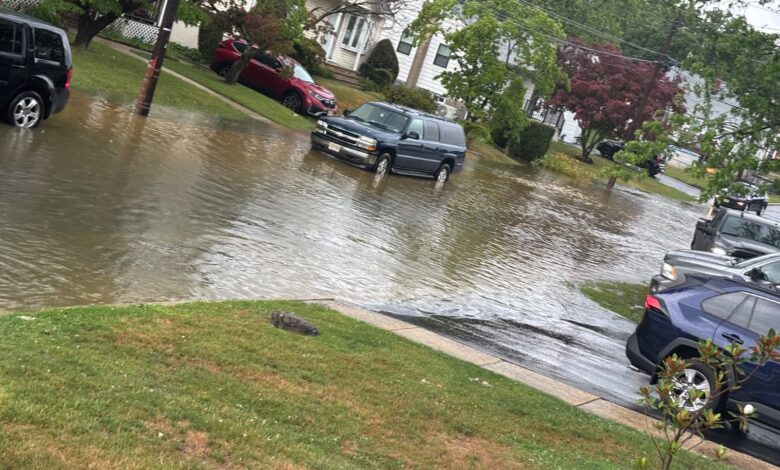
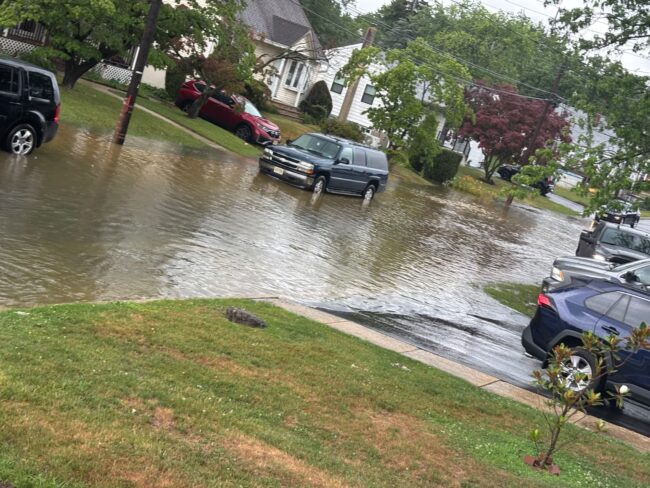
As flash floods sweep across the United States, New Jersey’s Monmouth county is no exception. Storms between July 3 and 9 ravaged Monmouth county with many residents losing power, closures occurring in Keyport, Hazlet, and other towns, multiple streets flooding, vehicles being stranded, and closures on Routes 35 and 36. With some experts considering these storms nor-easters, some people have pointed out concerns with infrastructure in shoreline flood sensitive zones and the heavy amount of beach erosion and dune damage, threatening shoreline stability.
Rain totals in New Jersey and especially Monmouth and Ocean Counties were extraordinarily high in the early July storms. The highest rainfall in New Jersey recorded by the National Weather Service fell close to the Summerfield Elementary School in Neptune Township, which saw about six inches of rain. Independent reports have claimed some areas of New Jersey’s shoreline experienced up to seven inches of rain. Local temperatures also dropped 30 degrees in some areas, going from 90 to the mid-60s in a few hours.
Nicole Clarke, 32 year old Hazlet resident, spoke about the storms and floods in Monmouth county being caused by poor sewage systems and extended drought periods. “We have experienced more droughts than rain recently, we have only experienced rain in large amounts once or twice a month that cause a lot of flooding,” said Clarke.
Some residents were forced to strand their cars and be rescued from their vehicles that were submerged by the floods. A portion of the roof has collapsed at BJ’s Wholesale Club in Ocean Township, the Monmouth County Sheriff’s Office said. Clarke said she didn’t receive any alerts for the storm’s severity until about 15 minutes after it started flooding on Thursday, July 9. “I was at work and I received an alert, but the parking lot of my job was underwater and the windows were leaking at that point,” Clarke said. “They need to do better with updating people about the storms.” Clarke also argued that this could have prevented many commuters in the storms whose cars were flooded that had to be rescued being out during the storm.
Flash flooding affected many states across the United States, leading many skeptics to start looking at climate change as the likely cause of these strengthened storms. Recent extreme heat, flash floods, power outages, etc. have been breaking back to back records and are exposing infrastructure issues all over the country. “They need to fix the sewage systems and power lines if storms are going to continue to come in this strong,” said Clarke. “My basement flooded and my husband’s speakers, clothes, and DVD’s were ruined. He is devastated. I pray for those whose cars and homes were damaged in the storms.”


