Being the text of the keynote address titled JUSTICE AND FAIRNESS AS PANACEA FOR PEACE
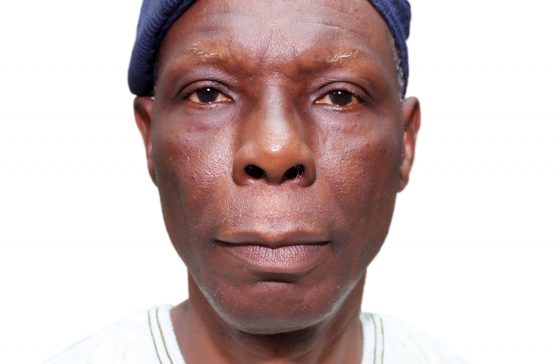
Delivered by: Dr. Kayode Fayemi, CON, Minister of Mines and Steel Development, Federal Republic of Nigeria at the 10th Anniversary Memorial Lecture in honour of Late Chief Adebayo Adefarati, Former Governor of Ondo State, Nigeria (1999 – 2003) at Akure, Ondo State on Thursday, March 30, 2017
Protocols and Introduction
I must start by thanking the chief host of today’s event, my brother and friend, Arakunrin Oluwarotimi Akeredolu, SAN, Governor of Ondo State, Nigeria, for honouring the legacy of Baba Peace, Late Chief Adebayo Adefarati, one of his illustrious predecessors, and to the organizers for according me the privilege of speaking today.
Chief Adebayo Adefarati was one of the stalwarts of a fast departing generation. From humble roots, his vocational arc took him from service as an educator into politics and public service when he served as a two-time commissioner in Governor Michael Ajasin’s cabinet in the Second Republic between 1979 and 1983. He was one of those who learned at the feet of Chief Obafemi Awolowo and was steeped deeply in the Awoist progressive tradition. Chief Adefarati was a throwback to a different time – an era of our history that has faded largely from the consciousness of the millennial generation. He was one of an impressive corps of hardy public servants reared in the womb of Awoism who approached politics first and foremost as an opportunity for bettering the lives of their compatriots.
For that generation, whatever political intrigues were considered part of the game of seeking power, ideology came first. There were marked by a distinctly progressive worldview that set their principles and policies apart. Many observers have argued that the military intervention that ended the Second Republic in 1984 was an unfortunate rupture in the progressive trajectory of the Southwest. It interrupted what would have been the transfer of progressive ethos from one generation of custodians in public office to another. Given the depth and breadth of the Awoist progressive vision, it would be fair to say that this rupture definitely altered the destiny of the Southwest.
When in 1999, Chief Adefarati ran for office as governor of Ondo State, he did so successfully as one of the veteran torch bearers of that brand of progressivism bringing it into the 21st century. In gathering here to remember him today, I must acknowledge that the timing of this occasion is auspicious and carries much synchronicity and symmetry. Ondo traditionally has been a progressive stronghold dating back to the First Republic where as part of the Western Region it was firmly in the camp of the Action Group. During the Second Republic, that alignment continued with the Unity Party of Nigeria. During the ultimately short-lived, Third Republic, Ondo pitched its camp with the Social Democratic Party. At the dawn of the Fourth Republic in 1999, the state followed its heart and aligned with the Alliance for Democracy with Chief Adefarati as its flag-bearer.
Papa Adefarati’s political clout was acknowledged beyond the Ondo political sphere which earned him the presidential ticket of the Alliance for Democracy (AD) in 2007. However, few weeks to the 2007 elections, he succumbed to death. Throughout his career in public life, the political gospel of Baba Adefarati was that of peace, even in the face of provocation, hence his sobriquet Baba Peace. It is therefore understandable that the focus of this gathering is hinged on peace as a fundamental condition for the success of the Nigerian project.
With the great legacy of his life and times being the continued quest for peace in its different manifestations; the late Papa Adefarati was of that quintessential stock that considered the organization of society along lines hinged on fairness and justice as the surest guarantees of attaining and sustaining peace. And, this he struggled for from his earliest entry into the political space as a member of the old Action Group (AG) in 1954, through the period he served in the Unity Party of Nigeria and twice became a Commissioner for Local Government and Community Development, and then Works and Transportation, under our late revered Pa Adekunle Ajasin in Ondo State from 1979 to 1983, to his days as the Alliance for Democracy (AD) Governor of Ondo State and beyond.
With the outcome of the last gubernatorial election, it would be accurate to say that Ondo State has now returned to its natural habitat in the moorings of the progressive tradition after what can be justly described as a period of drifting in shallow conservative waters. Ondo has returned home. Personally, as a native of Ekiti State, this occasion has tremendous resonance for me. Ekiti was part of Ondo State until 1996 when the former was carved out. Even so, these administrative and cartographic changes have not been enough to sever links that have endured for decades, if not centuries. In many ways, the destinies of both states are connected. Geography alone ensures that goings-on in Ado-Ekiti and Akure have a way of impacting each other. It might also interest you to know that the dear departed that we are fondly remembering today, held a most prized traditional title from the Egbeoba kingdom in Ekiti state – the Otunba Elekole of Ikole, Ekiti.
In a more significant sense, the mere fact that this occasion is holding at all is a sign of the times. Five years ago, I was billed to be the guest speaker at the fifth anniversary edition of this event. It was not to be. Thugs in the employ of the then incumbent government invaded the venue of the event, disrupted proceedings and visited mayhem on the guests. Many escaped with serious bodily injuries or barely with their lives. On the advice of my advance security detail, I cancelled my appearance. Evidently, the sponsored violent disruption of the occasion was meant to prevent what was perceived in some quarters as an opposition party conclave. But it was also a demonstration of how the trademark mainstreaming of brigandage by retrograde forces can poison politics and sow discord in society. Those were the dark days. Ondo State’s return to its progressive traditions also heralds the advent of a liberal political climate. Progressives have always been the most strident defenders of the liberal democratic ethos of tolerance and openness, and we will continue to do so.
From my perspective, this occasion is an opportunity to construct a bridge between our progressive past and our progressive present, and positively imagine our progressive future. Historians of the progressive tradition will observe that it has long been an oppositional principle primarily headquartered in the Southwest casting a social, political and economic vision ranged against the conservative status quo that has endured at the centre for decades.
One of the significant truths of our present political circumstances as a nation is that for the first time in our history, this progressivism is no longer a marginal tendency. In 2015, progressive forces were able to mobilize from across Nigeria and migrate from the periphery to the centre. This means that we now have an invaluable and historic opportunity to apply our ideas to national policy making; to begin to realize the vision of the good society that inheres in our worldview, and raise the moral and material quality of life on our shores. It is now possible for us to alter the course of our nation’s destiny by the sheer force of our convictions. This is a responsibility that we do not at all take lightly. Our conversations here will be framed by this consciousness.
Justice and Fairness as the Foundation of Social Progress
In reflecting upon the essence of peace that came to define Chief Adefarati’s political trajectory and expanding on the notion, it will be instructive to set a point-of-departure with the understanding that in the very complex environment within which we function, democracy – in itself – does not necessarily guarantee good governance and peace. It has to be fundamentally anchored to the moorings of justice, and cognate indices including the rule of law, a fair and sound electoral process, and an equitable system of resource allocation and distribution across the various tiers and levels of government in Nigeria, etc.
While it can be said that the most important, if not ultimate, goal of systems that are put in place to organise society – such as democracy – is to attain the objective of peace, this can mainly be achieved and sustained within a framework that is essentially predicated on justice. Yet, our very traditional understanding of the notion of ‘justice’, as pertaining to democracy, is based on a legal conception associated with electoral legitimacy, the effectiveness of constitutional guarantees in society, and other aspects of the rule of law. This has revealed, with time, as a fairly limited insight into the nature and dimensions of justice. For our purpose, justice signposts a broader view which encompasses all that promotes the greatest good for the greatest number of people; it signifies an ontology wherein rights and freedoms are attained and secured in society.
Hence, the broader context that I am appealing to is one that links justice with human security. It is only when human security has been achieved to a great extent in society that we can talk of having attained the condition of justice, which undeniably leads to peace. In delineating the intersection between justice and human security, it can be observed that most of the factors that have truly led to instability and conflict in society – whether they take on the hue of religious or ethnic strife – derive from the inability or lack of the government to provide essential safety nets and social services to people. And, this can be considered as going against the grain of the central purpose of government, from which it derives its purpose and legitimacy. The human security approach emphasizes the need for governments to be able to guarantee economic, food, health, environmental, personal, community and political security in society, which can be accessed by people. This can equally be regarded as issues of basic rights, the lack of which are at the source of most agitations and restiveness.
As such, the notion of attaining ‘peace’ in society relates to the achievement of a holistic human security agenda, particularly in a democratic situation. Moreover, in its radical Declaration of Intent, these are issues that have been placed on the front-burner of the rationale for the existence of the State, as stipulated in the Constitution of the Federal Republic of Nigeria 1999 under the Fundamental Objectives and Directive Principles of State Policy. In this section of the Constitution (Chapter 2), it is stated that: “the security and welfare of the people shall be the primary purpose of government” (14. (2) (b)). Hence, peace can only be affirmed in an environment that thrives on economic justice as declared by the Constitution.
Order and peace in human society rest on the idea that good will be rewarded and evil will be punished. This is the simplest definition of justice. This conviction that everyone will get their just deserts is so ingrained in the human psyche that it has shaped religion where different religions have theological concepts revolving around notions of eternal punishment and eternal reward.
In the field of religion, the arc of justice extends beyond the temporal realm into the cosmic realm; beyond earthly existence into the domain of the afterlife thus informing concepts like heaven and hell and karma among others. Philosophers and sages of old agree that justice is primarily a transcendental construct – a piece of moral logic that is built into how as human beings we perceive the universe to work. Without a perception of justice as being essential to the fabric of our mortal existence, we would have moral anarchy. Justice in this context means just reward. The operative assumption at the heart of any progressive human collective is that virtuous behavior will be justly rewarded. Good things will come to the most deserving. The effect of this equation is to give hope, purpose and meaning to the citizenry. It tells them that a moral order exists; one in which the citizens that practice certain virtues will be adequately rewarded. It enables us to cultivate the values that will engender social progress and promote the common good. Injustice, therefore, describes a situation in which this moral equation is not active.
This is as good a time as any to reflect upon the themes of justice and fairness because they are at the heart of the biggest problems confronting Nigeria at present. A cursory survey of contemporary events and of the headlines leaves one in no doubt that Nigerian is in the midst of what can only be described as a crisis of justice. If there is a singular word that encapsulates the grievances, disaffection and disillusionment that has assailed the Nigerian project for decades, it is injustice in all its ramifications. All about us, we see the signs of a society being buffeted by everyday injustices that have led many people to question the role of the state as a guarantor of justice and to conclude that Nigeria is a fundamentally unfair and unjust place.
The idea of justice is related to other concepts such as the rule of law, equality before the law and, the belief that all individuals are equal, which are the cornerstones of the universal declaration on human rights and our constitutional corpus of civil liberties. While these precepts are very much evident on paper, and are prominently enshrined in our constitution, in practice, they are under assault. It is a matter of much regret and concern that an elementary principle as equality before the law possesses a precarious practical existence. Much of this is a consequence of our political economy and our history which has shaped how ordinary citizens tend to relate to each other and their conceptions of power and authority.
The philosopher Blaise Pascal said, “Justice and power must be brought together, so that whatever is just may be powerful and whatever is powerful may be just.” The reality of sociopolitical experience is that for much of our history, power and justice have been estranged. The popular conception of authority forged during an era of military dictatorship mean that many Nigerians have been socialized to see power as inherently despotic and arbitrary and in fact fundamentally opposed to justice. Concerns of justice are seen as the moralistic niceties and naiveté of those unschooled in the demonstration of raw power.
I have had cause on a number of occasions to address the popular Nigerian archetype of the ‘big man’. The cult of the big man is an explicit statement of inequality. It crudely dramatizes the Orwellian axiom that ‘all animals are equal but some are more equal than others.’ The idea of big men became concretized during the decades of military rule because any dictatorship by its very definition assumes the inherent superiority of one class over others and of certain individuals over other individuals. In the Nigerian political lexicon of the 1980s and 1990s, the country was divided between all-powerful soldiers and “bloody civilians.” The idea of common citizenship which is closely related to that of equality before the law was severely degraded. Indeed, rule of law, itself was in abeyance. For it was not mere symbolism that one of the first acts of military juntas was to suspend the constitution, annulling as it were, the covenantal document guiding the relations between citizens as individuals, and between civil society and the state.
Today, eighteen years into the Fourth Republic democracy, the most blatant and brazen aspects of militarism may have retreated, but there is still much work to be done in terms of vigorously affirming equality before the law. No where perhaps is the impact of the big man as evident as in the precincts of criminal justice. More than 60 percent of Nigeria’s prison population are awaiting trial, held in decidedly sub-human conditions, and barely afforded some of the basic courtesies of the legal system including that of presumption of innocence until proven guilty. Compare their treatment with that of VIPs being prosecuted by the state, for example. There is a clear gulf between the easy almost casual access to justice enjoyed by big men and the lack of access endured by the less privileged. Sadly, there is still a clear distinction in how our social and political institutions treat those considered “big men” and those deemed ordinary people.
It has to be stressed that this is not simply due to the idiosyncrasies of our institutions. Our institutions are no more than systemic and structural representations of our values. In many respects, they project our character as a people. Any critique of how ordinary people are treated in contrast with big men must note that ours is a society in which the same mob that lynches pickpockets will exhibit the Stockholm syndrome by serenading a thieving VIP and be among the first to defend, rationalize and celebrate his infractions against our common wealth.
Impunity and Political Justice
A natural progression from inequality before the law is a culture of lawlessness and impunity. Many times in our history, those entrusted with authority, have used their custodianship of state instruments and resources to remorselessly violate the public interest. Our country is seething from wrongs inflicted by the powerful upon the poor and the vulnerable. Nothing has fostered the de-legitimization of the state and popular distrust of constituted authority as the belief that those who lead these institutions are fundamentally self-aggrandizing and are prone to act in ways that violate the less privileged among us. Thus, government rather than being perceived as an instrument of our collective betterment is seen as a vehicle of elite enrichment and predation.
Numerous cases of extra-judicial killings and brutality by law enforcement and security agents have severely rubbished their reputation in the public mind. The very low rate of remediation of such cases by the courts has further fortified the belief that the ordinary Nigerian has no options. The courts are meant to be temples of justice and are, in theory, the last hope of the common man. I think we can all agree that the blight that has beset our institutions over the years has not left the justice sector and the judiciary unscathed. When Olu Olagoke wrote The Incorruptible Judge in 1962, he was portraying a popular ideal of judges as individuals of such rarefied integrity that they were impervious to the taint of political compromise or the temptation of dubious lucre. Unfortunately, judges are no longer perceived in this light. And the courts, far from being temples of justice, are increasingly regarded as places were justice itself is a commodity to be bought and sold, and often procured by the highest bidder.
Injustice in our society transcends the weighty injuries daily borne by all of us and encompasses fundamental deficits in our political economy. Chief Adefarati’s belief in justice as a primary condition for ensuring peace inspired his participation in the struggle against military rule and towards the restoration of the annulled June 12 Presidential mandate in his capacities as a member of the Afenifere and the Joint Action Committee of Nigeria (JACON) of the 1990s, along with other icons of the struggle, such as the late Chief Gani Fawehinmi. Further to this, his role as one of the wheels on which the engine of the National Democratic Coalition (NADECO) spun in the dark days of authoritarian rule was well recognized by those located in the interstices of that experience.
For Chief Adefarati’s generation, issues of injustice were bound up with deep seated flaws in the structure of the Nigerian state. The progressive critique of the state is essentially that its predisposition towards over-centralization and unitary governance has seized the developmental initiative from Nigeria’s constituent communities and crippled them by rendering them dependent on federal hand-outs. For Adefarati and his cohorts, this state of affairs informed their quest for true federalism. This has remained an article of faith for progressive forces.
The old unitary model of top-down policy implementation in which well-meaning but remote technocrats virtually impose solutions on the people without taking into account their views is obsolete. Effective development is generated from the grassroots and funneled upward. It is rooted in the experiences and expectations of the people; it stems from their priorities and definitions of their needs and challenges. Democracy, more than anything else, is a system that makes people the masters of their fate by making them the main actors in the policies that affect them. A return to true federalism will truly empower the people in local communities to take charge of their destinies thus fulfilling the participatory imperative of democratic governance.
Of course, no one is suggesting that a return to true federalism will occur swiftly. Democratic politics which thrives on tireless advocacy, consensus-building and conciliation means that this shift will be incremental. This truth should not discourage us from beginning this shift however unheralded the initial steps in this direction might be. The arrival of progressives on the national stage has at least opened a fresh door of possibility in this regard.
If political injustice can be summed up as the illicit appropriation of sovereignty, which is a property of the people, and its conversion into the private prerogative of an usurper class in power, then we can say the return to democratic rule in 1999 closed the chapter of brazen injustice in our history.
The challenges today though somewhat more subtle remain no less injurious to our collective destiny. Yet, we must recognize that in the true moral and political sense, there is no statute of limitations on injustice. When grievances are left unresolved, they are not interred with time; they continue to haunt the nation and dog every step into the future. In this regard therefore, the advent of the Fourth Republic did not necessarily mean the attainment of closure for all the crimes committed in the preceding era.
The establishment of the Human Rights Violations Investigation Commission (HRVIC) by President Olusegun Obasanjo in 1999 was in recognition of the need for a reckoning with the historic injustices that were haunting the Nigerian state. The Commission which was headed by Justice Chukwudifu Oputa was modeled on the Truth and Reconciliation Commission that had mediated in post-apartheid South Africa. Its brief was to investigate violations of human rights in Nigeria that had occurred between January 15, 1966 and May 28, 1999. The Commission was mandated to give an accounting for our country’s history including some of its darkest moments, to untangle layers of grievance that had congealed over the years, and assign culpability with a view to achieving national reconciliation. I had the privilege of serving as a technical consultant to the Commission.
For nearly three years, the Commission guided Nigerians through a soul-wrenching exercise in public catharsis, televised hearings and visitations that provided platforms for various individuals and groups to vent their anger, relive their pain, and air their grievances. What we saw at the “Oputa Panel” as it became popularly called, was a nation in need of healing. The members of the Commission understood that doing justice and righting historical wrongs are essential to the process of national healing and reconciliation. We were conscious of the possibilities of achieving a lasting peace through a fair accounting and recompense for all the wrongs that had been done before. This outlook shaped the voluminous report of the panel, which including far reaching recommendations on what has to be done to achieve justice and reconciliation, including ways and means of resolving the deep-seated contradictions of our polity which are sometimes referred to as ‘the national question.’
Unfortunately, for a variety of reasons (none of them related to the quality of the Commission’s work which was unimpeachable), the federal government failed to release the report and implement its recommendations. I count this failure as a tragic missed opportunity to apply much needed salve to some of our nation’s deepest wounds. The report stands alone as the most comprehensive effort at instigating national healing and reconciliation and is a conceptual and practical arsenal of solutions with which to address past and persisting injustices. It is very much worth revisiting.
Conclusion
Another great son of Ondo State, Gani Fawehinmi, the legendary civil rights advocate, distinguished between two dimensions of justice – legal justice which relates to courts and social justice which covers the social and economic rights of the people. These rights include the right to employment, decent housing, good education, healthcare, life, property, electricity and water supply. In making this distinction, Gani apprehended the core proposition of the progressive tradition which yokes political and civil rights to social and economic rights. In the progressive worldview, the pursuit of justice goes beyond a functional legal order, pristine courts, and an efficient law enforcement establishment – although these are all certainly very important – to the presence of social and economic rights aimed at guaranteeing a certain quality of life for the citizenry. These ideals hark back to the cardinal tenets of the classical Awoist formulation which was dubbed “Life more Abundant” namely, “freedom from ignorance, freedom from disease and freedom from want.”
This is why progressives have been consistent and strident advocates of free education and other social deliverables for several decades – a tradition presently being carried on by the present administration. Through its practical commitment to programmes like access to education, school feeding for pupils, and job creation, under the aegis of its social investment schemes, this administration is embarking on historical steps to place ordinary Nigerians at the very centre of public policy. Whether one simply refers to these policies as populism or welfarism, these tags fail to accurately convey the unprecedented official resolve to create a social safety net and mobilize resources towards the protection and empowerment of the most vulnerable segments of our population. These are the kind of life-affirming possibilities that are brought into focus when progressive forces are on the national stage.
Our overarching commitment to social and economic justice has shaped our approach to the management of our mineral resources. We are bringing the painful lessons we have learned at great cost in the Niger Delta to bring to bear on the solid minerals sector. Ecological justice is our guiding principle. Our goal is to provide a better deal for the local communities where these minerals are located, ensuring communal buy-in and benefit. We are ensuring that investors comply with global best practices in resource extraction by integrating all relevant protocols on environmental conservation in the conduct of mining and all related business. This approach is informed by our belief that the environment itself is a resource and has to be safeguarded even as we unearth its more obvious treasures.
No longer will our communities simply be used and dumped or serve as mere sites for extraction. For the new resource economy to benefit our people, we have adopted an activist posture towards issues of developing local content and ensuring a transfer of skills and technology that will be to our nation’s advantage in the medium and long term. While we are committed to maintaining a liberal business environment, we are also mindful that the new resource economy results in a win-win situation for all stakeholders. This is why we are ensuring that host communities are directly and positively impacted by the activities that will be undertaken in their domains.
There is still, of course, much work to be done in our pursuit of a just society. Foremost among our priorities has to be distributive justice or the business of guaranteeing fair shares for every member of society. A truly egalitarian society is one in which all citizens have equal access to social and economic opportunity. At the heart of many of the existential grievances across the federation is the sense that ordinary citizens, the majority of them young people, can see no pathway to self-actualization. Ultimately a just society is one in which every citizen can claim an equal chance at realizing his or her potential. This is only the beginning. Other domains of justice similarly require attention.
There is no doubt that the justice sector is in need of profound reform. Nigerians have to once again look to the courts legitimately as the last hope of the common man and a dispensary of legal remedies for their hurts – critical steps in this regards are already being taken. For instance, our penal facilities require urgent attention. According to the Nigerian Bar Association, the rate of overcrowding in our prisons is 70 percent and in certain facilities that rate is as high as 90 percent. Expediting legal processes will go a long way towards reducing the number of remand prisoners in our penal facilities. The NBA has developed an ambitious raft of reforms for the justice sector. I am convinced that reformers in the public service and in civil society can work together and lend real momentum to efforts to transform the administration of justice in our country.
Lagos State has already blazed a trail in its reform of the judiciary and the justice sector and its innovative adaptation of other approaches such as alternate dispute resolution. During my time as Governor of Ekiti State, we also made Justice Sector Reforms a crucial component of our Governance agenda, and achieved a good number of significant shifts in the administration of justice in our state, in our time. Apart from the criminal justice system, we should empower our traditional communal authorities to mediate in areas of civil justice. We should strengthen traditional conflict prevention and mediation mechanisms and leverage their advantageous proximity to the grassroots to defuse disputes in our communities.
There are positive lessons to be learned from countries, especially those in South East Asia that we frequently cite admiringly for their order and cleanliness and socio-economic development. For example, the backbone of Singapore’s much vaunted order is a fierce commitment to rule of law. I am privy to the efforts of our foreign affairs ministry to intervene in the cases of Nigerians jailed abroad. A number of these Nigerians are being held for drug trafficking in countries with very stiff penalties for drug offences. Sadly, for many of these Nigerians, their fates are sealed. Such are these countries’ zealous commitment to their own laws.
This is the unyielding face of justice. That is what the rule of law looks like. It rewards civic virtue but uncompromisingly punishes criminal deviancy. As we seek the enthronement of the rule of law on our shores, we must recognize that a just society will demonstrate far less tolerance for disorder and indiscipline than has long been the norm. The liberal climate guaranteed by our democracy is not to be construed as a license for lawlessness. There must be an acknowledgment on both sides of the aisle – for the government and the governed alike – that the rule of law imposes behavioral demands on us.
Thank you for listening.
Dr. Kayode Fayemi, CON
Minister
Akure, Ondo State | Thursday, March 30, 2017