



 African leaders across the continent have increasingly joined forces with Caribbean nations and advocacy groups in calling for reparations from former colonial powers for the horrors of the transatlantic slave trade. On the surface, the demand might appear morally righteous. But in actual fact, it is not.
Millions of Africans were torn from their homes, subjected to brutal and inhuman conditions, exploited for centuries, leaving legacies of poverty, underdevelopment, and social fragmentation where once they had their ancestral homes. The outrage such historical injustices still provoke is understandable, but the discussion around reparations cannot be detached from historical realities and practical considerations. There are compelling reasons why African leaders should reconsider or at least pedal down on their insistence on demanding financial compensation as reparation.
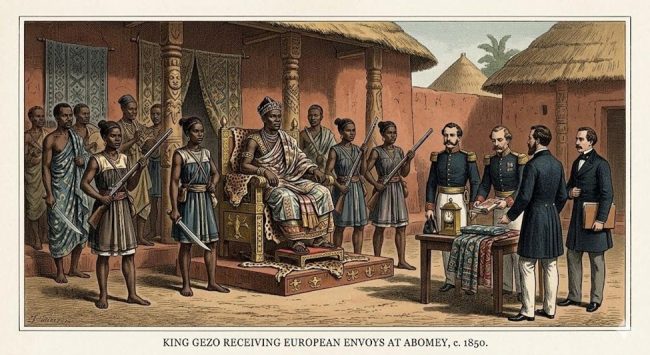
It is surprising that one critical point is often overlooked in these debates. And that is, the complicity of African rulers, elites, and traders in the transatlantic slave trade. History shows us that the trade was not conducted exclusively by Europeans. Local African intermediaries were the people who captured, sold, and profited from their fellow Africans, often betraying neighbours, rivals, and sometimes even their relations for such European goods as guns, rum, textiles, and trinkets. This complicity is one moral factor that undermines the legitimacy of the contemporary demand for reparation.
To draw a biblical parallel, it is reminiscent of the story of Joseph who was sold into slavery by his own brothers for a pittance because they were jealous of their father’s love for him as their last-born. African leaders today, demanding reparations, are effectively asking payment for sins that their ancestors willingly committed against their own people. It raises profound questions about moral authority. If one’s ancestors betrayed their own, can modern descendants claim the right to demand compensation from outsiders who benefited from that betrayal?
The comparison with modern kidnappers suits the situation. A bandit who abducts someone and demands a ransom is rightly condemned. But if the bandit were to turn around and demand more compensation from the state or third party for damages caused by the crime, such as if the victim died, it would be seen as morally absurd.
In the eyes of the wider global community, African leaders advocating for reparations will appear morally inconsistent, especially when the historical record clearly shows that some African communities facilitated the trade. These betrayals were not acts of coercion by Europeans as such. In many, if not all, cases they were conscious choices by African intermediaries, many of whom prospered materially from the sale of their own people. To demand reparation from the descendants of foreign powers while overlooking the role of African ancestors is ethically inconsistent.
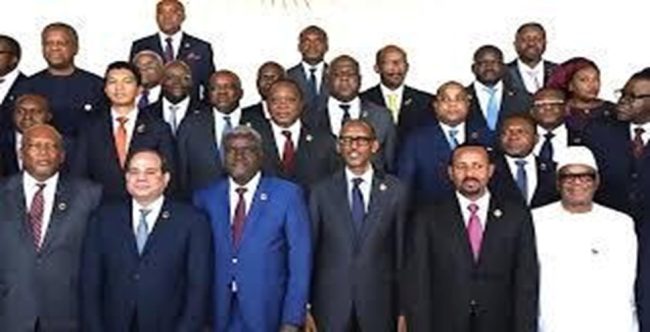
Moreover, the contemporary political reality in many African countries cannot be ignored. Greedy politicians and top public officers have historically been known to appropriate public resources for personal use. Assuming reparation was paid, the money would almost certainly end up in the pockets of a select few at the top, and not benefit ordinary citizens, not to talk of descendants of enslaved Africans if they can still be discovered. In other words, the common people whose ancestors suffered most acutely would likely see little to no tangible benefit coming from the reparation. In countries where governance is fragile and corruption is endemic, large inflows of external funds are often mismanaged, embezzled, or used for political patronage. To pursue reparation under these conditions would be simply insulting the intelligence and sensibilities of the very citizens African leaders claim to represent.
Many African societies actively participated in the slave trade, capturing and selling their own people to European traders. European powers, though culpable for sustaining and institutionalizing the trade, were not the only actors. If financial restitution were truly just, then African intermediaries and their descendants should, in principle, bear some responsibility for the consequences of their ancestors’ actions. Therefore, the very complexity of assigning blame across centuries, borders, and generations renders the demand for reparation highly problematic. It would consequently be far easier to appeal to emotion than to address the tangled realities of historical complicity.
The challenges of determining beneficiaries add another layer of difficulty to the equation. Who receives the reparation if it is paid? Would it go to governments, which would likely squander the funds? Should it be distributed to the descendants of enslaved people scattered across the Caribbean, North and South America, and Africa itself? How do you actually identify them? There is no clear mechanism to ensure equitable distribution. The logistical and moral questions are enormous, making the practical implementation of reparation almost impossible.
The economic argument is even more compelling. Calculating the value of centuries of human suffering, lost labour, and societal underdevelopment can only be an inherently speculative exercise. Trillions of dollars have often been cited, but such figures can only be arbitrary and politically motivated. Even if such an enormous sum were to be paid, it would do little to address the deeper causes of underdevelopment or improve governance. Besides, the focus on reparation can only distract African countries from pursuing such forward-looking strategies as economic reforms and investment in infrastructure, education, and healthcare. Development cannot be outsourced to historical claims. Instead, it requires proactive policy, accountability, and leadership.
The moral and spiritual dimensions of African leaders’ demand for reparation are equally significant. History demands acknowledgment and education, which are essential forms of restitution that do not rely on financial compensation. African societies have a responsibility to confront the role of their own ancestors in the slave trade, teaching future generations the full scope of historical truth. Moral authority cannot be claimed merely on the basis of victimhood when the historical record clearly shows complicity. Reparation, without such introspection, will only transform a legitimate grievance into a hollow political statement, potentially undermining the credibility of African leaders on the international stage, possibly.
To be sure, European powers, for their part, were not monolithic oppressors. Many societies were divided over slavery, with abolitionists and reformers challenging the system from within. Simplifying history into a binary of oppressors and oppressed ignores this nuance and undermines the intellectual credibility of the reparation argument. Similarly, African leaders advocating for reparation must grapple with the complexity of historical moral responsibility rather than reduce history to a simple narrative of exploitation. Ignoring these complexities is moral hypocrisy.

The analogy to Joseph being sold by his brothers remains instructive. Just as Joseph’s brothers acted out of jealousy and self-interest, African elites who facilitated the slave trade prioritized profit and political advantage over the lives of their own people. Modern leaders, invoking historical grievances, must recognize that moral and spiritual restitution should precede financial claims, if any country would be crazy enough to want to pay. A legacy of honesty, education, and societal repair offers far more enduring justice than a payment that, in all likelihood, would enrich a few politicians while leaving ordinary citizens untouched. Greedy public officers, who dominate the top echelons of African governments, would inevitably absorb the benefits of any reparation, leaving those whose ancestors suffered most marginalized once again. At this juncture, I would like to point out, and it is also worth noting, that European societies themselves were often victims of conquest and oppression in their own histories. Britain, for example, endured centuries under Roman rule, suffering exploitation and domination for nearly 400 years. Should the descendants of British families or other colonial victims now demand reparation from Rome for their ancient oppression? History cautions against simplistic claims that ignore the temporal distance and the complexity of responsibility across generations. Such comparisons highlight the selective logic underlying contemporary reparation claims, which tend to focus on European culpability while ignoring African complicity.
Ultimately, the push for reparation is fraught with historical, moral, and practical difficulties. African leaders are morally justified in remembering the suffering inflicted by slavery, yet the focus on financial compensation alone could be misleading and potentially counterproductive. Recognition, education, historical reckoning, and proactive development strategies are far more effective in addressing the legacies of slavery than monetary claims. Reparations, without these elements, stands to reward historical collaboration, enable corruption, and insult the intelligence of ordinary African citizens.
African leaders must also consider the broader impact of their rhetoric on governance and public trust. By emphasizing reparation over accountability, transparency, and domestic reform, they divert attention from the urgent needs of their populations. Citizens who continue to live in poverty, who lack access to quality education and healthcare, and experience systemic injustice are unlikely to benefit from reparation. The focus on historical grievances can be seen as a distraction, allowing top public officers to consolidate wealth and power while they claim moral high ground. This dynamic undermines the credibility of leadership and insults the common citizen who bears the daily brunt of poor governance.
History is a mirror reflecting human choices. African leaders, in pursuing claims for reparation, must look into that mirror honestly and recognize the full spectrum of historical responsibility. The moral fiber to demand payment cannot be inherited merely from victimhood. It must be earned through acknowledgment, restitution, and genuine reconciliation with the past. Financial compensation, in isolation, is insufficient and, in the hands of corrupt elites, potentially destructive. Moral clarity, education, accountability, and development strategies offer a far more enduring legacy for the continent and for the descendants of those who suffered most.
Reparation may soothe grievances, but it cannot substitute honesty, integrity, and proactive leadership. African leaders should peddle down on the demand for reparation and focus instead on empowering their people, building resilient institutions, and confronting the uncomfortable truths of history. This is the path toward lasting justice, not the hollow pursuit of financial compensation that is aimed at enriching the few while failing the many.


