Anxiety is sweeping through the Haitian immigrant community as hundreds of thousands of them that reside and work in New York City lost their Temporary Protected Status (TPS), which entitled them to live and work in the United States on Monday.
Their worries are increasing as many New York politicians and anti-immigration advocates are arguing that it is now safe enough in Haiti for them to return home. This is further compounded by reports that the United States Immigration and Customs Enforcement (ICE) is getting set for a major operation that would result in deportation of those affected by the TPS revocation.
About 350,000 Haitians lost their TPS on Monday, leaving them at the mercy of ICE agents who can now pick them off the streets or from their homes for deportation to a country that is as unsafe and economically unstable as it was when the TPS program started 36 years ago.
The US Supreme Court in June this year allowed the President Donald Trump administration to end the program which was created by Congress in 1990 to prevent deportation of people to countries suffering from civil strife or natural disasters.
People from Haiti were first granted the Status in 2010 after a devastating earthquake killed hundreds of thousands and left most parts of the country desolate, but it was extended following the widespread gang violence that erupted after the assassination of Jovenel Moïse, the 48th president of Haiti, on 7 July 2021.
Many of those born since the onset of the TPS program know no other country beside the US and the others who are now at risk of being deported are in mortal danger of being forced back into a country that is still held hostage by vicious gangs and a battered economy.
Officials, however, don’t seem moved by the dire circumstances the affected Haitians face. In response to their concerns, a spokesperson for the US Homeland Security said in a statement, “It’s closing time, which means you don’t have to go home, but you can’t stay here. The good news is, it’s not too late to get a $2,600 check and a free flight home.”
Haiti is, indeed, still struggling with widespread poverty, political corruption, and gang violence both in the nation’s capital of Port-au-Prince and throughout the country. With Haitian immigration to the US at an all-time high to escape the pervasive poverty, political turmoil and insecurity, the rug has literally been pulled from under the feet of the roughly 350,000 Haitian immigrants in the United States by the Trump administration and the Supreme Court.
“They killed our president!” said one Haitian American who is legally residing in New Jersey who pleaded anonymity, in reference to the 28 US trained Colombian mercenaries who murdered President Moïse in 2021. That incident is associated with the beginning of the rapid descent of the country into widespread violence and corruption, especially within Port-Au-Prince and surrounding areas.
“First, they kill our President and then they ban us from coming here for better lives. This is disgusting! I pray for my family and friends who may be sent back,” the concerned Haitian American said.
The Trump administration and its supporters argue that the withdrawal of the TPS has to do with US national security, with Haitians being labelled as dangerous. Trump and his supporters claimed on national news networks and during the last presidential debates that Haitian immigrants must be barred from the US as they were eating people’s pets, based on what was found to be a false video from Springfield Ohio.
Prison data has also shown that Haitian illegal immigrants have an incarceration rate of 81 percent below native-born Americans. There is also consensus in many places that Haitians are positively impacting communities across the country where they reside.
Efforts are being made to reverse or at least mitigate the consequences of the situation confronting hundreds of thousands of Haitians who had been enjoying TPS.
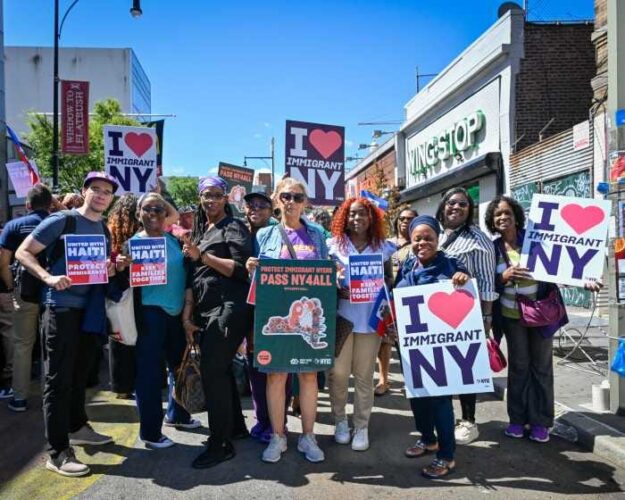
Some are protesting a situation where family members will be suddenly separated from each other, with parents being deported while the children, born in the US, are left to be by themselves, or a situation where these children are forced to return to a poor, hostile, unsafe country that they had never known.
Stephanie Delia, the incoming president of the Haitian American Lawyers Association of New York, shared the advice she has been offering Haitians who had been living under TPS in New York: “Use this time to prepare. When I say prepare, I mean, specifically think of four areas: your children, your money, your legal documents, and an emergency plan.”
New York City Mayor, Zohran Mamdani, on his part, has implored foreign nationals to connect with city officials. “We are going to be standing up for these communities, and we have instructed our Mayor’s Office of Immigrant Affairs to continue to connect families to free and confidential legal help,” he assured.