


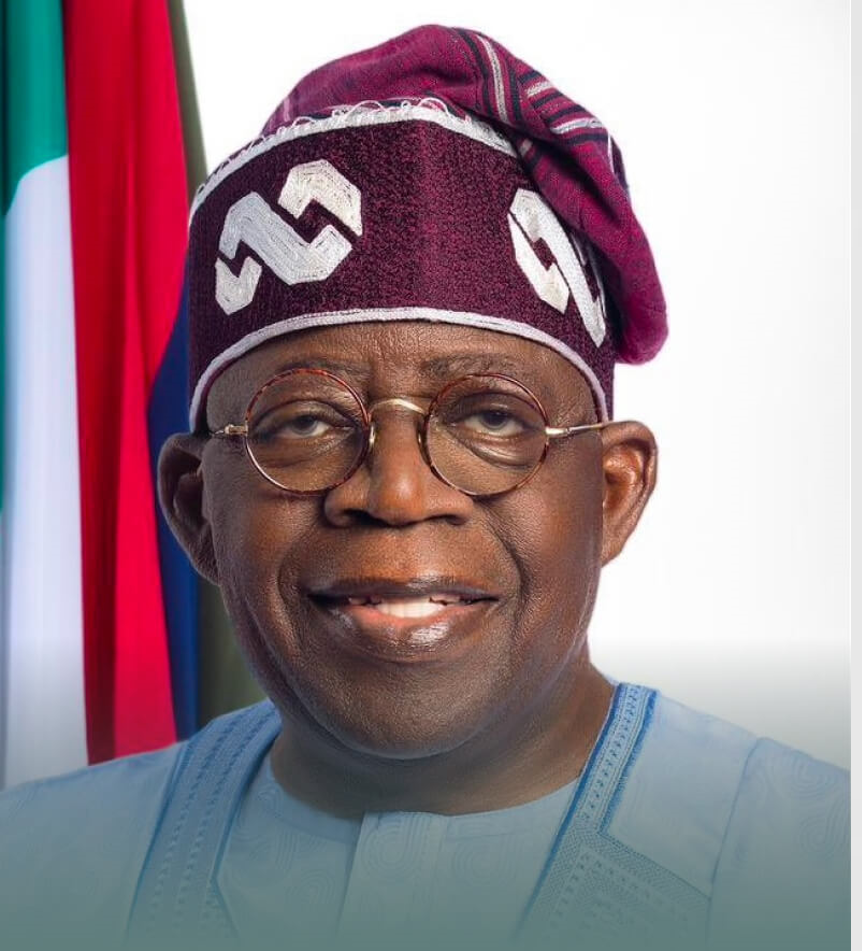
The question of whether Nigerians will support President Bola Ahmed Tinubu ahead of 2027 out of their conviction that he needs to complete the programmes he started or out of their expectation of what they can get from him while he is in office goes to the heart of how political power operates in the country. It is not a question that can be answered in absolute terms because Nigerian politics is neither purely ideological nor entirely transactional. The Nigerian socio-political dispensation is a layered system in which belief, identity, strategy, and survival have come to coexist over the years. Yet, as the next election cycle approaches, there is growing evidence that for a significant segment of the political class, and even parts of the electorate, support is being shaped as much by anticipated benefits as by genuine confidence in leadership.
Nigeria heads toward a general election scheduled for early 2027, with the incumbent already positioned as Presidential candidate of the ruling party, the All Progressives Congress. This early consolidation of power at party level speaks of a familiar pattern. Incumbency in Nigeria has never been just an advantage, it is often the central force around which political alliances are built. Access to state resources, control of political structures, and the ability to influence elite networks make the Presidency the single most important node, the meeting point in the political system. In such a system, support is rarely detached from expectation. So, what would it really look like this time around?
In Tinubu’s home region, the South-West, political support remains a strong element of historical loyalty and identity. Tinubu is not just a sitting President, he has built his reputation as a long-standing political architect whose influence dates back to decades, especially in Lagos state, where he was a governor. Many within the region view his Presidency as a culmination of a collective political journey. For this group, support is not going to be primarily transactional, it will be rooted in shared political history and regional pride. But even there, the picture is not entirely uniform. The 2023 election revealed a generational divide, with younger, urban voters showing willingness to break from traditional alignments. That undercurrent has not disappeared, nor is it likely to disappear any time soon. So, it will introduce a subtle but important shift, meaning that even in Tinubu’s strongest base, support must now be maintained, not assumed.
In the North-West, the dynamics are remarkably different. This is Nigeria’s most populous geopolitical zone and historically the decisive one in Presidential elections. Here, political loyalty tends to follow elite consensus rather than personal attachment to a candidate. The region has long operated within a framework where alignment with the centre is seen as a pathway to influence and development. As a result, Tinubu’s support in the North-West will be heavily shaped by negotiations among political heavyweights, traditional institutions, and religious leaders. Where these actors perceive advantage, in terms of appointments, projects, or political protection, support could be consolidated. Where they do not, Tinubu’s support will fragment. Emerging cracks within the northern elite suggest that this region may not present a unified front in 2027, creating both risk and opportunity for the incumbent.
The North-East presents a more fluid picture. Long affected by insurgency and economic marginalization, the region tends to evaluate leadership through the lens of security and federal attention. Support for Tinubu here will be conditional and pragmatic. Alliances matter, but performance matters even more. If the administration can demonstrate progress in reconstruction and stabilization, it may retain the people’s goodwill. If not, opposition forces, particularly those coalescing under alternative platforms like the ADC could find fertile ground. The region’s voting behaviour has historically been less rigid than that of the North-West, making it an arena where momentum can shift quickly.
In the North-Central, often described as Nigeria’s swing region, the calculus is even more grounded in immediate realities. This is an area that is deeply affected by farmer-herder conflicts, economic pressures, and questions of representation. Voters here have shown a willingness to move across party lines, depending on perceived responsiveness. Tinubu’s economic reforms, including subsidy removal and currency adjustments, drew mixed reactions nationally, praised by international observers but criticized domestically for deepening hardship. In the North-Central, where economic vulnerability is acute, these policies could become a decisive factor. Support here would be less about what people hope to gain in a patronage sense and more about whether they feel their situation is improving or deteriorating.
The South-East remains the most resistant region to Tinubu’s dream of political expansion. The 2023 rise of Peter Obi had reshaped the political psychology of the region, energizing an Obidient Movement that emphasized reform, inclusion, and generational change. Obi’s alignment with the African Democratic Congress has further consolidated opposition energy, bringing with it a base that is highly motivated and less susceptible to traditional patronage politics. While there are pragmatic actors within the South-East who advocate engagement with the federal government, the broader sentiment remains oppositional. For Tinubu, gains here would not likely come from sweeping victories but from incremental inroads driven by strategic alliances.
In the South-South, the picture is more transactional, and more structured. This is a region where political elites have historically prioritized access to federal power as a means of negotiating resource control and development. Support for the incumbent often depended on how effectively the centre was willing to accommodate regional interests. In this context, Tinubu’s prospects will hinge less on popular enthusiasm and more on his administration’s ability to integrate key stakeholders into its governance framework. The region’s political behaviour is pragmatic rather than ideological, making it responsive to negotiation.
Overlaying all these regional dynamics is the emerging challenge from the African Democratic Congress, a platform that has rapidly transformed into a coalition vehicle for major opposition figures. The involvement of leaders like Atiku Abubakar, Rabiu Kwankwaso, Rotimi Amaechi, Nasir El-Rufai and Peter Obi signals a serious attempt to replicate the kind of alliance that reshaped Nigerian politics in 2015. The logic behind the coalition is clear: no single opposition figure has the national spread to defeat an incumbent, but a united front might be able to do so.
However, the ADC faces significant internal contradictions. Leadership ambitions remain unresolved, with competing interests among its key figures. There are also structural challenges. Compared with the APC, the ADC lacks a deeply entrenched grassroots network. Internal disputes have already surfaced, including leadership crises that have drawn the attention of electoral authorities. Even within the party, some voices acknowledge its vulnerabilities, warning that internal weaknesses could undermine its ability to mount a credible challenge. These tensions highlight a central paradox. The opposition’s greatest strength, its gathering of influential figures, could also become its greatest weakness. Without a clear hierarchy and shared strategy, the coalition risks fragmentation. And in Nigerian politics, fragmentation is often fatal to electoral success.
At the same time, the ADC cannot just be dismissed easily with a wave of the hand. Its current formation reflects a broader shift in the political landscape. The 2023 election demonstrated that traditional party structures were no longer unassailable, because new movements had proved they were capable of mobilizing significant support, particularly among younger voters. The coalition’s ability to tap into the economic dissatisfaction of a vast majority of the Nigerian people and to present a credible alternative could reshape the direction of the race. Analysts widely agree that only a unified opposition stands a realistic chance of unseating an incumbent.
This brings the discussion back to the central question: are Nigerians supporting Tinubu because of what they believe they will get from him? The regional analysis suggests that the answer depends largely on where one is looking from. Among political elites, particularly in regions where access to federal power is a key determinant of influence, support is often strategic and expectation-driven. Among sections of the electorate, especially in areas facing economic hardship, support may be less about anticipated rewards and more about alleviating alternatives. While Tinubu’s core base remains anchored in loyalty and shared political identity, among younger and reform-oriented voters, there is frequent skepticism.
Ultimately, Tinubu may be able to enter the 2027 race favoured by many millions of Nigerians, but he will definitely not remain unassailable. His advantages are formidable: incumbency, a nationwide party structure, and the ability to shape political alignments. The APC has already demonstrated its capacity to consolidate support and attract defections, reinforcing the perception of momentum. But these strengths are counterbalanced by real vulnerabilities: economic dissatisfaction, regional fractures, and the possibility, however uncertain, of a unified opposition.
The election may therefore hinge on two critical variables. The first is whether the ADC can overcome its internal divisions and present a coherent, credible alternative. The second is whether Tinubu can convert his structural advantages into broad-based legitimacy in the face of economic and social pressures. Nigerian politics rarely turns on a single factor. It is shaped by a convergence of interests, identities, and calculations. Support for Tinubu, like support for any major political figure in the country, is not purely about belief or benefit. It is about a constantly shifting balance between the two.


