
ColdHubs: How solar-powered cold storage is reducing food waste in Nigeria



By Rebecca Cairns
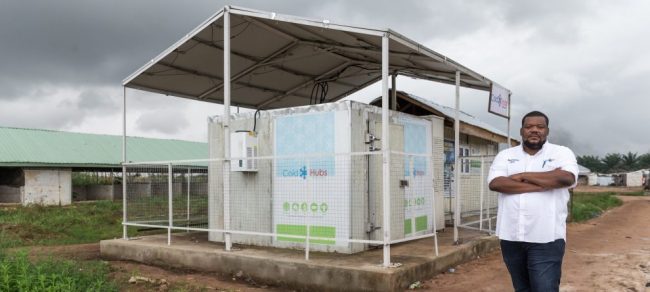
That’s why Nnaemeka Ikegwuonu decided to take a fresh approach to food waste. He’s the founder of ColdHubs, which provides solar-powered food storage units designed for markets and farms.
The 39-year-old has won countless awards for the initiative and has just been announced as the joint winner of the $1.5 million AYuTe Africa Challenge, for promising young innovators who are using technology to reimagine food production on the continent.
Officially launched in 2015, ColdHubs now has 54 units in 22 states across Nigeria. More than 5,250 smallholder farmers, retailers, and wholesalers use its cold rooms and in 2020, the company stored 40,000 tons of food, reducing waste and increasing farmers’ profits.
“This is food meant for human consumption that we typically lose along the supply chain, either during harvesting, transportation, or distribution,” says Ikegwuonu. “The mission really is to reduce food spoilage due to lack of cold food storage at key points along the food supply chain.”
Tackling a food waste crisis
Nigeria is ranked 100 out of 113 countries on the Global Food Security Index. Over 88 million people in the country face food insecurity and 12% are undernourished.
The problem isn’t a lack of food, though: it’s an excess of waste. An alarming 40% of the food Nigeria produces every year is lost before it even reaches consumers. That’s equal to 31% of its total land use, according to the World Bank, and accounts for 5% of the country’s greenhouse gas emissions.
Ikegwuonu’s ColdHubs are 10-foot-square cold storage units which keep produce fresh for up to 21 days. Conventional cold storage units of this size would be powered by diesel generators and require 20 to 30 liters of diesel every day, says Ikegwuonu – but by using solar panels instead, he says that across all its units, the company prevents over 1 million kilograms of CO2 entering the atmosphere each year, while powering the units 24/7.
CNN


