


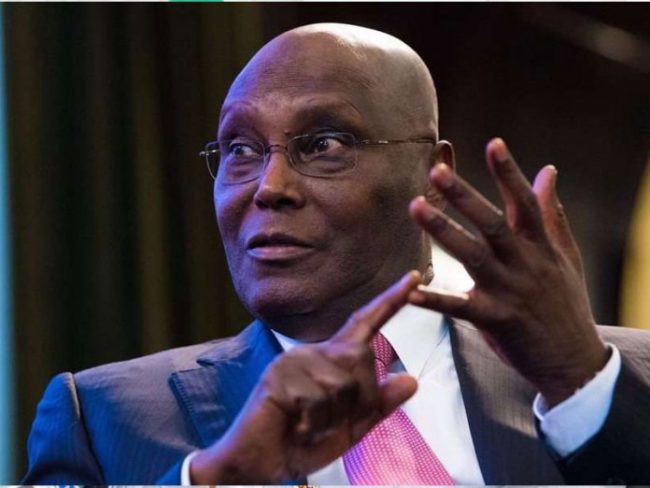
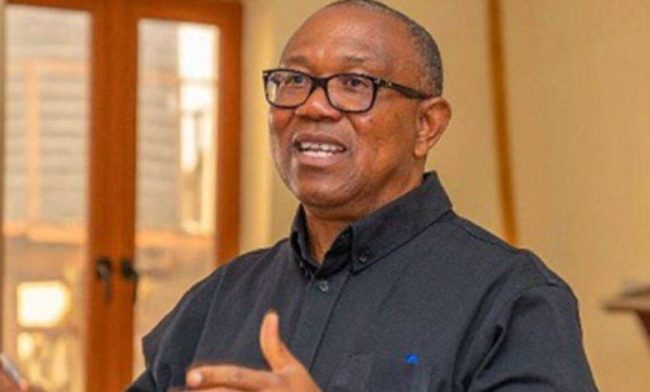

The very appalling statement credited to Western Nigerian activist, Sunday Adeyemi threatening Peter Obi and Atiku Abubakar campaigning in the southwest is very unfortunate. In a constitutional democracy, the line between free expression and dangerous provocation must never be blurred. Nigeria, with all its complexities, remains bound together by a shared legal and moral framework that guarantees every citizen the right to move freely, associate freely, and participate fully in the political process. It is therefore deeply troubling that such a public figure as Sunday Igboho would be associated with statements that appear to threaten or intimidate political actors and their supporters from exercising these fundamental rights.
Let us be clear: no individual, no matter how influential within a region or among a group, has the authority to declare any part of Nigeria off-limits to any other citizen. The suggestion that political leaders like Atiku Abubakar or Peter Obi should not campaign in the South-West is not only undemocratic, it is unlawful. Nigeria is not a confederation of ethnic enclaves governed by strongmen, it is a republic governed by the rule of law.
The right to campaign, to canvass for votes, and to engage with citizens across the federation is enshrined in Nigeria’s democratic framework. It is protected by the Constitution and reinforced by decades of political evolution, often achieved through sacrifice and struggle. Any attempt to undermine these rights, whether through threats, coercion, or inflammatory rhetoric, must be condemned in the strongest possible terms.
What makes such statements even more concerning is the fragile state of national cohesion. Nigeria today is navigating deep social, economic, and security challenges. From unrest in parts of the North to agitation in the South, the country is already grappling with tensions that require careful, responsible leadership. This is not a moment for reckless pronouncements or divisive posturing. It is a moment for bridge-building.
It is important to remind those who may be tempted to fan the flames of division that Nigeria’s history is replete with examples of inter-ethnic solidarity. When Sunday Igboho himself faced intense pressure during the administration of Muhammadu Buhari and eventually fled the country, support for his cause was not confined to one ethnic group. Many Igbo voices, alongside Yoruba compatriots, spoke out in defence of his rights and due process. That solidarity was rooted not in ethnic loyalty but in a shared belief in justice and fairness.
To now turn around and promote rhetoric that appears exclusionary or threatening toward others is not only inconsistent but deeply ungrateful. It undermines the very spirit of unity that once worked in his favour. Nigeria cannot afford selective nationalism, where one demands support from others in times of need but denies them their rights in return.
Furthermore, the language of intimidation, whether explicit or implied, has consequences. Words spoken in anger or political zeal can quickly translate into actions on the ground. Nigeria has witnessed too many instances where rhetoric escalated into violence, leaving communities fractured and lives disrupted. Leaders, activists, and public figures must therefore exercise restraint and responsibility in their public communications.
The question also arises: should such statements attract the attention of law enforcement agencies? The answer is straightforward. If any individual, regardless of status, makes statements that could incite violence, threaten public peace, or intimidate citizens from exercising their constitutional rights, it is within the purview of the police and relevant authorities to investigate and, where necessary, prosecute. The rule of law must apply uniformly. Selective enforcement only deepens mistrust and emboldens further misconduct.
However, beyond legal considerations lies a broader moral imperative. Nigeria’s survival as a united nation depends on the willingness of its citizens to rise above parochial interests and embrace a shared destiny. Ethnic chauvinism, no matter how passionately expressed, cannot be the foundation of a stable society. It breeds suspicion, fuels retaliation, and ultimately weakens the collective fabric. It is also worth noting that no ethnic group holds a monopoly on assertiveness or resistance. Among the Igbo, the Hausa, and indeed every major group in Nigeria, there are individuals and factions capable of responding forcefully to perceived threats. But that is precisely the path Nigeria must avoid. A cycle of provocation and retaliation serves no one. It leads only to chaos and regression.
At this critical juncture in Nigeria’s history, what citizens across the federation yearn for is healing. The country’s “broken relationship,” as many have described it, requires deliberate efforts to mend. This involves dialogue, mutual respect, and a recommitment to the principles of justice and equity. It does not involve drawing battle lines or issuing ultimatums.
Political competition, by its very nature, can be intense. Candidates and their supporters will disagree, sometimes vehemently, on issues of policy and leadership. But such competition must remain within the bounds of civility and legality. Elections are not wars; they are processes through which the will of the people is expressed. Any attempt to militarize or ethnicize this process undermines its legitimacy.
Sunday Igboho, like many influential figures, commands a following. With that influence comes responsibility. Words spoken by such individuals carry weight and can shape the attitudes and actions of others. It is therefore imperative that he, and others in similar positions, choose their words carefully and act in ways that promote peace rather than division.
Nigeria’s diversity is both its greatest challenge and its greatest strength. Managing that diversity requires wisdom, patience, and a deep commitment to the common good. It requires leaders and influencers who understand that their role is not to inflame passions but to guide them constructively. There must also be a collective rejection of narratives that seek to pit one group against another. The idea that any region belongs exclusively to one group, to the exclusion of others, is fundamentally at odds with the Nigerian project. Every Nigerian, regardless of ethnicity or religion, has a stake in every part of the country. That is the essence of nationhood.
If Nigeria is to move forward, it must do so on the basis of inclusivity and respect for the rule of law. Threats, whether real or perceived, have no place in this journey. They distract from the real issues that are challenging Nigerians – security, economic development, education and healthcare – that demand urgent attention.
In the final analysis, the message is simple but firm: no individual is above the law, and no individual has the right to curtail the freedoms of others. Sunday Igboho must recognize the boundaries imposed by a democratic society and operate within them. To do otherwise is to invite not only legal consequences but also the erosion of the very principles that sustain national unity.
Nigeria stands at crossroads. The choices made today will shape the country’s trajectory for years to come. It is therefore incumbent upon all – leaders, activists, and ordinary citizens alike – to choose the path of peace, dialogue, and mutual respect. Anything less is a disservice to the nation and to future generations.
Chief Asinugo, PhD., M.A., KSC, is a highly respected commentator on national and international affairs


