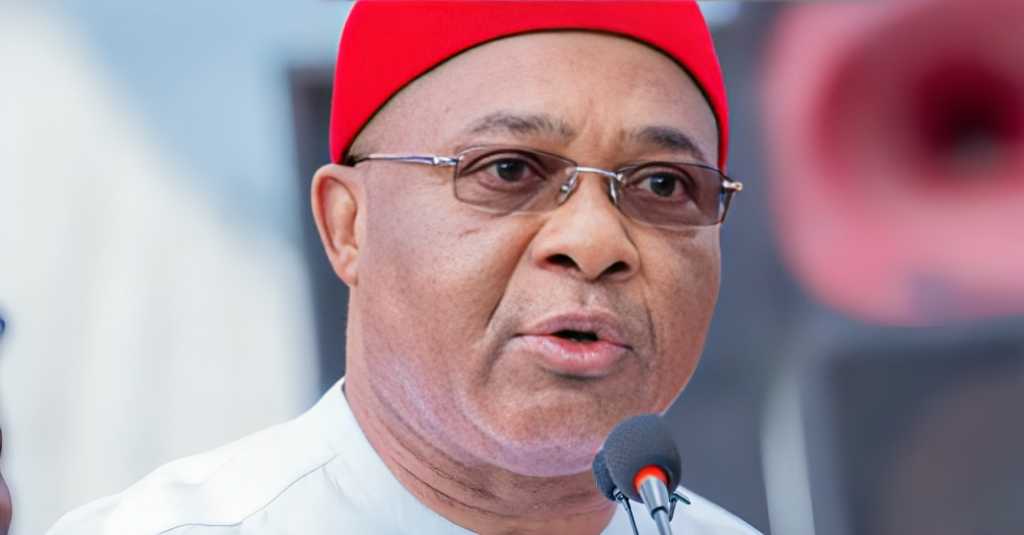


The Pentagon confirmed, Friday, that United States forces carried out an airstrike in Syria targeting Emwazi, the Isis terrorist known as “Jihadi John” after appearing in gruesome propaganda videos depicting the beheadings of eight hostages.
David Cameron made a statement from Downing Street on Friday morning confirming the attack amid reports from the US that the American military was 99% certain that Emwazi had been killed in a drone strike.
The prime minister said it had not been confirmed that Emwazi was dead, but described the strike as “an act of self-defence” that struck at the heart of Islamic State. Cameron added that Britain had been working “hand in glove, round the clock” with the US to track down and target the militant.
He said Emwazi had remained a threat to innocent people around the world, adding: “This was an act of self-defence. It was the right thing to do.”
Downing Street and Ministry of Defence sources were marginally less certain in their response to the reports of his death than US sources, but added there was a “high degree of certainty that he has been killed”.
Announcing details of the strike late on Thursday night, the Pentagon press secretary, Peter Cook, said: “US forces conducted an airstrike in Raqqa, Syria, on 12 November 2015 targeting Mohamed Emwazi, also known as Jihadi John.”
“Emwazi, a British citizen, participated in the videos showing the murders of US journalists Steven Sotloff and James Foley, American aid worker Abdul-Rahman [Peter] Kassig, British aid workers David Haines and Alan Henning, Japanese journalist Kenji Goto, and a number of other hostages.
“We are assessing the results of tonight’s operation and will provide additional information as and where appropriate.”
A spokesman for No 10 said: “The prime minister will make a statement later today. We have been working hand in glove with the Americans to defeat Isil and to hunt down those murdering hostages. The prime minister has said before that tracking down these brutal murderers was a top priority.”
The Associated Press quoted an unnamed US official saying that a drone had targeted a vehicle believed to be carrying Emwazi in Raqqa, the de facto capital of Isis in northern Syria. Fox News said a senior US military source said it was “99% sure we got him”.
Activist groups in Raqqa reported airstrikes and an explosion during the night of 12 November. A US military statement said one of eight strikes in Syria on Thursday had struck an Isis tactical unit.
Japan’s chief cabinet secretary, Yoshihide Suga, added that Tokyo was liaising with Washington over the outcome of the airstrikes.
Suga said the Japanese government was “aware of the Pentagon’s press statement on this matter, and we understand that the Pentagon is assessing the results of the operation. The government of Japan is in contact with the US government about the details.”
Emwazi is believed to have beheaded two Japanese hostages, journalist Kenji Goto and security consultant Haruna Yukawa, earlier this year.
In late January, Islamic State released a video, called A Message to the Government of Japan, showing a militant who looks and sounds like Emwazi. The man, armed with a knife and dressed in black with his face covered, stands behind Goto before beheading him.
Isis had targeted Japanese citizens after the prime minister, Shinzo Abe, publicly pledged $200m in non-military aid to countries engaged in the fight against the group.
Emwazi was born in Kuwait in 1988 and came to the UK in 1994 when he was six years old. His parents reported him missing in August 2013 and were reportedly told by police, four months later, that he was in Syria.
In August 2014, he made his first appearance – with his face covered – in the Islamic State video showing the beheading of Foley. In the following months he featured in similar propaganda films showing the killings of Sotloff, Haines and Henning.
In November 2014, Emwazi was believed to have carried out the killing of a Syrian military officer. He was filmed standing over the severed head of Kassig, and two months later appeared in a video killing Goto.
His nickname “Jihadi John” was given to him by a group of hostages, who described him as part of an Isis cell they named “the Beatles” because of their British accents. In February 2015, his identity was confirmed as Emwazi.
Spanish journalist Javier Espinosa, who was freed in March 2014 after six months being held hostage by Isis in Syria, later wrote in El Mundo of his experiences at Emwazi’s hands.
“Jihadi John wanted maximum drama. He had brought along an antique sword of the kind Muslim armies used in the Middle Ages. It was a blade of almost a metre in length with a silver handle.”
Espinosa said the Isis militant would describe in graphic detail how he would behead his hostages and carried out mock executions with a Glock pistol.
From a “painfully shy” football-loving child to the knife-wielding Islamic State militant, the man who became one of the most haunting figures of the jihadi movement remains a mystery even after being the high-profile target of a US airstrike.
Mohammed Emwazi, a Briton born in Kuwait, is believed to have beheaded at least seven westerners, among them the American journalists James Foley and Steven Sotloff and the British aid workers David Haines and Alan Henning. He is also thought to be responsible for the deaths of Syrian troops.
On 12 November 2015, the Pentagon announced he had been targeted in a US drone strike in Raqqa, Syria. It is not yet known whether he survived the attack.
Whether he is dead or alive, the picture that has emerged of Emwazi is riddled with apparent contradictions. Classmates described a quiet boy dedicated to his religion who dreamed of being a footballer. At secondary school he struggled with the usual teenage angst, unrequited love and an awkwardness around girls. He was a “lovely, lovely boy”, according to one former teacher, but had to take anger management sessions because he was unable to control his emotions.
As a teenager he started hanging around with a group of would-be terrorists, some of whom are now dead or have been forbidden from travelling by British security services. But after leaving university and moving to Kuwait, he was described as a “humble” and “beautiful” young man by Cage, the advocacy group Emwazi turned to for help (although it later said it had made mistakes in the way it had described him). . Then just a few years later he is described as a cold and solitary Isis fighter known by the media as “Jihadi John”.