What Ogunlesi investing in Nigeria after UK conquests would mean to his countrymen By Emeka Asinugo

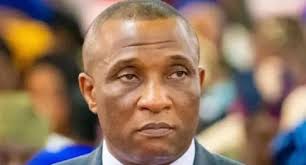
When Nigerian-born billionaire Adebayo Ogunlesi sat down with President Bola Tinubu in Abuja recently, it was not merely a courtesy visit. It was a symbolic homecoming wrapped in business ambition, an acknowledgment of Nigeria’s pressing need for infrastructure renewal, and a personal decision to channel the wealth and experience he gathered across the world into transforming his homeland. The meeting itself might have been brief, but the vision it birthed could mark a turning point in how Nigeria handles its ports, energy, and aviation sectors.
Ogunlesi was quick to admit, with characteristic candour, that while his company, Global Infrastructure Partners, had successfully developed ports in Togo and Benin Republic, they had done no such thing in Nigeria. He said he had requested President Tinubu to forgive that omission. Tinubu, amused and magnanimous, reportedly forgave him and told him firmly: “You must bring port investment to Nigeria.” That exchange, more than anything else, defined the spirit of the meeting, the reconciliation between Nigeria’s immense potential and the global Nigerian who had the resources and expertise to unlock it.
For years, Nigeria’s ports have been notorious for their inefficiency, congestion, and corruption. Containers linger for weeks, goods are delayed, and costs soar. Many shipping companies prefer neighbouring West African ports, where clearance and turnaround are faster. For a country that depends heavily on imports and aspires to grow exports, this dysfunction has been a massive drag on the economy. When Ogunlesi expressed interest in changing that narrative, it was music to the ears of both policymakers and private entrepreneurs who have long lamented the country’s broken trade arteries.
To appreciate the weight of this development, it might help to know who Adebayo Ogunlesi is and why his involvement in the Nigerian economy could signal something extraordinary. He was born on December 20, 1953, in Makun, Sagamu, Ogun State, into a distinguished family. His father, Theophilus O. Ogunlesi, was the first Nigerian Professor of Medicine. Young Bayo attended King’s College, Lagos, where his brilliance shone early. From there, he went on to Oxford University in England, graduating with first-class Honours in Philosophy, Politics and Economics. Not satisfied, he crossed the Atlantic to Harvard University, where he earned both a law degree and a Master of Business Administration. In 1980, he served as a law clerk to Justice Thurgood Marshall of the United States Supreme Court, a rare honour for a non-American.
Ogunlesi’s rise in global finance was swift. He joined the investment banking world at First Boston, later known as Credit Suisse First Boston, where he rose through the ranks to become Global Head of Investment Banking and eventually Executive Vice Chairman. In 2006, he co-founded Global Infrastructure Partners, or GIP, an independent private equity firm focused on infrastructure investments. Under his leadership, GIP acquired major international assets, including London City Airport, Gatwick Airport, and Edinburgh Airport. His company also invested in ports, power generation, energy pipelines, and logistics facilities across the world. In early 2024, the American investment giant BlackRock acquired GIP in a deal valued at about 12.5 billion dollars, a testament to the scale of what Ogunlesi built.
So when this man, who has managed multi-billion-dollar portfolios and successfully run airports in one of the world’s most competitive markets, announces that he is turning his gaze homeward to invest in Nigeria’s ports, it is not a casual statement. It is a declaration that Nigeria is again worth betting on. Ogunlesi himself said that the reforms initiated by President Tinubu, particularly the removal of fuel subsidies and tax restructuring, are creating a more inviting business environment. “Nigeria is now an exciting place to invest in,” he said, pledging to channel energy, capital, and innovation into his homeland.
His meeting with the President was not limited to ports alone. He spoke about energy and aviation as well, two other sectors crying out for transformation. He revealed that his firm is currently building LNG plants in Texas and Australia and that Nigeria, being a vast gas-producing country, naturally interests him. The implication of that interest is profound. If a figure with Ogunlesi’s experience and resources enters Nigeria’s gas infrastructure space, it could accelerate the shift toward export-led industrialization.
But what does all this mean for the ordinary Nigerian walking the streets of Lagos, Taraba, Ogun, Imo, or Kaduna? What difference will it make for the market woman in Mushin, the farmer in Taraba, the mechanic in Kaduna, or the small business owner in Owerri? The truth is that the impact of such large-scale investments often trickles down gradually, but decisively, changing how people work, move, and earn.
In Lagos, where the ports have long been symbols of frustration, a major investment in modernization could bring immediate relief. If Ogunlesi and his partners succeed in introducing digital clearance systems, automated cargo handling, and better logistics coordination, the endless congestion that has turned Apapa and Tin Can Island into nightmares could begin to ease. This would not just make life easier for truck drivers and port workers, it would also reduce the cost of imported goods, as businesses would no longer need to factor in weeks of delay and demurrage fees. Over time, this could help stabilize prices in markets, improve supply reliability, and make Lagos a more efficient commercial hub.
For people in Ogun State, where industrial estates and warehouses line the roads leading from Lagos, improved ports mean smoother supply chains and more job opportunities. Ogun could experience an industrial boom as factories and logistics companies set up to take advantage of the improved flow of goods. Young people might find employment not only in construction and transportation but also in information technology, warehousing, and supply chain management. Property values could rise, and local governments might earn more revenue from taxes and service charges.
In the East, especially in Imo State, where many small-scale manufacturers and traders struggle with high logistics costs, efficient ports would open new possibilities. A shoe manufacturer in Aba or a palm oil exporter in Owerri could ship products abroad more easily and profitably, no longer at the mercy of inefficient systems or corrupt intermediaries. Over time, this could trigger a quiet revolution in local manufacturing, enabling more Nigerian-made goods to compete internationally.
For Taraba and the wider Middle Belt, where agriculture is the mainstay, the benefits could be equally significant. Farmers often face discouragement because exporting perishable goods is cumbersome and costly. With modernized ports and better transport corridors, farmers could more easily move produce like sesame seeds, ginger, and cashew nuts to international markets. That would translate into better incomes and stronger incentives to invest in improved farming techniques and processing facilities.
In Kaduna, known for its industrial potential, efficient port systems would mean faster access to imported machinery, raw materials, and spare parts. Local industries that have been struggling to survive could find new life. For ordinary people, that means more jobs, steadier wages, and more affordable goods. The cumulative effect across the country could be a gradual but real reduction in poverty, as logistics costs—a hidden tax on everything from food to fuel—decline.
Of course, such sweeping transformation will not happen overnight. Large infrastructure projects take time. In the short term, there may even be disruptions—construction works that affect traffic, temporary displacement of informal workers around ports, and tension as old systems give way to new ones. But if the projects are well managed, the benefits will outweigh the inconveniences. Nigeria’s experience with privatization and concessioning has not always been smooth, so it will become necessary that citizens will rightly demand transparency and accountability in whatever agreements the government signs with Ogunlesi or his firm.
The broader significance of Ogunlesi’s return lies in what it represents for Nigeria’s relationship with its Diaspora. For decades, many of the country’s most brilliant minds have found opportunities abroad, frustrated by corruption, inefficiency, and insecurity at home. Ogunlesi himself once said that he could not have achieved what he did if he had stayed in Nigeria. Yet now, at the height of his global influence, he is returning to invest in the very country he once had to leave. It sends a powerful message that reform, when real, can attract not only foreign investors but also the best of Nigeria’s own global citizens.
If Ogunlesi’s investments take root, they could spark a domino effect. Other Nigerian professionals in the Diaspora—bankers, engineers, energy experts, entrepreneurs—may follow his lead, bringing capital, skills, and networks back home. That could be transformative. One of the tragedies of Nigeria’s development story is that it has often been deprived of its own best people. Ogunlesi’s example could help reverse that narrative.
For President Tinubu, the meeting with Ogunlesi is also politically and economically significant. His administration has embarked on painful reforms—removing fuel subsidies, floating the naira, and restructuring taxes. These measures have strained ordinary Nigerians but are designed to make the economy more competitive and attractive to investors. A heavyweight investor like Ogunlesi publicly endorsing those reforms gives the president credibility in the eyes of international markets. It suggests that the painful sacrifices being demanded of Nigerians may indeed attract the kind of investment that can create jobs and improve living standards.
But the stakes are high. Nigeria has seen many grand promises before, megaprojects that never materialized or did so at exorbitant costs. For Ogunlesi’s vision to succeed, the government must ensure a stable policy environment, uphold contract integrity, and prevent corruption from undermining the process. Infrastructure investment thrives on predictability and trust. Investors need to believe that their funds will not be swallowed by bureaucracy or political upheaval. If handled well, the ripple effects could extend beyond the ports. Improved logistics can ignite manufacturing, which in turn can create jobs and reduce Nigeria’s dependence on imports. Export-led growth, which Ogunlesi and Tinubu both emphasize, would help stabilize the naira and strengthen the nation’s balance of payments. Energy projects tied to gas exploration could boost electricity supply, powering industries and reducing reliance on generators. Aviation investments could modernize airports, enhance safety, and expand Nigeria’s role as a regional air transport hub.
Over time, ordinary Nigerians would begin to feel the difference in very tangible ways. A trader in Kaduna might get goods faster and cheaper. A farmer in Taraba could export crops for real profit. A young graduate in Ogun might find work in logistics or construction. A manufacturer in Imo could access machinery without ruinous delays. These are not abstract benefits; they are the real-world dividends of infrastructure done right.
There will, of course, be winners and losers. When ports become more efficient and transparent, those who have thrived on inefficiency—middlemen, bribe-takers, and rent-seekers—will lose out. But that is a necessary price for progress. The challenge for the government will be to cushion the impact on vulnerable groups while ensuring that the transition remains irreversible. In all, Ogunlesi’s return is more than a business story. It is a story of identity, redemption, and belief. It is about a man who conquered the financial capitals of the world and has now turned to the land of his birth with a promise to help it rise. It is about a President who, whatever his flaws, is trying to convince the world that Nigeria is open for serious business. And it is about a people who have waited too long for their leaders and elites to act with courage and vision.
If the partnership between Tinubu and Ogunlesi produces tangible results, it could become a model for how African nations can leverage their Diaspora talent to build homegrown prosperity. It would also show that Nigerians need not wait for salvation from abroad: they can create it themselves, through collaboration, competence, and integrity.
The future, of course, remains uncertain. Nigeria’s challenges are deep, and its bureaucracy is stubborn. But every journey begins with a decision and this decision of a global Nigerian billionaire choosing to invest his capital, expertise, and reputation at home might well be the spark that sets the country on a new course. For millions of Nigerians from Lagos to Kaduna, from Imo to Taraba, the hope is simple: that this time, the promise will be kept, the ports will work, the jobs will come, and life will finally begin to move forward.
Chief Sir Asinugo, PhD., M.A., KSC, writes from the UK