UN chief hails Pope Francis as ‘transcendent voice for peace’
Holy See/By Cecilia Ologunagba, New York
April 21, 2025
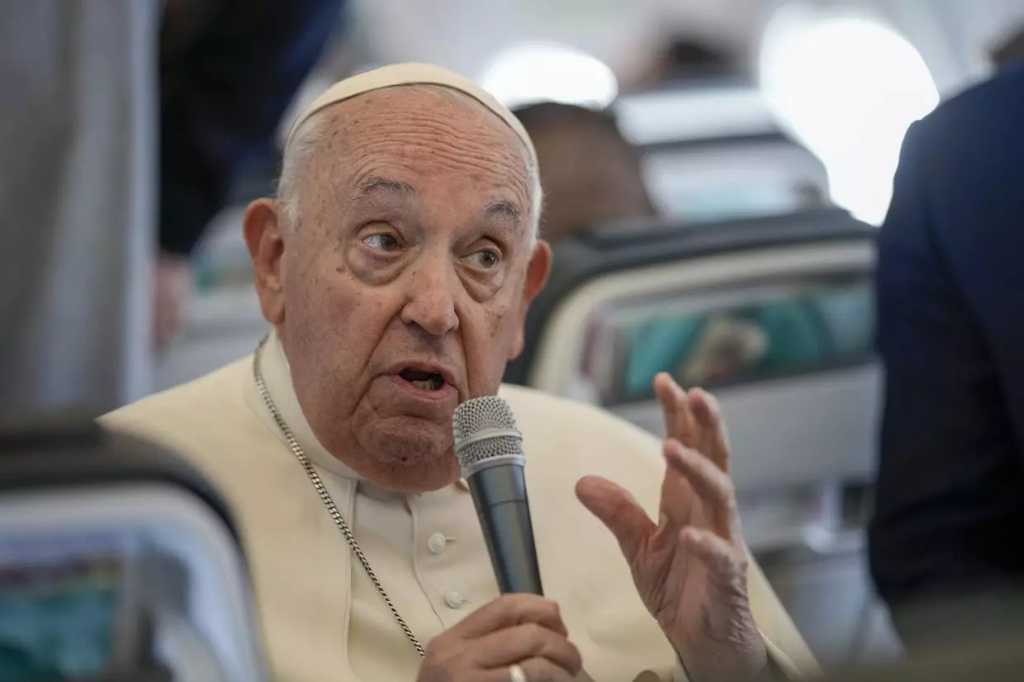
Pope Francis, spiritual leader of the world’s 1.4 billion Catholics, died on Monday aged 88, the Vatican announced.
Following the demise of the Pontiff, there have been statements from across the world hailing his impact and mourning the exit of the pro-poor Pope who traversed the globe preaching peace and brotherhood.
Cardinal Kevin Farrell, Camerlengo of the Apostolic Chamber, announced the death in a statement: “At 7:35 this morning (0535 GMT), the Bishop of Rome, Francis, returned to the house of the Father.”
Francis had recently suffered from pneumonia in both lungs and spent more than a month in the Gemelli Hospital in Rome.
It was his fourth longer stay in the hospital in the past four years.
He was initially there in 2021 for intestinal surgery, in 2023 for severe pneumonia and later that year for another open abdominal procedure.
Francis had been participating in public events from a wheelchair due to a severe knee condition and had to cancel many regular prayers, audiences and services in recent months.
In what turned out to be his last public appearance, Francis appeared briefly on the balcony in front of thousands gathered in St Peter’s Square on Sunday to deliver an Easter blessing.
In spite of his ill health, the Pope completed a 12-day trip to Asia and the Pacific in the first half of September and a visit to Luxembourg and Belgium later the same month.
In New York, the UN Secretary-General António Guterres joined the world in mourning the death of His Holiness Pope Francis, who was born Jorge Mario Bergoglio in Buenos Aires, Argentina and was elected head of the Catholic Church in March 2013.
He was the first priest from the Americas region to lead the Catholic Church worldwide and a strong voice for social justice globally.
Guterres described him as a messenger of hope, humility and humanity.
“Pope Francis was a transcendent voice for peace, human dignity and social justice. He leaves behind a legacy of faith, service and compassion for all — especially those left on the margins of life or trapped by the horrors of conflict,” he said.
Furthermore, he “was a man of faith for all faiths — working with people of all beliefs and backgrounds to light a path forward.”
The secretary-general said the UN was greatly inspired by the Pope’s commitment to the goals and ideals of the global organisation, a message that he conveyed in their various meetings.
He recalled that the Pope spoke of the organisation’s ideal of a “united human family” during his historic visit to UN Headquarters in New York in 2015.
“Pope Francis also understood that protecting our common home is, at heart, a deeply moral mission and responsibility that belongs to every person,” Guterres said, noting that his second Encyclical – Laudato Si – was a major contribution to the global mobilisation that resulted in the landmark Paris Agreement on climate change.
“Pope Francis once said: “The future of humankind isn’t exclusively in the hands of politicians, of great leaders, of big companies…[it] is, most of all, in the hands of those people who recognize the other as a ‘you’ and themselves as part of an ‘us,’” he added.
The secretary-general said that “our divided and discordant world will be a much better place if we follow his example of unity and mutual understanding in our own actions.”
During his September 2015 visit to the UN, Pope Francis delivered a wide-ranging address to leaders gathered in the General Assembly Hall to adopt the 2030 Agenda for Sustainable Development.
Guterres urged global action to protect the environment and end the suffering of “vast ranks of the excluded.” He also suggested that the UN could be improved and can “be the pledge of a secure and happy future for future generations”.
“The international juridical framework of the United Nations and of all its activities, like any other human endeavour, can be improved, yet it remains necessary,” he said.
Five years later, during the virtual meeting of the UN General Assembly due to the COVID-19 pandemic, the Pope said the crisis was also an opportunity to rethink our way of life – and systems that are widening global inequality.
Pope Francis was a strong supporter of the UN, including its humanitarian work.
He engaged with the three UN agencies based in Rome, namely the Food and Agriculture Organisation (FAO), the World Food Programme (WFP), and the International Fund for Agricultural Development (IFAD).
In a message to the FAO Conference in June 2021, he expressed concern over rising food insecurity amid the pandemic and called for developing a “circular economy” that both guarantees resources for all people and promotes the use of renewable energy sources.
“If we are to recover from the crisis that is ravaging us, we must develop an economy tailored to fit mankind, not motivated mainly by profit but anchored in the common good, ethically friendly and kind to the environment,” he said.
Most recently, the Pope backed UN efforts towards ending the current unrest in South Sudan, where rising political tensions and fresh mobilisation of the army and opposing armed groups in some regions have raised fears of a return to civil war.