

By Cecilia Ologunagba
New York, Oct. 29, 2022
Diaspora investments could make some important contributions to the development of Africa’s economy through the establishment of industries and institutions in various sectors.
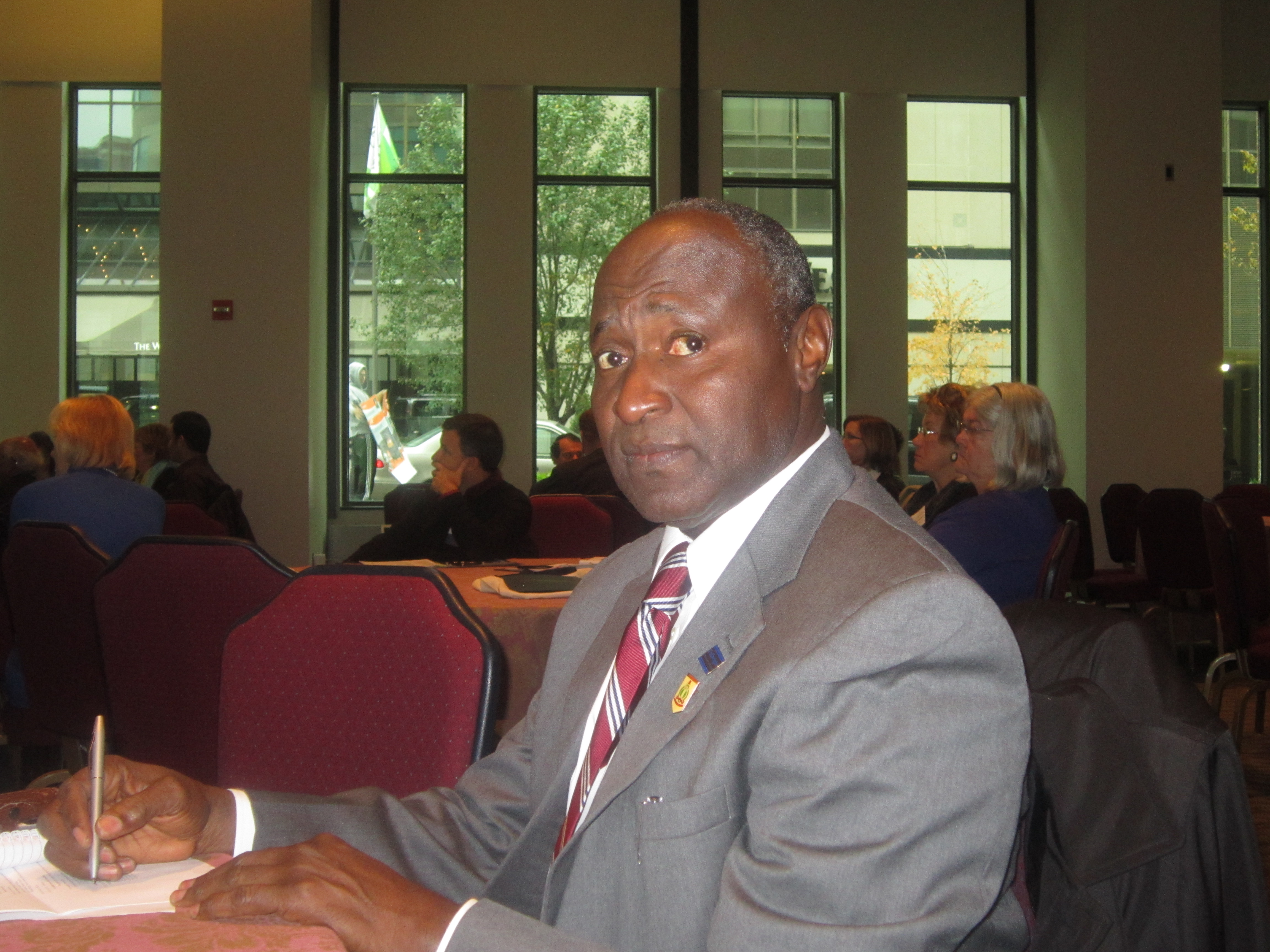
Dr Abubakar Sokoto Mohammed, a lecturer at the department of Sociology, Usmanu Danfodiyo University (UDU), Sokoto and Chairman of the Alumni Association of the National Institute (AANI), Sokoto State Chapter, said this at a recent hybrid International Conference on Africa’s Economy in New Jersey, United States of America (USA).
The don, who spoke virtually, at the Conference that held at the Newark City Hall in New Jersey, United States of America (USA), said establishment of industries and institutions in various sectors such as ICT, Education, Healthcare, Hospitality and Tourism could contribute to the development of the continent’s economy.
Vice President Yemi Osinbajo, Mrs. Sola David-Borha, Chairman, Stanbic IBTC Bank Plc, Professor Akil Khalfani, Director of the Africana Institute of the Essex County College, Newark, New Jersey and Rev. Monsignor (Dr.) Anselm Nwaorgu of the Catholic Church in New Jersey were among the other key speakers at the Conference that had other dignitaries, like Nigeria’s Permanent Representative at the United Nations, Ambassador Professor Tijjani Mohammed-Bande (GCON), Ambassador Lot Egopija, Nigeria’s Consul General in New York, Professor Mondy Gold, President, Ijaw Diaspora Council (IDC) and top diplomats from Egypt, Sierra Leone and other African countries in attendance.
Dr. Mohammed, a member of the Governing Council, Sokoto State University since 2017, said that Africa’s economy could be characterised as essentially a raw materials producer for other economies, noting that the continent largely, produces raw agricultural and mineral resources for other economies to process.
According to him, the Africa is terribly underdeveloped in terms of infrastructure, noting that there is also a very low level of trade among African countries, estimated at about five per cent.
He said there were still strong linkages with former colonial and western powers, noting that there is also the rise of a new imperialism in Africa with China, Russia and the European Union leading.
Apart from these challenges, he said the continent had weak democracy characterised by authoritarianism, tenure elongation and military coups.
The don said in some cases votes of the citizens don’t count in elections, noting that there are no “dividends” of democracy in form socio-economic development, while there is prevalence of poverty, diseases, low school enrolment, unemployment, corruption and violent conflicts.
Other challenges, according to him, are proliferation of small arms and light weapons, high level of insecurity and general instability.
Mohammed, a Senior African Fulbright Scholar at the Catholic University of America, Washington, D.C for 1990/1991, further said that leadership deficit in terms of inadequate and unprepared leaders, low level of education and experience of the leaders, the role of “god fatherism,” among others, had also impacted negatively on the development of the economy of the continent.
He, therefore, advised that all African countries and Institutions (Public/Private) should think, and act pan African in the planning as well as implementation of their economic programmes, stressing that Sub-Regional Blocs such as Economic Community of West African States, East African Community, Southern African Development Community, The Maghreb and Central African Community should be strengthened.
“This will vigorously enhance trade among member states and other sub-regions of the African continent leading to realization of the objectives of African Continental Free Trade Agreement,” he pointed out.
He also suggested the “decolonisation of Africa’s economy through replacing disadvantageous linkages with past colonial masters/Bretton Woods institutions by developing Pan African Economic Institutions and operations,” as well as negotiation of “more favourable deals with the New Imperialist Powers of China, Russia and Turkey.”
He also insisted that “the rapacious pillage of Africa’s resources and the strangulating threat of a new Debt Trap by the New Imperialists must be reversed’’ for the economy of Africa to move forward.


