THE former Undersecretary General of the United Nations, Ambassador Ibrahim Gambari, has raised an alarm on the gradual return of the world to a new Cold War in which the big powers are directly joined and the Middle Powers are implicated either directly or by proxy.
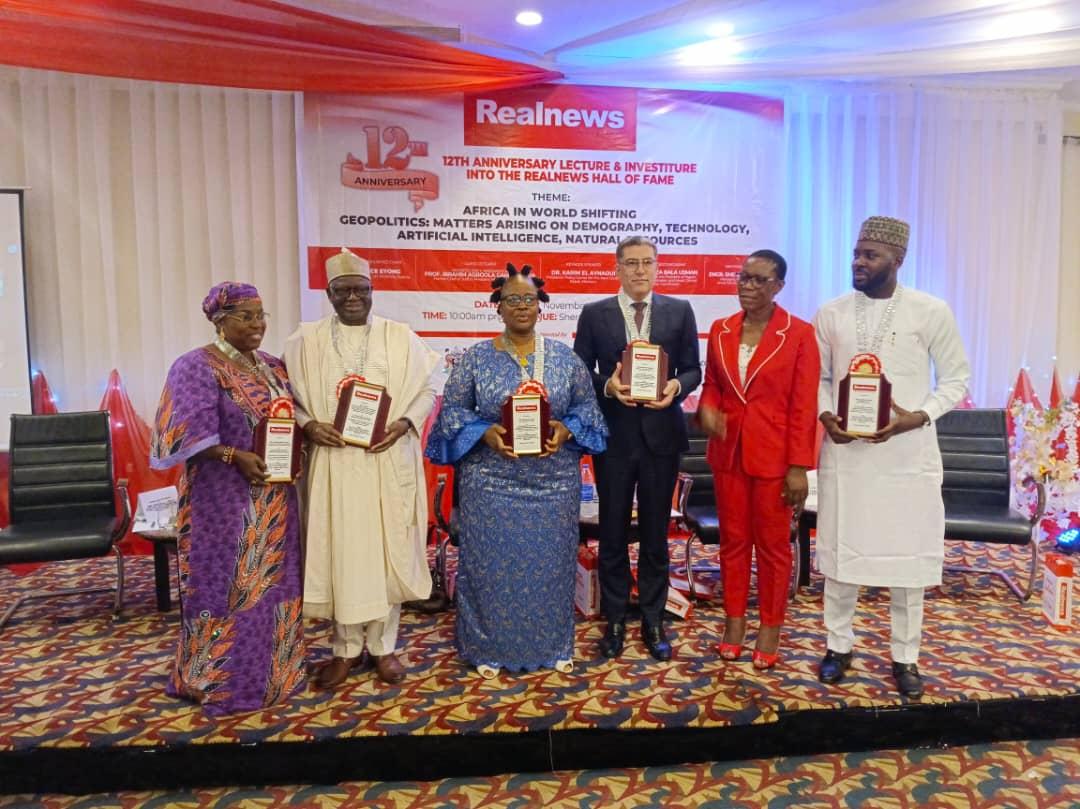
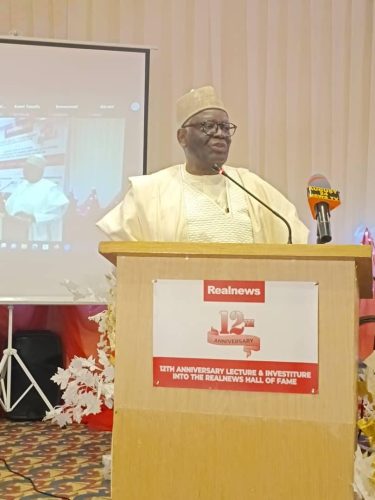
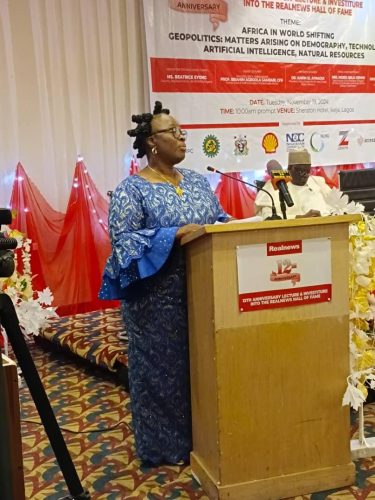
Delivering the 12th Annual Lecture of Realnews Magazine last Tuesday in Lagos Gambari, who was a former Nigerian Minister of Foreign Affairs and Chief of Staff to former President Muhammadu Buhari, noted the ongoing geopolitical resurgence and realignment which we are all witnessing in these trying times around the world.
Speaking on the theme ”Africa in World Shifting Geopolitics: Matters Arising on Demography, Technology, Artificial Intelligence, Natural Resources”, Gambari urged Africans generally and Nigerians in particular ”to take a step back and reflect on the contours of change taking around us as for the invitation it provides us to begin seriously to think through their implications for our immediate future and long-term interest.”
The changes, according to him, are unfolding before our eyes, promise a profound transformation the workings of the international system, and nations, big and small, North and South, are busily preparing themselves to ensure that they are neither left behind nor reduced to victims of the new order that is in the making.
Observing that the expenditures on new generations of weapons of mass destruction are skyrocketing and across the world, from the Atlantic to the Pacific, the Arctic to the Antarctic, on land, in the air, on the seas, and in the outer space, he stated that “a relentless militarisation is taking place”.
“Taking advantage of the possibilities opened up by new digital technologies and artificial intelligence, various options for electronic warfare are being developed.
“In all of this, prime locations around the world that offer one form or the other of strategic advantage are being sought,” he said, adding that Africa, with an abundance of such strategic sites is, not surprisingly, the target of competitive bid from the Big and Middle Powers setting up military bases.
“We know that the entire seaboard of Africa is already dotted with military bases operated by various powers; the continent is once again at the centre of a scramble as the new Cold War intensifies. In addition to geo-strategic considerations in the event of conflicts and war, there are strong interests in securing access to and control of strategic and critical minerals and arable land and forests,” he said.
Gambari also noted that competitive investments are also being made in building stable and durable political alliances with the governments of various countries and that the age of zero sum geopolitics is back with all its destabilising consequences for African countries.
Looking at the options open for Africa, Gambari stated that with well over a billion people and with an overwhelmingly youthful population, the African continent is destined for a significant role in the demographics of the world in a context in which populations are both declining and ageing rapidly in many other parts of the world.
He believes that taking advantage of the African demographic dividend in a renewed season of new global geopolitics effectively means that the countries of the continent “must build national and regional strategies to leverage the energy, innovative acumen, and futuristic vision of its young people in order to ensure that as a new world order takes shape, we are positioned to be joint rule makers”.
According to him, the import of all the foregoing is simple. “Although there is no doubt that up we are in the throes of rapid, complex, multidimensional change in global affairs, it is equally important to know that the outcome of the ongoing geopolitical shifts are not necessarily destined to be at the expense of or to the detriment of our people and continent. That means that we must be ready to harness our abundant human and natural resources to leapfrog our development in order to achieve the structural transformation that has eluded us for too long.
“It also means that we cannot afford to sit on the sidelines while the rules of a new world order are being written; we have the opportunity to insist on being joint rule makers so that the new global order that is being forged reflects our values and aspirations for a fairer, more inclusive, and equitable world.
“In this, we must ensure that our youth bulge is turned into an advantage that puts us at the forefront of the digital economy and the innovations underpinning it,” he added.
UN representative calls for increase in role of women in shifting global geopolitics
…says no country can develop with high rate of gender inequalities and the feminization of under-development.
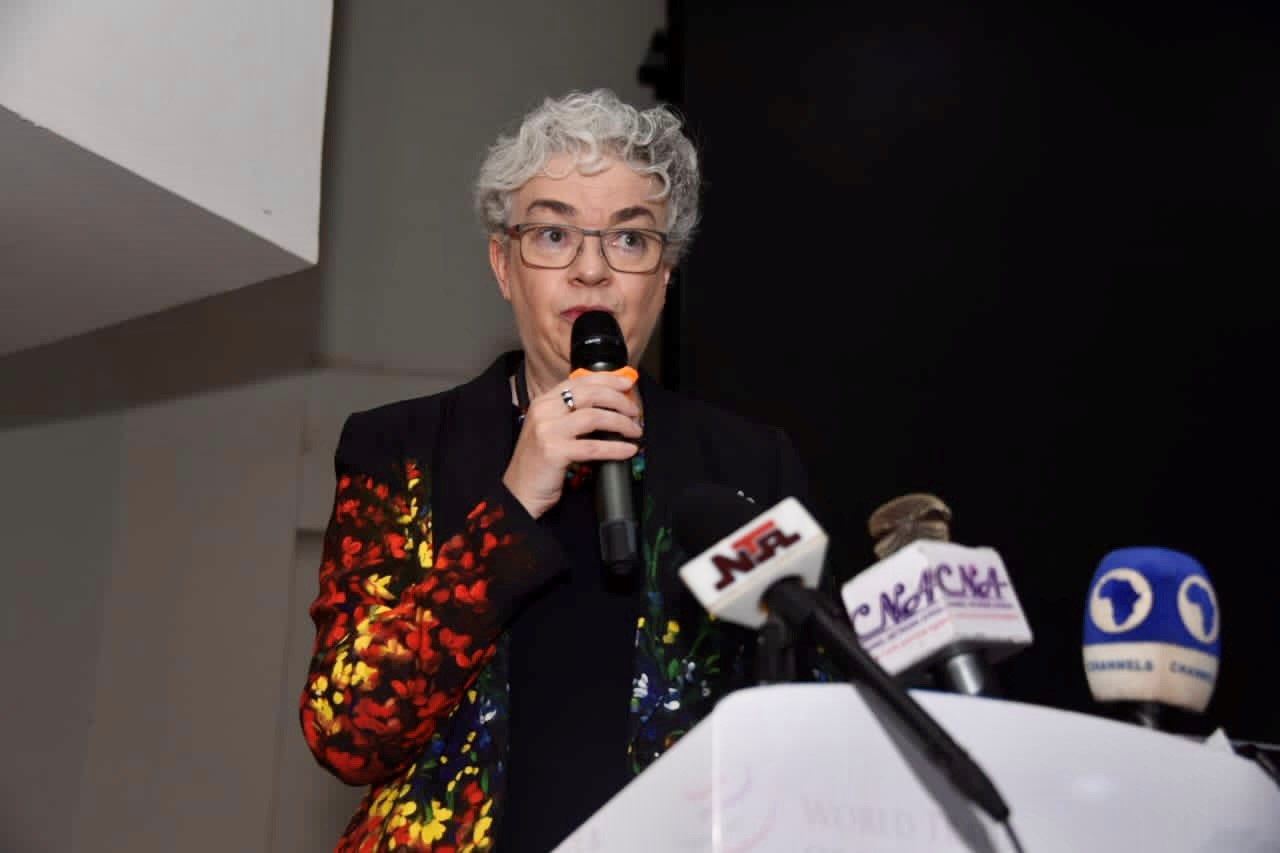
THE Chairperson of the 12th anniversary Lecture of Realnews Magazine, Beatrice Eyong, on her part, said that Africa must positively improve the conditions and status of its women and girls in order to take its place in the world shifting geopolitics.
Speaking on the theme: “Africa in World Shifting Geopolitics: Matters Arising on Demography, Technology, Artificial Intelligence, Natural Resources” held on Tuesday, November 19, 2024, Eyong, who is the UN Women Country Representative to Nigeria and ECOWAS, noted that the global economy will grow by trillions if Women could equally participate in the economy and have equal pay.
She explained that increasing women’s access to services such as health, education and agriculture) technologies, resources, markets, decision making positions and peace processes will quickly reduce poverty and its consequences in Africa.
Advocating for Women to participate, lead and benefit from all governance systems and peace processes, she stated that studies show that peace negotiations without women and girls will not last up to 10 years. But with the full participation of women in peace processes, those processes will last for more than 10 years.
She averred that it has become even more necessary to ensure that the interest of women are secured, especially with the changing geopolitics between countries as a result of the rivalry between stronger countries such as, the US, China and Russia as well as the BRICS.
These changes have led to rise in the need and fight for more natural resources, leading to continuous polarization of countries, the rising number of resource-related conflicts leading to insecurities (even in countries called developed) and the detrimental consequences of those wars, the issues related to ineffective democracies in developing countries leading to members of economic blocks breaking away- Mali, Niger, Burkina Faso, Guinea Conakry, the increased demographics ie. High birth rate vis a vis underdevelopment causing a huge brain drain from African countries through professional and un professional migrations, the economic downturn of African countries, and the huge gender based violence and the situation of women and girls, especially as it concerns the feminization of poverty, morbidity and mortality leading to the under-development of African countries.
According to her, Anecdotal data shows that women and girls are disproportionally affected by of these changes, with women dominating the lower tiers of positive growth and being the worse victims of negative changes, thereby perpetuating cycles of poverty.
“Our goal is for the face of a woman to no longer be seen as the face of poverty.
“No country can develop with high rate of gender inequalities and the feminization of under-development.”
The UN representative, however, noted that despite the afore-mentioned, Africa will become a prominent player due to Africa’s abundance of strategic resources, favorable demographics and attractive growth prospects which will give its leaders leverage in modern affairs.
“Africa’s population will reach 2.5 billion people by 2050, and will constitute what is expected to be a quarter of the world’s populace. According to studies, sub-Saharan Africa will soon be the only place with birth rates at replacement level or higher, while major economies like China, the US and Europe are expected to see major demographic decline. As a result of these favourable demographics, the African middle class is anticipated to reach 1.1 billion by 2060, up from 355 million in 2010. McKinsey’s research also found that as early as 2030, 250 million Africans are expected to unlock $3 trillion in consumer spending.
“The African continent boasts 30% of the world’s mineral reserves, and demand for rare earth metals alone is expected to reach 315,000 tons by 2030, more than double the volume in 2021. The urgency to increase exploration efforts of these strategic resources rises at a commensurate level to commercial opportunities.
“In an era marked by shifting global dynamics, Africa and other parts of the developing world are experiencing a profound transition from traditional geopolitics to a more nuanced geoeconomic framework. This evolution reflects the growing recognition that economic interests, rather than mere political allegiances, are driving international relations in these regions.
“Africa has recorded over 7 tech unicorns (A unicorn is a privately held startup company with a valuation of over $1 billion) over the years. With a larger number of them coming from Nigeria, this gives credence to the growing youth population in the country and also the move towards technological advancement.
“In this time of global upheaval and a rapidly changing climate, the economies of Sub-Saharan Africa stand to benefit from vast endowments in natural resources and the transition to a low-carbon economy.
“Global efforts to decarbonize economies are likely to create demand for 3 million tons of minerals and metals needed to deploy solar, wind, and geothermal energy by 2050. Many of these minerals are found in abundance across Africa. As the world adapts, we anticipate structural changes perpetuated by the growing positive impacts of these transitions in the world and the African continent,” she added