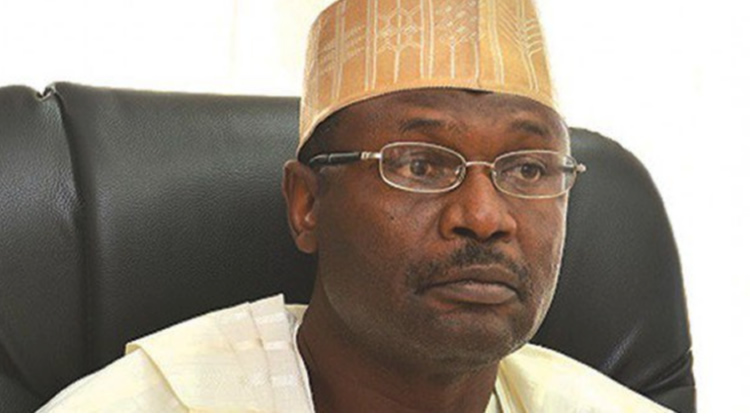

A question, recently amplified in a trending video by Muhammadu Sanusi II, has resonated across the country: If fuel subsidy has been removed, why is Nigeria still borrowing? It is a question that sounds straightforward – but it rests on a misunderstanding that deserves careful unpacking.
At the core of the debate is a simple but often overlooked principle: you cannot save what you never had.
For years, Nigeria’s fiscal position has been strained not merely by the existence of fuel subsidy, but by the way it was financed. The subsidy was not consistently paid out of surplus revenues; rather, it was largely sustained through borrowing. In effect, the country was financing a consumption expense with debt. That distinction is crucial.
To better understand this, consider a simple analogy. Imagine an individual who has, year after year, been borrowing money just to pay rent. Each year, their debt burden increases—not only because they must borrow again for the current year’s rent, but also because interest accrues and portions of previous loans must be serviced. In reality, such a person is not living within their means; they are living on credit.
Now suppose that individual, recognising the unsustainability of this pattern, decides to stop. A relative offers temporary accommodation, eliminating the need to borrow for rent in the current year. At first glance, this appears to be a financial breakthrough. But is it truly a saving?
Not quite.
What has occurred is a cessation of new borrowing for that specific expense, not the creation of surplus income. The accumulated debt remains. Interest obligations persist. And perhaps most importantly, the individual still does not own a home. The fundamental challenge – insufficient income relative to needs – has not been resolved.
This is the precise context within which Nigeria’s subsidy removal must be understood.
Yes, the removal of fuel subsidy means that the government is no longer compelled to borrow specifically to fund that line item. That is significant. It reduces one source of fiscal pressure and, in that sense, represents an important step toward discipline.
But it does not follow that Nigeria now has “savings” in the conventional sense.
The country still carries a substantial stock of existing debt, which must be serviced. Interest payments do not disappear simply because a particular expense has been removed. At the same time, government revenues -despite recent improvements – remain insufficient to meet the full spectrum of national obligations, from salaries and security to social services and capital expenditure.
In other words, subsidy removal has delivered relief, not transformation.
There is, however, an even more critical layer to this discussion – one that speaks directly to the question of continued borrowing.
Returning to our analogy, the individual who has moved into temporary accommodation still faces a pressing need: to build a house of their own. Without doing so, they remain dependent and exposed to future uncertainty. Building that house requires capital – capital they do not currently possess. Under such circumstances, borrowing may still be necessary, not for consumption, but for asset creation.
For Nigeria, that “house” is infrastructure.
The country’s developmental needs are both vast and urgent. Reliable power supply remains inconsistent. Transport networks require expansion and modernisation. Healthcare systems need strengthening. Educational infrastructure demands sustained investment. These are not discretionary expenditures; they are the foundations upon which economic growth is built.
Delaying these investments carries its own costs. Without adequate infrastructure, productivity remains constrained, businesses face higher operating costs, and the economy struggles to generate the level of growth required to expand government revenues. Ironically, this can perpetuate the very cycle of borrowing that critics seek to end.
This is why the nature of borrowing matters more than its mere existence.
There is a fundamental difference between borrowing to fund consumption and borrowing to finance productive investment. The former – exemplified by subsidy – creates no enduring value. It is analogous to borrowing to pay rent: necessary in the short term, but ultimately unsustainable. The latter, by contrast, can create assets that enhance economic capacity and generate future returns. It is akin to borrowing to build a house – an obligation today that can yield stability and value tomorrow.
Seen through this lens, the persistence of borrowing in Nigeria’s post-subsidy environment is not necessarily a contradiction. Rather, it reflects the reality of a country attempting – however imperfectly – to transition from a model of debt-financed consumption to one of debt-supported development.
This does not mean that all borrowing is justified. Far from it. The critical questions remain: Are the loans tied to clearly defined, growth-enhancing projects? Are they managed transparently and efficiently? Do they contribute to expanding the nation’s revenue base over time? Without affirmative answers to these questions, borrowing – whether for consumption or investment – can become a burden rather than a tool.
But to expect that the removal of subsidy alone would eliminate the need for borrowing is to misunderstand both the structure of Nigeria’s finances and the scale of its developmental challenges.
Subsidy removal stops a leak. It does not fill the tank.
Ultimately, the debate must evolve beyond the simplistic framing of “borrowing versus not borrowing.” The more meaningful conversation is about purpose, discipline, and outcomes. Nigeria’s path forward depends not merely on reducing expenditure, but on converting fiscal relief into sustainable growth – on ensuring that every Naira borrowed is anchored in productivity, accountability, and long-term value creation.
Until then, the apparent paradox will persist.
Subsidy may be gone – but borrowing, for now, will remain.
Agenmonmen, Founder, Nigerian Marketing Awards, is a Fellow of the National Institute of Marketing of Nigeria (NIMN)