
Researchers, critics examine exploits of legendary Moroccan explorers, Estevanico and Ibn Battuta

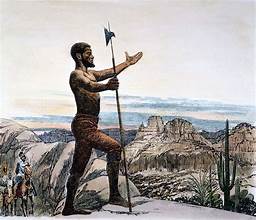
In the latest issue of Soroud Magazine, an internal journal of literary criticism, researchers and critics address the narratives of exploration under the theme: “Exploring the World: Knowledge and Imagination.”
The annual issue (9/2025) of the Soroud Journal, published by Narratives Laboratory in Morocco, has just been released and it features articles in Arabic, English, French, and Spanish, adhering to the peer-review system commonly used in academic journals. The journal is overseen by an editorial board of academics and specialized researchers from Morocco and beyond.
This issue is dedicated to the theme of narratives of world exploration: knowledge and imagination, and contains both theoretical and applied topics across the four international languages. Spanning 378 pages, the issue comprises 21 articles contributed by critics and researchers from Western, Arab, and Moroccan universities.
Contributors include Ihsain Elhyane, Halima Addi, Abdelkader Jamoussi, Ahmed Jariti, El-Hussein Seimour, Khalid Chaouch, Hasna Mabrouk, Abdel-Fattah Benzroual, Said Benmbarek, Driss El-Houssaini, Said El-Aimari, Ahmed Belati, Younes Idrissi, Jamil Hamdaoui, Al-Arabi Kandil, Aseel Al-Shabi, Abdelhafid Mashkouri, Mohamed Idrissi, Mohamed Abdel-Samad Idrissi, Nasser Ldeim, and Mourad EL Khatibi.
According to the introduction, the studies in this issue intersect history with culture and anthropology, focusing on moments of world exploration both East and West. These explorations are viewed as passionate pursuits of new knowledge, simultaneously real and imaginative acts that produce both understanding and fiction. All studies delve into the concept of exploration in its relation to travel, knowledge, and imagination, with a focus on two figures whose journeys have been pivotal in the narrative of exploration and remain open for further research and creative reinterpretation.
First Theme: The Journey of Estevanico (Mustafa al-Azamouri)
The first set of studies examines Estevanico’s journey as a model of westward exploration. They revisit questions such as:
• How can this journey be reinterpreted?
• How can writings on Estevanico be reexamined using new approaches to highlight his exploratory adventures and roles?
• How can the concept of the New World (America) be reconstructed through this Moroccan journey, which was nearly forgotten?
• How can Morocco’s and Africa’s roles in discovering this New World be emphasized?
Estevanico’s significance lies in his contribution during the 16th century to exploring Florida in the southern United States, making him the first Moroccan and African to set foot in the Americas. His journey has been the subject of historical and literary writings, hundreds of fictional and documentary texts in America, Europe, and Morocco.
Second Theme: The Journey of Ibn Battuta
The second focus is on re-reading the journey of Ibn Battuta in the light of current knowledge questions and using new methodological tools. The issue explores:
• How can the role of Moroccans in exploring the East be highlighted?
• How can historical and literary writings related to this journey be revisited?
Ibn Battuta’s journey, which spanned nearly three decades, is unprecedented globally and represents an expansive encyclopedia of exploration. It has been a key reference for historians, geographers, anthropologists, and an inspiration for writers and artists.
From these two figures, the articles in this issue tackle diverse topics, such as critical analyses of colonial discourse, the role of narrative representation in shedding light on cultural and social dimensions, and the impact of diplomatic and scientific journeys on shaping perceptions of different peoples. The studies also delve into symbolic spaces between reality and imagination, opening avenues for a deeper understanding of how human thought evolves regarding the “other” and the “self” and the role of imagination in shaping exploration.
Table of Contents
The issue’s articles include:
• Ihsain Elhyane: “Estevanico, also known as Mustafa al-Azamouri: The First Moroccan and African Explorer of the Southwestern United States.”
• Halima Addi: “Estevanico: Towards a Liberating Exploration/Conquest.”
• Abdelkader Jamoussi: “Mustafa al-Azamouri: The Journey, the Text, and the Figure.”
• Ahmed Jariti: “Postcolonial Studies and World Exploration.”
• El-Hussein Seimour: “Liberating History and Narratives of Conquest.”
• Khalid Chaouch: “Claiming Mustafa al-Azamouri in the Labyrinth of Eastern/Western Identities.”
• Hasna Mabrouk: “Narrating the Conquest of the Other in the 16th Century: Mustafa al-Azamouri’s Historical Memory and Representations.”
• Abdel-Fattah Benzroual: “Freedom and the Clash of Values in ‘Estevanico: The Black Man in the Conquest of Florida’ by José Eusebio Cherrino Camacho.”
• Said Benmbarek: “Estevanico and the Myth of Knowledge.”
• Driss El-Houssaini: “The Subaltern and the Anti-Colonial Narrative in Laila Lalami’s The Moor’s Account.”
• Said El-Aimari: “The Narrative of Slavery and Representations of the Real and Imaginary in Estevanico’s Character.”
• Ahmed Belati: “The Afro-African Subversion of Cabeza de Vaca’s Narrative.”
• Younes Idrissi: “Mustafa al-Azamouri: Restoring Identity and Building Collective Memory.”
• Jamil Hamdaoui: “The Anthropological Journey.”
• Al-Arabi Kandil: “The Role of Imagination in Diplomatic Travel Writing: Idris al-Amraoui as a Model.”
• Aseel Al-Shabi: “The Wondrous East in Ibn Battuta’s Travel Account Rihla.”
• Abdelhafid Mashkouri: “The New Journey of Ibn Battuta: Crossing Semiotic Borders of the Universe.”
• Mohamed Idrissi: “Mechanisms of Narrative Meaning in The Adventures of Ibn Battuta by Ross E. Dunn: A Cognitive Approach.”
• Mohamed Abdel-Samad Idrissi: “Cabeza de Vaca’s Report: Discovering America Alongside Mustafa Estevanico (1527-1536), Translated and Presented by Abdelkader Jamoussi.”
• Nasser Ldeim: “Ross E. Dunn: The Adventures of Ibn Battuta, a Muslim Traveler of the 14th Century.”
• Mourad El-Khatibi: “Abdel-Salam Idrissi and Abdelkader Jamoussi: Estevanico: Tracing the Footsteps of an Extraordinary African Explorer.”