
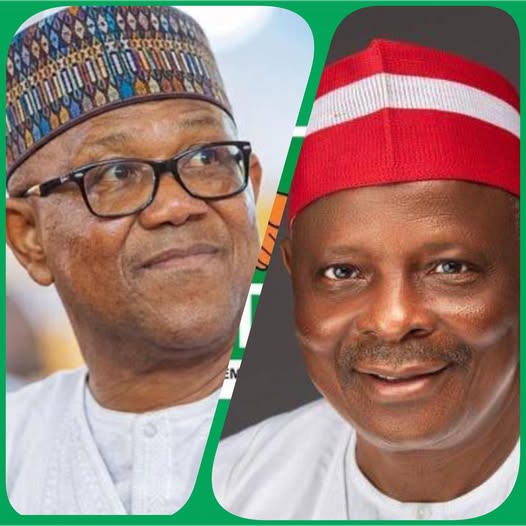
The idea of a “New Nigeria” has, in recent years, moved from the fringes of political rhetoric to the centre of national conversation. It is a phrase that carries both hope and frustration: hope for a country that can work, and frustration with one that often does not. For many citizens, especially younger Nigerians, the question is no longer whether change is necessary, but how it can realistically be achieved.
One popular argument is that meaningful transformation can only come through the creation of entirely new political platforms, fresh parties untainted by the entrenched interests of yesteryears, patronage networks, and financial excesses that have long defined Nigeria’s political system. The appeal is obvious: start anew, keep out the “old brigade,” mobilize the youth, and build a cleaner, more accountable political culture from the ground up. That would be a compelling vision. But it is also one that risks underestimating the depth and resilience of the system it seeks to replace.
Nigeria’s political environment is not simply a collection of parties, it is an ecosystem that is shaped by history, incentives, institutions, and power structures that extend far beyond party names or logos. Creating a new party within that ecosystem does not mean that one can escape from it. On the contrary, new parties are often quickly drawn into the same gravitational pull, needing funding, seeking influence, building alliances, and, in many cases, compromising along the way.
The experience of recent political movements illustrates this tension. Efforts to break away from dominant parties have shown that while public enthusiasm, particularly among young voters, can be overwhelmingly powerful, it is not sufficient on its own. Elections in Nigeria are not won solely on social media momentum or urban support. They are decided through a complex interplay of grassroots organization, regional balancing, logistical capacity, and, most crucially, the ability to sustain a nationwide presence across diverse communities.
This is where the romantic notion of a completely “clean” party begins to collide with reality. To compete effectively, any party, whether new or old, must build structures in all states, recruit and train agents for tens of thousands of polling units, and finance extensive campaigns. These requirements are not incidental, they are fundamental. And they create entry points for the very forces reformers often seek to exclude. Money, influence, and political experience become not just assets, but necessities.
It is therefore not surprising that new parties, even those founded with reformist intentions, often find themselves accommodating elements of the old order. This is not always a betrayal of ideals: sometimes it is a pragmatic response to the demands of the system. The danger, however, is that over time, pragmatism can blur into conformity, and the distinction between the “new” and the “old” becomes increasingly difficult to discern.
Still, acknowledging these challenges does not speak to abandoning the pursuit of change. Rather, it calls for a more nuanced and realistic strategy which recognizes that transforming Nigeria requires more than simply changing party labels. It requires engaging with the deeper structures that shape political behaviour.
One critical area is institutional strength. No political party, however well-intentioned, can single-handedly overcome weak institutions. Electoral integrity, judicial independence, and transparent public financial management are not optional extras, they are the foundations upon which any meaningful reform must rest. Strengthening these institutions reduces the incentives for corruption and makes it harder for any group, new or old, to manipulate the system.
Another essential component is internal party reform. While it is tempting to view existing parties as irredeemable, they remain central to Nigeria’s political landscape. To reform them from within, by improving on current internal democracy, enforcing accountability, and promoting merit-based leadership could be slow and frustrating, but it is a necessary part of the broader transformation. After all, these parties are not abstract entities, they are composed of individuals who can, over time, be influenced or replaced.
Civic engagement also plays a crucial role. The surge of political participation seen in recent years, particularly among young Nigerians, is one of the most encouraging developments in the country’s democratic journey. But sustaining that engagement beyond election cycles is vital. Voting is important, but so is holding elected officials accountable, participating in policy discussions, and demanding transparency at all levels of government. Change is rarely the result of a single electoral victory, it is the product of continuous pressure and vigilance. Equally important is the need to build broad coalitions.
Nigeria is a diverse country, with significant regional, ethnic, and socio-economic differences. Any movement that seeks to bring about national change must find ways to bridge these divides. This often requires compromise and negotiation, processes that can be uncomfortable but are unavoidable in a pluralistic society. A “New Nigeria” cannot be built by one group alone, it must be a collective project.
There is also the question of leadership. Charismatic and reform-minded individuals can inspire hope and mobilize support, but they cannot, on their own, transform a system. Sustainable change depends on building institutions and cultures that outlast any single leader. This means investing in leadership development at all levels, encouraging ethical standards, and creating systems that reward integrity rather than opportunism. Perhaps the most difficult aspect of this more realistic path is that it demands patience. In a country where many citizens face daily hardships, calls for gradual change can seem inadequate, even insensitive. The desire for swift, decisive transformation is understandable. But history suggests that durable political change is rarely instantaneous. It is often the result of incremental progress, small victories that, over time, accumulate into significant shifts.
This is not to say that bold ideas or new initiatives should be discouraged. On the contrary, innovation and experimentation are essential. New parties, movements, and platforms can inject fresh energy into the system, challenge established norms, and expand the range of political possibilities. But they should be seen as part of a broader strategy, not as a silver bullet. The vision of a “New Nigeria” remains both valid and necessary. It reflects a collective aspiration for a country where governance is transparent, resources are managed responsibly, and opportunities are accessible to all. Achieving that vision, however, requires a clear-eyed understanding of the obstacles involved and a willingness to engage with them strategically.
In the end, the path to a better Nigeria is unlikely to be defined by a single breakthrough or the emergence of a “perfect” political platform. It will be shaped by the interplay of democratic institutions, state actors, and citizens working, sometimes imperfectly, sometimes inconsistently, towards a common goal. It will involve setbacks as well as progress, compromises as well as convictions. What matters is not the purity of any one approach, but the persistence of the effort. Change, in this context, is less about finding an escape from the existing system and more about gradually transforming it from within and without. It is a demanding task, but it is also the most realistic one.
For those who continue to believe in the possibility of a “New Nigeria,” this realism should not be a cause for despair. Rather, it should be a guide pointing towards strategies that are not only inspiring, but also achievable. The journey may be longer and more complex than many would like, but it remains a journey worth undertaking.
Chief Sir Asinugo, PhD., M.A., KSC, is a UK-based author and veteran Journalist


