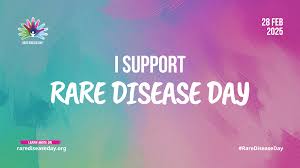
 Rare Disease Day is Friday, February 28, 2025.
One may ask what constitutes a Rare Disease? Why conduct research into Rare Diseases and what does the future hold for families with a member living with a Rare or ultra-rare Disease?
Rare Diseases, by definition, are those diseases that affect a small number of people (fewer than one in 2,000 people), in any World Health Organization region. There are more than 7,000 types of rare diseases in existence and the burden worldwide is not insignificant [1]. An Ultra-rare disease is a condition that affects fewer than 1 in 50,000 people. This means that for any ultra-rare disease, if we consider the world population to be 8 billion persons then less than 0.000625% of the 8 billion people world-wide live with that condition. Some of these diseases are so rare that only a very few people in the world have them.
In 2021, the United Nations (UN) issued the first resolution on addressing the challenges of persons living with rare diseases and their families, calling on Member States to provide access to safe and affordable health services, particularly at the primary-care level [2].
World-wide, people living with rare or ultra-rare diseases are often a neglected and marginalized group, especially those living in low and middle-income countries. Repeatedly we hear that many times, families embark on a bureaucratic Odyssey to obtain diagnoses, obtain services and manage care. Around 80% of rare diseases have a genetic cause, almost 70% of which present in childhood. About 95% of these lack approved treatments. The average time for an accurate diagnosis is 4-8 years, and about 30% of children with a rare disease die before age five years [2]. To codify information on rare diseases, the standard international designation is The International Classification (ICD) that serves to globally record and report health and health-related conditions. It standardizes interoperability and comparability of digital health data. The ICD contains diseases, disorders, health conditions [1]. ICD-11 includes some 5,500 rare diseases and their synonyms. The rare diseases are regularly updated, in close collaboration and conceptual identity with Orphanet, a system that is linked to the “World Health Organization Collaborative Global Network 4 Rare Diseases” [3].
As we observe Rare Disease Day in 2025, we acknowledge the ever-present danger of not understanding the significance of studying rare diseases and the consequences of funding reductions and cuts to this type of medical and scientific research. Here, we should emphasize that we understand that studying the roles of basic science and specifically genetics in a rare disease can help society’s understanding of related common diseases such as diabetes, obesity, heart disease and many forms of cancer that are rarely caused by only one genetic mutation—these common diseases usually arise from a combination of many genetic and environmental factors. This makes determining the cause of common diseases a bit more complicated. Understanding the mechanism of how genes and the proteins that encode interact and affect one another leads to discovering the gene involved in a rare disease and its function, and thus identify the function of other gene products that interact with it thereby allowing research on rare disease genes to impact our understanding of other diseases, including the most common ones.
Rare diseases are often caused by a mutation in one gene, which makes proving that it is the cause of the disease much simpler. Achieving precise and early diagnosis poses challenges because of the low likelihood of such a disease occurring, and poor knowledge among patients and health-care workers of their typical signs and symptoms. However, substantial diagnostic advances have been made using whole-genome sequencing. Investigating the underlying mechanism for rare and undiagnosed diseases can yield some of the most interesting scientific discoveries.
Why is this work important and what is the significance of it? One way to make headway in the genetics of many complex disorders is to search for large pedigrees living in the same geographic location, where one can study the penetrance and segregation of variants in a similar environmental background, free of population stratification concerns, particularly given the possible penetrance of only approximately 40–60% for mutations in some disorders [3]. Many countries in Africa still remain under represented in this aspect studies. Discovery, educational awareness, identifying needs, providing services and developing treatment strategies is the mantra of rare disease studies [4].
All laboratory research conducted observe that the process of regulatory considerations demand that research begins with the approval by an Institutional Review Board, (IRB), that is, a committee involved in reviewing human subjects research with the charge to assure that no harm will come to the participating subjects. Under the USA’s Federal Drug Administration (FDA)regulations, an IRB is an appropriately constituted group that has been formally designated to review and monitor biomedical research involving human subjects. In accordance with FDA regulations, an IRB has the authority to approve, require modifications (to secure approval), or disapprove research. This group review serves an important role in the protection of the rights and welfare of human research subjects. The purpose of IRB review is to assure, both in advance and by periodic review, that appropriate steps are taken to protect the rights and welfare of humans participating as subjects in the research.
An example of active rare disease studies is being conducted by a research team led by geneticist and psychiatrist at the New York State Institute for Basic Research in Developmental Disabilities in New York, USA. They are focused on the discovery of rare previously undiscovered genetic diseases. Beginning in 2011, a team of international researchers used a then new lab technique known as variant annotation analysis and search tool, to identify the cause of an extremely rare X-linked genetic disorder that is often lethal in infancy. The disease-causing mutation is the NAA10 gene found on the X- chromosome. Males with this mutation have an aged appearance, facial abnormalities, developmental delay and cardiac arrhythmias, among other conditions. The team studied a family in Utah, USA with a history of several boys with these symptoms who died in infancy and analyzed DNA from five boys in the family. It was decided by the families to name the disease Ogden syndrome, reflecting the family’s city of residence in the USA [5].
This study is one of the first that next-generation sequencing was used to help identify and confirm the genetic etiology of a previously unknown and unreported disease [6]. Females identified with this ultra-rare disorder have a variety of symptoms including facial dysmorphia, intellectual and developmental delays, speech and motor delays, visual impairments and visual impairments. [6] The original study was research rather than clinical during the discovery of the mutation. However, there is an on-going debate in the medical genetics and ethics communities concerning whether research results should be returned to participants in the study or not. There really is no major or ‘correct’ consensus on this. In the USA, some people argue that all research results must be confirmed in a FDA’s Clinical Laboratory Improvement Amendments (CLIA), certified laboratory prior to giving any such results back to patients. The Centers for Medicare and Medicaid Services (CMS) regulates all laboratory testing – except research – performed on humans in the USA through the CLIA. In total, the CLIA covers approximately 200,000 laboratory entities.
Recently published findings from their studies of the ultra-rare neurodevelopmental disorders associated with the Ogdensyndrome genes (NAA10). In brief, the first study consisted of 61 children with NAA10-related neurodevelopmental syndrome, an X-linked disorder due to NAA10 gene variants. They found a high prevalence of growth failure, with weight and height percentiles often in the failure-to-thrive diagnostic range. The exact cause of poor growth in individuals with NAA10-related neurodevelopmental syndrome is unknown, and the degree to which gastrointestinal symptoms contribute to this problem remains uncertain. However, the team’s analysis of nine individuals who received tube feeding found it to be effective in improving weight gain and caregiving. The authors recommend that if children with NAA10-related neurodevelopmental syndrome are in the failure to thrive range past one year of age, treating physicians should be consulted regarding the possibility of starting tube-feeding to avoid prolonged growth failure. The findings were published in the article in the American Journal of Human Genetics Part A [7].
A second recent ultra-rare disease study by the same group examined the clinical characteristics, or phenotype, of individuals with NAA10- and NAA15-related neurodevelopmental syndromes. Briefly, clinicians interviewed the parents of 56 individuals with newly identified variants of NAA10 gene and of 19 individuals with newly identified variants of NAA15 gene, which were added to all previously diagnosed cases. The researchers’ analysis of the phenotype of affected individuals revealed a spectrum of variable levels of intellectual disability, delayed milestones, autism spectrum disorder, craniofacial dysmorphology, cardiac anomalies, seizures, and visual abnormalities, including cortical visual impairment and microphthalmia. Although they found that there is clinical overlap between the two syndromes, functional assessment showed that the overall level of functioning is significantly lower in individuals with NAA10 variants than in individuals with NAA15 variants.
These findings were published in the article, “Expanding the phenotypic spectrum of NAA10-related neurodevelopmental syndrome and NAA15-related neurodevelopmental syndrome,” in the European Journal of Human Genetics. In this study, the research team collaborated with institutions in the United States, Canada, Germany, Portugal, and Spain. These studies advance our understanding of the clinical characteristics of the rare NAA10-related and NAA15-related neurodevelopmental syndromes,“ The research team of scientists contributed to another study, recently published in Nature Genetics, that addressed these neurodevelopmental syndromes among other syndromes, and Artificial-Intelligence (AI) based phenomics to quantify rare disease and genetic variation study evaluated the use of the PhenoScore artificial intelligence–based framework in establishing genotype-phenotype correlations in rare genetic syndromes [8]
An international and collective approach involving integration of rare diseases into the health-care system, inclusion of mental health considerations in rare disease services, and increased awareness efforts will be essential to foster progress and addressing the unmet needs of those affected by rare diseases.
There is need to raise awareness and prioritize early and precise diagnosis, and develop effective treatment of rare diseases via specific policies and funding for research and development. A collective approach involving integration of rare diseases into the health-care system and inclusion of mental health considerations in rare disease services, will be essential for fostering progress and addressing the unmet needs of those affected by rare diseases. The need remains to support research in the basic sciences, support stewardship initiatives to develop educational tools and to provide resources to improve health equity in underserved and underrepresented populations. Support of post-pandemic common virtual and in-person meetings, building community, national and international opportunities to foster collaboration, social support, education, and raising of awareness may improve the health and mental well-being of the rare disease community, including children, siblings, caregivers/care partners and those who are grieving from loss. Let’s remember that February 28 is Rare Disease Day.
References:
1. https://www.who.int
2. https://www.rarediseasesinternational.org/wp-content/uploads/2022/01/Final-UN-Text-UN-Resolution-on-Persons-Living-with-a-Rare-Disease-and-their-Families.pdf
3. https://globalgenes.org/rare-disease-facts/
4. Mitchell KJ, Porteous DJ. Rethinking the genetic architecture of schizophrenia. Psychol. Med. 41, 19–32 (2011).
5. https://doi.org/10.2217/pgs.11.117 Gholson J Lyon (2011) Interview: Personal Account of the Discovery of a New Disease Using Next-Generation Sequencing, Pharmacogenomics, 12:11, 1519-1523, DOI: 10.2217/pgs.11.117
6. Rope AF, Wang K, Evjenth R et al. Using VAAST to identify an X-linked disorder resulting in lethality in male infants due to N-terminal acetyltransferase deficiency. Am. J. Hum. Genet. 89, 28–43 (2011).(http://www.nature.com/news/2011/110623/full/news.2011.382.html)
7. Sandomirsky K, Marchi E, Gavin M, Amble K Lyon GL. (2023). “Phenotypical variability and gastrointestinal manifestations and interventions for growth in NAA10-related neurodevelopmental syndrome. AJMG part A. <https://doi.org/10.1002/ajmg.a.63152>
8. Nellåker C, Alkuraya FS, Baynam G, Bernier RA, […] Lyon GJ, […] Wilkie AOM; Minerva Consortium. Enabling Global Clinical Collaborations on Identifiable Patient Data: The Minerva Initiative. Frontiers in Genetics. 2019 Jul 29; 10:611. eCollection 2019. PMID: 31417602.