Prophet El Buba: That stance alone remains priceless By Emeka Asinugo

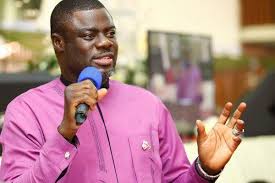
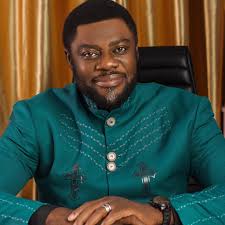
In a country where religion and ethnicity often define the identity of citizens and ultimately shape their national destiny, Prophet Isa El Buba has always stood out as a remarkable voice of caution. Born into the Fulani ethnic stock in Kaduna where his parents resided, he has always carried with him the weight of history, the complexities of heritage, and the courage to walk a different path from many of his northern kiths. As a Fulani who embraced Christianity and rose to become a prophet, his story is not only unusual but also deeply symbolic of Nigeria’s contradictions and its possibilities. Over the years, he has emerged as the conscience of the Nigerian public, one who refuses to keep silent in the face of injustice, insecurity and the manipulation of truth. He has insisted that Nigerians are not telling themselves the truth about their country. That alone is more than a passing statement. It is a message to the people of Nigeria in their entirety, a challenge, a call to self-examination.
To understand Prophet Isa El Buba is to first appreciate the tension in his background. The Fulani are often perceived as custodians of power in Nigeria, linked to the political and cultural structures that dominate the northern region. To come from this heritage and yet openly embrace Christianity is in itself a daring choice. It is a path of both spiritual conviction and social isolation. In the northern Nigerian setting, where identity is tightly woven around Islam and ethnic belonging, El Buba’s position has at times placed him at odds with his kinsmen and also earned him suspicion from others who see him as an outsider. Yet, instead of retreating, he has chosen to step into the public square with clarity, preaching not only salvation but also truth to power.
Over the years, El Buba has become a thorn in the side of leaders who prefer silence and submission to inconvenient realities. He is known to raise his voice against corruption, insecurity, bad governance and the structures of privilege that divide Nigerians along ethnic and religious lines. His audiences, whether in churches, civic gatherings or through the media, hear not only a prophet’s sermon but a citizen’s lament. He speaks with urgency because, for him, the stakes are too high to keep quiet. He insists that a nation where the truth is suppressed cannot prosper, and a people who refuse to confront reality cannot build a meaningful future.
In recent years, as Nigeria has been buffeted by waves of insecurity, from Boko Haram in the North East to banditry in the North West and separatist agitations in the South East, El Buba’s voice has gained greater resonance. He is no stranger to danger, having himself been at risk because of his outspoken nature.
Yet he continues to remind his audiences that insecurity is not just about weapons and killings, but about the deeper culture of privilege, impunity and dishonesty that has taken root in the nation. He argues that insecurity thrives where some tribes or groups are seen as untouchable, where crime is overlooked because of identity, and where leaders shy away from naming and confronting the perpetrators. For him, the truth must be told, even when it unsettles.
What makes Prophet Isa El Buba unique is not only his courage but also his consistency. Unlike many who oscillate with the tides of politics, he has built a reputation for speaking his convictions regardless of which government is in power. During the Buhari years, he accused the administration of being built on lies and failing to address insecurity honestly. Today, he still presses the Tinubu administration to go beyond rhetoric and face the roots of Nigeria’s problems. For him, every administration must be held to account, and every leader must recognize that leadership is not a privilege but a responsibility.
El Buba’s charisma lies in his ability to connect the spiritual with the social. As a prophet, he is committed to the transformation of individual lives. But as a public figure, he insists that salvation must also reflect in how citizens live together and how leaders govern. He urges Christians not to see their faith simply as a ticket to heaven, but more importantly, as a call to responsible citizenship. He challenges Muslims, Christians and adherents of traditional faiths to recognize their common humanity and confront the culture of silence that allows injustice to fester. For him, the gospel and truth-telling are inseparable.
Beyond his words, El Buba has also sought to build structures that embody his vision. He has been involved in empowerment programmes aimed at training and equipping young Nigerians with skills. He believes that insecurity is not only a product of guns but also of poverty and hopelessness. To him, a young person who has no means of livelihood becomes an easy recruit for crime and extremism. That is why he consistently calls on government to invest in education, skills and opportunities, while urging citizens to take responsibility for their communities. His conviction is that unless Nigerians learn to face themselves and admit where they have gone wrong, no external saviour will fix the country.
Yet, Isa El Buba is not without his critics. Some accuse him of being too political for a prophet, arguing that his pulpit should be reserved for spiritual matters. Others believe his bluntness exposes him to unnecessary risks. But those who know him insist that he cannot be otherwise. To him, the gospel is holistic, and silence in the face of oppression is a betrayal of both faith and humanity. He is convinced that if pastors and imams refuse to speak the truth, Nigeria will sink deeper into deception and violence.
What his critics miss is the symbolic weight of his identity. As a Fulani, his voice carries a challenge to stereotypes. It disrupts the easy narrative that assumes all Fulani are Muslims or that their loyalty is bound to power. His presence shows that even within the Fulani world, there is diversity, courage and alternative visions. This alone makes his life a kind of sermon, reminding Nigerians that no ethnic group is monolithic, and no identity is destiny.
Prophet Isa El Buba’s relevance in Nigeria today does not lie only in what he says but in what he represents. At a time when the Nigerian nation is dangerously polarized, his life embodies the possibility of dialogue across divides. He is a Fulani, yet a Christian. He is a prophet, yet a social critic. He is a man of faith, yet a builder of civic awareness. In a sense, he embodies the contradictions of Nigeria itself: a land of diversity, pain and potential. His call for truth-telling is, therefore, not merely rhetorical. It is a call to national honesty, a reminder that Nigeria cannot heal by denying its wounds.
As the country continues to grapple with insecurity, economic hardship and political distrust, voices like Isa El Buba’s have become even more necessary. They disturb the comfort of silence, they pierce through propaganda, and they demand accountability. Nigeria’s future may well depend on whether more citizens are willing to take his advice seriously: to look themselves in the mirror and admit the truths they would rather suppress. In that sense, his recent insistence that Nigerians are not telling themselves the truth is not just a criticism but an invitation. It is an invitation to honesty, to courage, and to the rebuilding of trust.
The story of Isa El Buba is still being written. His life continues to be a testimony of conviction, his ministry a platform of courage, and his voice an echo of conscience. Whether or not Nigeria listens remains an open question. But for now, he remains steadfast, reminding his audiences that silence is not an option, that truth is not negotiable, and that a people who refuse to face their reality will forever stumble in the dark. His is the kind of leadership that does not come with titles or offices, but with the authority of integrity. For a country that is tired of deception, that stance alone remains priceless.
Chief Sir Asinugo writes from the UK