
Human history has always been a story of migration. The world has always been in motion. From the earliest times when nomadic peoples moved in search of food and shelter, to the modern era when people cross borders in airplanes and ships in search of opportunities for better lives, migration has been part of what makes us human. Today, with an estimated global population of 8.2 billion people, only a very small percentage of this number live outside the countries of their birth, just about 3.7%. And this is approximately 304 million international migrants across the globe, according to recent estimates from the United Nations. The remaining 96.7% of the world’s population continue to live in the countries they were born in, even with the inequalities, limitations and challenges that exist there.
This striking contrast is often forgotten in the heat of political debates about immigration, where one might think that half of the planet is on the move. The truth is far from it. Only about one in every twenty-seven human beings is actually an immigrant. And when considered in this light, one begins to wonder why immigration should really pose a major problem to governments. Yet in many countries, political leaders and public discourse paint immigration as one of the greatest challenges of our time, a destabilizing force that undermines economic stability, stretches public services to breaking point, fuels cultural conflict, and threatens national security. But the figures tell us otherwise. With fewer than 4% of the world’s people living outside their birth countries, immigration should have been a minor political issue in reality. Moreso, when the reasons that push or pull people across borders are deeply human, even noble in many cases, rooted in the universal desires for safety, dignity, opportunity, and the chance to provide for loved ones.
It is important to remember that people do not simply uproot themselves for frivolous reasons. Migration is rarely a matter of choice. It is often a response to powerful pressures or attractive opportunities that make the risk worthwhile. For many, it is about escaping poverty, where life in the home country does not provide enough food, work, or shelter. For others, it is the hope of securing better jobs and better pay abroad, often in industries that need workers but where the local population cannot meet the demand. Many migrate to pursue education that is unavailable or inaccessible at home, knowing that knowledge is the most powerful tool for transforming not just individual lives but entire families and communities. Others migrate to reunite with family members who have already gone ahead, for the bond of kinship and affection is stronger than borders or political lines on a map.
There are also those who are forced to flee because of political instability, persecution, or war. From conflict-ridden regions to places citizens are scarred by authoritarian regimes, the choice is often stark: leave or risk imprisonment, torture, or death. In more recent years, environmental factors have increasingly joined the list of migration drivers. Drought, flooding, desertification, rising seas, and other climate-related disasters push people away from homes that may no longer sustain them. Added to these are the threats of terrorism, banditry and insecurity in several parts of the world, especially in Africa and the Middle East. When homes and farms are frequently attacked, schools are raided and made unsafe, and communities are repeatedly targeted, ordinary people seek refuge wherever safety seems possible. At the core of these movements is a simple and powerful truth: that people migrate to live, and to give their families a chance to thrive.
In examining the distribution of immigrants across regions, it is evident that migration is not uniform. Asia accounts for about 37% of global migrants, Europe about 22%, Latin America and the Caribbean 14%, Africa 14%, North America 1.6%, and Oceania less than 1%. These numbers reflect both geographic realities and historical patterns. Some regions are closer to conflict or poverty-stricken zones that push people out, while others, particularly in Europe and North America, are wealthier and therefore exert a strong pull. Yet even in regions that are seen as popular destinations, immigrants remain a small fraction of the total population. In North America, for example, where migration often dominates political campaigns and news headlines, international migrants account for only 1.6% of the world’s total migrant population. And when compared against the continent’s entire population, immigrants are still a small minority.
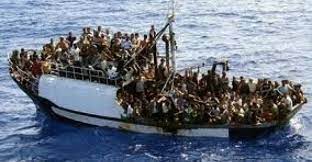
So why, then, does immigration cause so much anxiety to government and prospective migrants? Why does a movement that affects only one in twenty-seven people worldwide occupy such a disproportionate space in public and political imagination? The answer lies partly in perception and politics. Governments often amplify fears about migration for electoral gain, presenting themselves as protectors of national borders against imagined invasions. In many cases, media narratives also contribute to the exaggeration, highlighting dramatic arrivals of boats or caravans while overlooking the far greater majority who remain in their countries of birth. Against such a backdrop, it is easy for citizens to believe immigration is spiraling out of control when the reality is that the numbers are small and manageable. Another part of the answer lies in the genuine challenges that migration does present. It is undeniable that a sudden influx of people into a community can put pressure on housing, schools, healthcare, and other services. Integration is not always seamless, especially when language and cultural barriers exist. Some sectors of society may feel threatened by newcomers competing for jobs or changing the cultural landscape. These are real issues, and they require thoughtful policies and careful management. But that cannot be a reason immigration issues should be inflated into existential crises that fuel fear and division. Instead, governments need to approach immigration with calmness, perception, and above all, a sense of humanism.
The humanism is crucial. Every immigrant is first and foremost a human being with hopes, dreams, aspiration and rights. They are not statistics. They are not invaders. They are not problems to be solved. They are people seeking what any of us would want if we were in their situation: safety, opportunity, and a chance to contribute. When governments treat immigrants as less than human, when they subject them to inhumane detention, hostile rhetoric, or discriminatory laws, they not only fail those individuals but also fail their own citizens, because they corrode the values of dignity, compassion, and justice that should guide any decent society and for which their societies are mostly known.
In reality, immigration is not only a challenge. It is also an opportunity. Migrants bring with them skills, talents, and labour that often complement rather than compete with host populations. Many industries in developed countries especially in agriculture, healthcare, construction, hospitality and so on, rely heavily on immigrant labour. Without immigrants, fruits would rot unharvested in fields, hospitals would struggle to staff wards, and entire sectors would stand still. Immigrants also bring cultural diversity that enriches societies, creating new cuisines, music, art, and perspectives that expand horizons and foster innovation. On the economic front, they contribute taxes, fill demographic gaps in aging societies, and send remittances back home that support families, fund education, and build communities. Far from draining economies, immigrants often help sustain them.
Even in cases where governments feel overwhelmed, the solution is not to shut doors or build walls but to improve systems for orderly and humane migration. This includes investing in integration programmes, ensuring access to language classes and job training, fostering inclusive policies that prevent discrimination, and cooperating with other nations to address the root causes of forced migration such as conflict and climate change. Most importantly, it means calming down the rhetoric and recognizing that with only 3.7% of the global population currently on the move in search of better lives, the issue of immigration is a manageable phenomenon and not an existential crisis.
Indeed, if governments approached immigration with perspective, they would see that the real crisis does not lie in the small number who leave but in the far larger majority who are trapped where they are, unable to access the opportunities, safety, or dignity they deserve. The billions who remain in their countries of birth often face crushing poverty, limited education, insecure health, or dangerous political regimes. For them, the chance to migrate is not available, either because borders are closed, fees are unaffordable, or opportunities are scarce. If governments truly want to address global human welfare, they might focus more on creating conditions where people can thrive at home rather than panicking over the minority who move abroad.
The perspective also calls for humility. Today’s wealthy nations were built by migrants, either through waves of immigrants who came voluntarily or through darker histories of forced labour and colonial exploitation. To turn around now and deny others the chance to move in search of a better life is both hypocritical and historically blind. Nations that celebrate their immigrant roots on one hand while they demonize current immigrants on the other, undermine their own identities. They forget that openness and exchange have always been sources of strength, not weakness in democratic countries.
In this interconnected world, where goods, capital, and information move across borders with astonishing speed, it is unrealistic and unfair to expect any human being to remain confined in his country of birth by the accident of his birth. Migration will continue, as it always has, because it is part of the human condition. But it will remain a relatively small part of the global population picture. The overwhelming majority of people will continue to live and die in the countries where they were born, contributing to their communities and nations. Governments should therefore put the issue in perspective, calm the fears, and handle immigration with fairness and humaneness.
All told, immigration should not really pose a major problem to governments. The numbers are small, the reasons are human, and the opportunities are real. What is required is not panic measure but perspective, not hostility but humaneness. People migrate because they want to live, to work, to learn, to be safe, to love, to hope. In recognizing this, governments would not only manage immigration better but also reaffirm their commitment to the dignity and rights of all human beings. In an age where fear and division are too often the tools of politics, the call is clear: treat migration not as a crisis but as a manageable, even enriching aspect of our shared human journey.
Chief Sir Asinugo, PhD., M.A., KSC writes from the UK