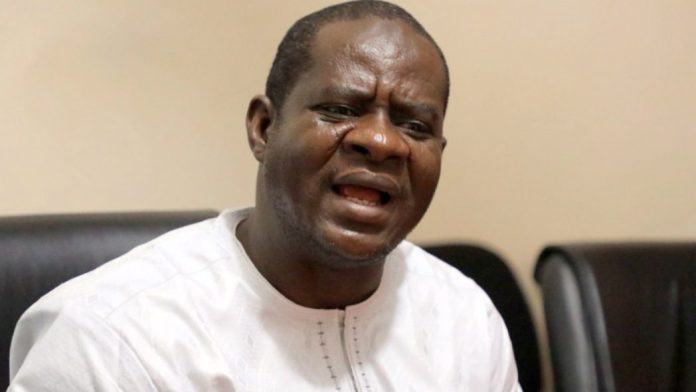
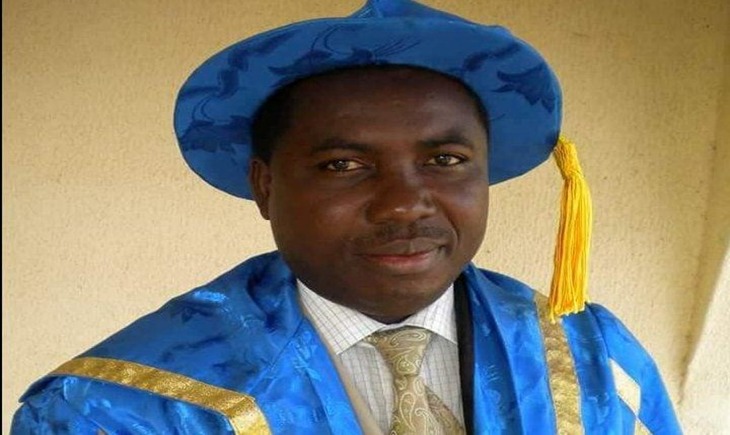

In the complex political and electoral landscape of Nigeria, the question of who leads the Independent National Electoral Commission (INEC) has never been a trivial issue. It is a position that sits at the very heart of the country’s democratic process, determining not only how votes are counted but also how citizens perceive the fairness and legitimacy of their government. When President Bola Ahmed Tinubu recently nominated Professor Joash Ojo Amupitan, Senior Advocate of Nigeria (SAN), as the new Chairman of INEC, reactions across the nation were mixed. Many hailed his intellect and legal accomplishments, while others questioned whether a man whose entire academic and professional life has been confined to a single Nigerian university can effectively steer such a delicate national institution toward reform.
Professor Amupitan’s credentials are, on paper, impressive. He obtained his Bachelor of Laws degree (LL.B) from the University of Jos in 1987. He was called to the Nigerian Bar in 1988. He earned his Master of Laws (LL.M) from the same institution in 1993, and later completed his PhD in Law in the same Jos University in 2007. From assistant lecturer in 1989, he rose through the ranks to become a professor in 2008 in the same university. Over the years, he has served in numerous administrative capacities within the University of Jos, as Head of Department of Public Law, Dean of the Faculty of Law, and later Deputy Vice-Chancellor (Administration). His legal scholarship and classroom contributions are beyond dispute. He has written extensively on corporate governance, company law, the law of evidence, and the law of trusts. His books which include ‘Corporate Governance: Models and Principles’, ‘Documentary Evidence in Nigeria’, ‘Evidence Law: Theory and Practice in Nigeria’, and ‘Principles of Company Law’ have become reference materials for many law students and practitioners across Nigeria.
Yet, the criticism that greets his nomination by President Ahmed Tinubu does not question his intelligence or commitment. It focuses instead on a deeper issue: his total lack of external academic or professional exposure. In an age of globalization, where comparative perspectives define institutional reforms, Professor Amupitan’s curriculum vitae is distinctly local. He is a pure product of the University of Jos, a man who has lived, studied, taught, and risen within a single institutional culture for nearly four decades. He has never studied, taught, or undertaken research in the United Kingdom, the United States, Europe, or even other African countries such as South Africa or Ghana. This uninterrupted, single-campus background has led many to wonder whether he possesses the breadth of perspective, the international awareness, and the boldness of reform that leadership of INEC demands.
Nigeria’s electoral system has struggled for decades to earn public trust. From disputed results to logistics failures and allegations of manipulation, INEC’s record is a blend of incremental progress and recurring disappointments. To reform such an institution requires not only technical knowledge of law but also the courage to benchmark Nigeria’s processes against global best practices. Those who have had the opportunity to study or work abroad often return with insights into how electoral commissions in other democracies handle transparency, technology, voter education, and institutional independence. The concern here is that a man who has spent his entire career within one Nigerian university environment, however reputable, may have become too comfortable with the bureaucratic inertia that characterizes much of Nigeria’s public sector.

To be fair, local experience is not inherently a weakness. Professor Amupitan’s long immersion in Nigerian legal and administrative systems could mean that he understands the peculiarities of Nigeria’s political terrain better than anyone else. He knows the mindset of politicians, the weaknesses of the judiciary, and the deep-rooted culture of patronage that often undermines merit and accountability. His background in corporate governance could help him structure INEC’s internal administration with greater discipline and transparency. His expertise in the law of evidence may make him particularly attentive to the need for verifiable electoral processes, where results are not merely declared but proven beyond reasonable doubt to be accurate. These are significant assets that, if deployed properly, could make a difference.
However, the challenge before him is not only to manage INEC efficiently but to reform it fundamentally. Reform demands imagination. It requires an understanding of how other democracies have tackled similar challenges, from Kenya’s biometric voter registration and Ghana’s transparent collation processes to the United Kingdom’s mechanisms for ensuring electoral accountability. Without such exposure, a leader risks assuming that the Nigerian way is the only way. When a person has never left the ecosystem that shaped him, it is difficult to recognize its limitations. The danger is that he might reproduce within INEC the same cautious, conservative approach that pervades Nigeria’s universities, where hierarchy is rigid, innovation is slow, and dissent is often stifled.
This concern becomes even more critical when viewed against the broader context of Nigeria’s leadership culture. Too often, appointments to strategic positions are based not on reformist credentials but on political comfort. President Tinubu’s choice of Professor Amupitan, if confirmed by the Senate, will be seen through that lens. Does the President want a strong, independent reformer or a steady, predictable bureaucrat? The difference is consequential. INEC needs a leader who can resist political pressure, overhaul logistics, strengthen voter confidence, and embrace technology in ways that make elections not just credible but transparent. The commission does not need another cautious administrator who will spend four years learning on the job.
There is also a gender dimension to this appointment that deserves attention. Following Professor Mahmood Yakubu’s exit, May Agbamuche Mbu, an experienced commissioner within INEC, was appointed as Acting Chairperson. She is a lawyer, a woman of experience, and someone who has worked within the commission long enough to understand its internal dynamics. Her brief tenure as acting head offered Nigeria a rare opportunity to test whether a woman could handle a job that has historically been dominated by men. Yet, before she could even settle into the role or demonstrate her capacity, her leadership was overshadowed by the announcement of a substantive replacement. She was not given the time or institutional backing to prove her capability. In a nation that constantly preaches gender inclusion and equity, her abrupt sidelining raises questions about whether Nigeria is truly ready to trust women with sensitive national assignments. It was a missed opportunity, and one that leaves many wondering whether competence or gender bias shaped the decision.
Mrs. Agbamuche Mbu’s experience within INEC, her familiarity with its internal workings, and her exposure to electoral processes across the country would arguably have made her a strong candidate for continuity and stability. But as is often the case in Nigeria, experience sometimes counts less than political expediency. While Professor Amupitan comes from outside the electoral institution and will need time to study its complexities, Mrs. Agbamuche Mbu has been part of that system for years. Her exclusion at the point of potential elevation only reinforces the perception that top positions in Nigeria’s public institutions are reserved for men, regardless of women’s proven competence.

Returning to Professor Amupitan, one must admit that his record is not one of mediocrity. As a scholar, he is disciplined and respected. His rise to the rank of Senior Advocate of Nigeria shows that he has excelled both in academia and in the practice of law. As Pro-Chancellor and Chairman of the Governing Council of Joseph Ayo Babalola University, he has demonstrated administrative acumen beyond the University of Jos. These achievements indicate a mind that is organized, focused, and capable of leadership. What he must prove now is that he can step out of the shadows of academia and operate in the messy, fast-moving world of electoral politics where law meets logistics, and principle meets power.
The Nigerian Senate, when it eventually receives his name for confirmation, will carry a heavy responsibility. This is not the kind of nomination that should be rubber-stamped in the usual ceremonial fashion. The Senate should take time to interrogate his worldview, his independence, and his preparedness to defend INEC’s autonomy against political interference. Lawmakers must ask hard questions: what specific reforms does he envision? How does he plan to rebuild public confidence in INEC after the controversies of past elections? What lessons does he draw from electoral commissions in other countries, and how would he adapt those to Nigeria’s context? How does he intend to protect INEC’s staff from partisan manipulation? These questions will reveal whether he is merely another insider appointed to preserve the status quo or a visionary prepared to push boundaries.
Moreover, the Senate should pay close attention to his temperament. An effective INEC chairperson needs not only legal expertise but also moral courage. The office demands firmness under pressure, humility in success, and transparency in decision-making. The Commission’s independence is always under threat from political actors who see elections as war, from security agencies that seek to control outcomes, and from internal staff tempted by compromise. The next INEC chairman must be able to say “no” to power and “yes” to integrity, even when that choice carries personal cost. Professor Amupitan’s years in academia may have taught him patience and diplomacy, but the real test will come when those virtues clash with the ruthless demands of political survival.
It would be unfair to judge him solely by his lack of international exposure. Many world-class administrators have risen to greatness through local institutions. What matters most is whether he recognizes his own limitations and surrounds himself with advisers and commissioners who can supply the perspectives he lacks. INEC already collaborates with international organizations such as the European Union, the United Nations Development Programme, and ECOWAS. Under his leadership, these partnerships must be strengthened, not merely for funding but for knowledge exchange. He should open INEC to external review, encourage research partnerships with universities abroad, and invite independent audits of the commission’s processes. In this way, his local background can be complemented by institutional exposure to global best practices.
Still, symbolic gestures will not be enough. Nigerians are tired of promises. They want elections that reflect their will, not the designs of political godfathers. They want results transmitted transparently, logistics managed efficiently, and disputes resolved fairly. If Professor Amupitan can deliver these outcomes, his local academic background will soon be forgotten. But if he fails, it will only confirm fears that the presidency prefers comfortable administrators to courageous reformers. The path ahead is narrow. INEC’s credibility has already been stretched thin by public suspicion. To rebuild confidence, the new chairman must approach his task not as a mere continuation of his predecessors’ efforts but as a total overhaul. He must digitalize processes, professionalize staff, and strengthen internal audit systems. He must ensure that the commission’s technology infrastructure is not manipulated during elections. He must also cultivate a new communication culture that engages citizens honestly, admits failures when they occur, and restores faith in the power of the vote.
There is also the moral question of representation. When competent women within INEC, such as Mrs. May Agbamuche Mbu, are denied the opportunity to lead, the institution loses diversity of thought and experience. The Senate should use this confirmation hearing to demand greater gender balance in future appointments, not as tokenism but as recognition of the unique strengths women bring to governance. The exclusion of women from the top reinforces a patriarchal pattern that weakens rather than strengthens our democracy.
All in all, Professor Amupitan’s appointment could go either way. It could become a story of how a home-grown scholar with deep knowledge of Nigerian law rose to transform the nation’s electoral system, or it could become another chapter in the tale of wasted opportunities. His success will depend not on where he studied but on how courageously he leads. To reform INEC, he must first reform its culture of complacency. He must inspire his staff to believe that credibility is possible, that transparency is non-negotiable, and that power truly belongs to the people.
As the Senate prepares to deliberate on his confirmation, lawmakers should remember that this decision is not about one man’s résumé but about the integrity of Nigeria’s democracy. They must scrutinize his background, assess his vision, test his independence, and ensure that his appointment strengthens rather than weakens public confidence in the electoral process. They must seek evidence that he can rise above local mentality, embrace global standards, and lead with both intellect and integrity.
If they find in him the courage to do what is right, then his appointment will be justified. But if they detect in him the cautious conservatism of a man too loyal to the system that produced him, they must think twice. Nigeria cannot afford another electoral cycle defined by distrust and disappointment. The time for experimentation is over. The time for genuine reform has come. And whoever leads INEC next must be prepared, not merely to preside over elections, but to defend democracy itself.
Chief Sir Asinugo, PhD., M.A., KSC writes from the UK