The attack on Iran is capable of shaping the next world war By Emeka Asinugo


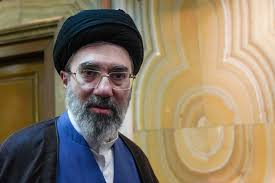
In the complex theatre of global politics, wars don’t normally erupt suddenly or without a long and tangled history behind them. The present confrontation involving the United States and Iran cannot be different. It is one of those conflicts whose roots stretch across decades of suspicion, ambition, wounded pride, and geopolitical calculation. The attack on Iran, justified by the leadership of the United States as a necessary response to perceived threats, is not merely another episode in Middle East’s historical narrative of instability. This is a period that carries the potential to reshape international relations and, if mishandled, could become one of the dangerous flashpoints capable of shaping the next world war.
To understand how the world arrived at this precarious point, we need to return to the early years of the Cold War and the rise of Mohammad Reza Pahlavi, the last Shah of Iran. In the 1950s, Iran was already one of the most strategically important nations in the Middle East. It possessed vast oil reserves and occupied a geographical position that placed it squarely at the crossroads of global power politics. Western governments, particularly those of Britain and the United States, viewed Iran not only as an important energy supplier but also as a crucial buffer against the expanding influence of the Soviet Union during the Cold War.
At that time, much of Iran’s oil industry was controlled by a British enterprise, the Anglo-Iranian Oil Company, which later became British Petroleum (BP). The profits generated by the extraction of Iranian oil flowed disproportionately to foreign shareholders while many ordinary Iranians struggled economically. The arrangement generated deep resentment within Iranian society, and it was this resentment that propelled a nationalist politician, Mohammad Mossadegh, into prominence. Mossadegh was democratically elected as Iran’s Prime Minister in 1951 and quickly became a symbol of Iranian independence and dignity. His most famous and controversial decision was to nationalize the country’s oil industry, arguing that Iran’s natural wealth should benefit its own citizens rather than foreign corporations. The decision electrified Iranian politics and made Mossadegh a hero among many ordinary people. However, it alarmed Western governments that had long relied on Iranian oil.
Britain, led by Prime Minister Winston Churchill responded by imposing economic sanctions and by lobbying the United States to help reverse Mossadegh’s policies. The crisis escalated into one of the most controversial covert operations in modern history. In 1953, intelligence agencies from the United States and the United Kingdom orchestrated a coup that removed Mossadegh from power. The operation restored the authority of Mohammad Reza Pahlavi, the Shah, who briefly fled the country during the political turmoil.
For many Iranians, the coup became a defining symbol of foreign interference in their national affairs. While the Shah consolidated his rule with Western backing and embarked on ambitious modernization programmes, the memory of the coup lingered as a powerful grievance within Iranian political consciousness. Over the next quarter of the century, Iran experienced rapid industrial growth and increasing urbanization under the Shah’s rule. Yet the modernization campaign came at a heavy political cost.
Increasingly the Shah’s government grew authoritarian. Political dissent was suppressed, opposition parties were marginalized, and critics of the regime were frequently imprisoned or forced into exile. The secret police, known as SAVAK, gained notoriety for its harsh methods in dealing with opponents of the monarchy. At the same time, the rapid pace of social change alienated segments of Iranian society who felt that the country’s traditions and religious values were being eroded in the rush toward Western-style modernization.
By the late 1970s, dissatisfaction spread across multiple layers of Iranian society, including students, intellectuals, religious leaders, and segments of the working class. The protests that erupted across the country eventually culminated in the dramatic upheaval known as the Iranian Revolution of 1979. Millions of Iranians poured into the streets demanding an end to monarchical rule. The Shah fled the country, and the revolutionary movement led by the cleric, Ayatollah Ruhollah Khomeini, transformed Iran into an Islamic Republic. The revolution marked a fundamental turning point in the relationship between Iran and the United States.
What had once been a close strategic partnership became a bitter and enduring hostility. Later that same year, tensions erupted into one of the most dramatic diplomatic crises of the twentieth century when Iranian students stormed the United States embassy in Tehran and seized American diplomats and citizens as hostages. The hostages were held for 444 days, an effrontery that shocked American public and permanently damaged relations between the two countries.
From that moment onward, mistrust defined the relationship between Washington and Tehran. The United States accused Iran of supporting militant groups across the Middle East, while Iran accused the United States of attempting to dominate the region and undermine its sovereignty. Economic sanctions, diplomatic isolation, and periodic confrontations became the defining features of their relationship.
In the decades that followed, disputes over Iran’s nuclear programme further intensified tensions. Western governments expressed concern that Iran might seek to develop nuclear weapons, while Iranian leaders insisted that their nuclear programme was intended solely for peaceful energy production. Years of negotiations eventually produced the Joint Comprehensive Plan of Action in 2015, an agreement designed to limit Iran’s nuclear activities in exchange for relief from economic sanctions.
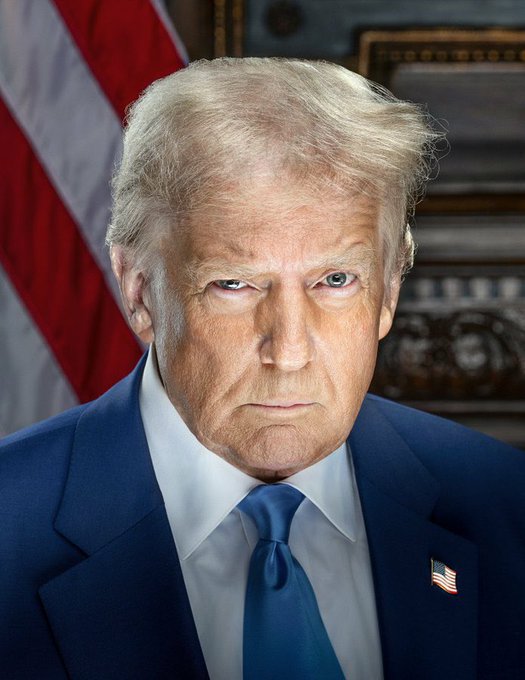
For a brief moment, it appeared that diplomacy might succeed where decades of hostility had failed. Yet the agreement soon became a subject of intense political controversy in Washington. When Donald Trump assumed the presidency of the United States, he criticized the agreement as inadequate and withdrew the United States from the deal in 2018. The withdrawal marked a sharp escalation in tensions, as sanctions were reinstated and diplomatic relations deteriorated further.
Today, military strikes against Iran authorized by the Trump administration have once again pushed the two nations toward a dangerous confrontation. The official explanations offered by Washington revolve around security concerns, the need to prevent Iran from developing nuclear weapons, and the protection of regional allies. But many critics argue that these justifications are vague and that the broader strategic objectives remain unclear.
What makes the situation particularly dangerous is the strategic environment in which the conflict is unfolding. The Middle East remains one of the most geopolitically sensitive regions in the world. It contains enormous reserves of oil that power the global economy, and it sits astride vital maritime routes through which much of the world’s energy supply flows. The Strait of Hormuz, for example, serves as one of the most important shipping passages on the planet, carrying a significant portion of global oil exports each day. A major war in the region could disrupt these routes and trigger economic shockwaves across the world.
The geopolitical landscape also includes a web of alliances and rivalries that could transform a regional confrontation into a broader international conflict. The United States maintains strong alliances with such countries as Israel and several Gulf states. Iran, on its part, has cultivated strategic relationships with other major powers and has developed influence through regional partners and allied groups.
In such an environment, even a limited military clash can carry unpredictable consequences. The Syrian civil war demonstrated how quickly multiple international actors can become entangled in a single regional conflict. When global powers find themselves supporting opposing sides, the risk of miscalculation can always increase dramatically.
Another factor that raises the stakes is the shadow of nuclear weapons. Several nations connected to Middle Eastern geopolitics possess nuclear capabilities, and any confrontation involving such powers carries risks that extend far beyond regional politics. The mere possibility of escalation into a nuclear crisis is enough to make the present tensions deeply alarming. Yet beyond the strategic calculations and diplomatic rhetoric lies the human reality of war. It is easy for political leaders to discuss military operations in terms of deterrence, influence, and national security. It is far more difficult to confront the human suffering that inevitably follows when bombs fall on cities and missiles strike civilian neighborhoods.
The victims of war are rarely the politicians who authorize military action. They are the ordinary citizens who wake up each morning hoping to provide food for their families, send their children to school, and live peaceful lives. When war arrives, it is these ordinary people who suffer the destruction of their homes, the loss of loved ones, and the collapse of the stability that once defined their daily existence. History offers countless examples of how regional conflicts can spiral into global catastrophes. The world wars of the twentieth century began as crises that many leaders believed could be contained. Yet alliances, rivalries, and miscalculations transformed those crises into disasters that reshaped the world.
The present confrontation with Iran carries echoes of those historical lessons. If diplomacy fails and military escalation continues, the conflict could expand beyond the intentions of those who initiated it. The consequences would not be limited to the Middle East but could ripple across the international system in ways that are difficult to predict. And so, beyond strategy and power politics lies a moral question that humanity cannot afford to ignore. Political leaders often speak the language of faith, justice, and national pride. Yet the true measure of leadership does not lie in words but in the value placed upon human life.
Politicians who seek power by destroying the lives of innocent citizens anywhere in the world are no friends of the human family. The suffering of ordinary people can never be justified as collateral damage in the pursuit of geopolitical ambition. No matter how many times such leaders bow their heads in prayer or invoke the name of God, their actions reveal whether they stand for the preservation of life or the pursuit of power.
The attack on Iran has brought the world to another moment of grave responsibility. Humanity must decide whether the lessons of history will guide our choices or whether the same cycles of rivalry and violence will continue to repeat themselves. The world has seen enough wars to understand their cost. The question that remains is whether our leaders possess the wisdom to prevent the next one.
Chief Sir Asinugo, PhD., M.A., KSC, is an acclaimed commentator on national and international affairs.